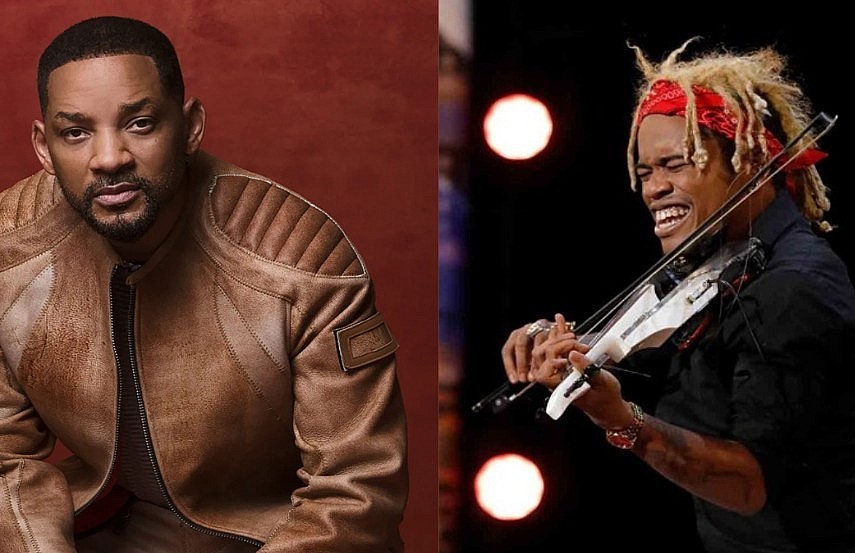
Brian King Joseph Lawsuit Explained: Why He’s Suing Will Smith and Chance of Winning?
In late 2025, a lawsuit filed by musician Brian King Joseph against Hollywood star Will Smith quietly turned into a major entertainment-industry story. Unlike celebrity disputes centered on money or contracts, this case touches on allegations of sexual harassment, power imbalance on tour, and retaliation in the live music business.
So what exactly is Brian King Joseph suing Will Smith for—and does he have a realistic chance of winning?
Read more: Fact-Check: What Did Will Smith tell Chris Rock at the Oscars 2022?
 |
| Who Is Brian King Joseph, The Musician Suing Will Smith Over Alleged Sexual Harassment |
What Brian King Joseph is accusing Will Smith of
According to the civil complaint filed in Los Angeles County Superior Court, Brian King Joseph alleges that while he was hired to perform in connection with Will Smith’s 2025 tour, he experienced inappropriate conduct that escalated over time. The lawsuit includes claims of:
-
Sexual harassment, described in the complaint as unwanted behavior and “grooming”
-
Retaliation, after Joseph reported an alleged incident
-
Wrongful termination, arguing he was removed from the tour because he spoke up
One of the most serious claims centers on an incident at a Las Vegas hotel during the tour. Joseph alleges that his hotel room was entered without consent and that he later reported the situation to hotel security, police, and tour management. Instead of receiving protection or support, he claims he was blamed, isolated, and ultimately dismissed from the tour.
The lawsuit names both Will Smith and Treyball Studios Management, Inc., the company linked to Smith’s touring operations. At this stage, these are allegations in a civil lawsuit; no court has ruled on the facts.
Why this case is legally complex
Cases like this are rarely simple “he said, he said” disputes. To succeed, Joseph will need to show more than discomfort or misunderstanding. The court will look closely at:
-
Evidence of misconduct, such as messages, witnesses, or documentation
-
A clear reporting trail, showing when and how Joseph raised concerns
-
A connection between the complaint and his termination, proving retaliation
If Joseph can demonstrate that he reported alleged misconduct and was then removed from the tour shortly afterward, that timing alone could strengthen a retaliation claim. U.S. employment law does not require a worker to prove harassment beyond doubt to win a retaliation case—only that they engaged in protected activity and suffered adverse consequences as a result.
However, the defense is likely to argue that Joseph was let go for legitimate business reasons unrelated to any complaint, such as creative direction, performance issues, or tour restructuring.
Does Brian King Joseph have a real chance of winning?
From a legal perspective, the retaliation claim may be stronger than the harassment claim.
Sexual harassment cases often hinge on credibility and corroboration. Without witnesses or written proof, they can be difficult to win outright. Retaliation, on the other hand, is sometimes easier to establish if timelines and internal communications suggest a cause-and-effect relationship.
Another factor is power imbalance. Courts increasingly recognize that touring artists, especially non-headliners, operate in environments where speaking up can cost them their livelihoods. If Joseph’s legal team can show that the tour lacked clear reporting safeguards or mishandled his complaint, that could weigh in his favor.
Still, high-profile defendants typically mount aggressive legal defenses. The case could also end in a confidential settlement long before trial, which is common in disputes involving reputational risk.
Who is Brian King Joseph?
For many readers, this lawsuit is their first introduction to Brian King Joseph as more than a headline name.
Joseph is a Washington, D.C.–born electric violinist known for blending classical technique with pop, hip-hop, and electronic music. He rose to national fame after finishing third on America’s Got Talent in 2018, where his high-energy performances helped redefine the violin as a front-stage instrument.
He later studied at Berklee College of Music and continued performing despite being diagnosed with neuropathy, a condition that affects nerve function. Over the years, he built a career touring, releasing music, and cultivating a strong online following under the name “BKJ.”
That background matters. Joseph is not a casual freelancer; he is an established performer with a public career and a clear professional trajectory—something courts often consider when evaluating claims of career harm.
Why this lawsuit matters beyond the headlines
Regardless of the outcome, the case highlights ongoing issues in the touring industry: blurred professional boundaries, limited HR oversight, and the risks artists face when reporting problems involving powerful figures.
Whether Brian King Joseph ultimately wins in court remains uncertain. What is clear is that the lawsuit forces uncomfortable questions about accountability on tour—and about how much protection working musicians really have when the spotlight is offstage.