How Americans Cut Their Heating Bills in Early Spring Without Freezing at Home


 |
| One Small Change, Big Savings |
Why early spring heating bills still hurt in America
For many Americans, January through March is an expensive stretch. Holiday spending has just ended, credit card balances are higher than usual, and heating bills often remain stubbornly high even as winter starts to ease.
In early 2026, this pressure is even more noticeable. Energy prices have stayed unpredictable, and many households are actively looking for ways to cut monthly costs without making daily life miserable. The good news is that most families don’t need major upgrades or expensive equipment to lower heating bills in early spring. What actually works is a mix of small adjustments and smarter habits.
This article breaks down exactly what many Americans are doing right now to reduce heating costs while staying comfortable at home.
Read more: 10 tips for saving big on your New Year's Travels: American style!
The biggest mistake: treating early spring like deep winter
One of the most common reasons heating bills stay high in February and March is simple. People never change their winter settings.
Early spring weather in most parts of the U.S. is milder during the day but still cold at night. If your thermostat is still set for January conditions, you are paying for heat you don’t need.
Many households assume the savings will happen automatically when the weather warms up. In reality, utilities only drop when behavior changes.
Read more: The Simplest Energy Saving Tips for Using Air Conditioners
Set your thermostat for early spring, not winter
Thermostat settings make the biggest difference, and the changes can be small.
Many American households follow this early spring range:
-
Daytime (home): 66–68°F
-
Nighttime: 60–62°F
-
Away from home: 58–60°F
Lowering the thermostat by just 1–2 degrees can noticeably reduce monthly heating costs. At night, the savings are even larger because heating systems run for hours while people sleep.
A common concern is comfort. Instead of raising the heat, many families rely on layered clothing, socks, and extra blankets. This approach costs nothing and works immediately.
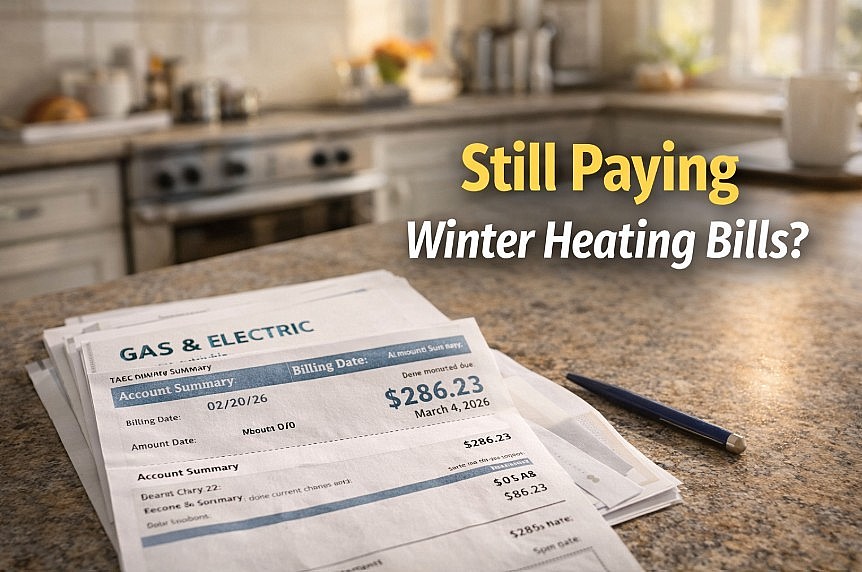 |
| The Bill Nobody Wants |
Stop overheating the house during warm afternoons
Early spring afternoons can be deceptively warm, especially in sunny homes. Many heating systems continue running simply because no one adjusts them.
A practical habit many Americans use is checking the thermostat around midday. If sunlight is already warming the house, turning the heat down a few degrees can prevent unnecessary cycles.
Opening curtains on south-facing windows during the day also helps. Sunlight provides free warmth, and closing curtains again at sunset helps trap that heat inside.
Change your furnace or HVAC air filter right after winter
This step is often ignored, but it matters more than people realize.
After months of winter use, air filters are usually clogged with dust and debris. A dirty filter forces your heating system to work harder, using more energy and raising your bill.
Most HVAC professionals recommend:
-
Checking filters every 30 days during heavy use
-
Replacing them at least once at the end of winter
This is one of the easiest energy-saving steps. Most filters cost less than a dinner out, and replacement takes only a few minutes.
Seal the heat leaks winter leaves behind
Winter weather is tough on homes. By early spring, small gaps and leaks around doors and windows often appear.
Many Americans use simple checks:
-
Run your hand along window frames on a cold morning
-
Check door edges for drafts
-
Look for daylight around door frames
Weather stripping and door draft blockers are inexpensive and widely available. These small fixes can significantly reduce heat loss, especially overnight.
This step is especially important for older homes and rental properties, where insulation may not be ideal.
Adjust heating habits, not just settings
Cutting heating costs isn’t only about the thermostat. Habits matter.
Common early spring adjustments include:
-
Using space heaters only in occupied rooms instead of heating the whole house
-
Turning the heat down when cooking, since ovens and stovetops add warmth
-
Avoiding frequent thermostat changes, which can increase system workload
Consistency is key. Steady, modest settings usually cost less than constant adjustments.
 |
| Tricks to Keep Your House Cool Without Air Conditioning |
Don’t wait for spring to “fix it later”
Many Americans make the mistake of delaying action until spring fully arrives. By then, they’ve already paid higher bills for weeks.
Early spring is the best time to reset heating habits because:
-
Weather changes make small adjustments noticeable
-
Utility bills are still top of mind
-
It prepares households for lower-cost transitions into warmer months
Families who act in February or early March often see savings immediately and carry those habits into the rest of the year.
What about smart thermostats?
Smart thermostats are popular in the U.S., but they’re not required to save money. That said, households who already have them often review schedules in early spring.
Helpful adjustments include:
-
Shorter heating periods in the morning
-
Lower daytime temperatures when homes are empty
-
Gradual temperature drops at night
Even basic programmable thermostats can achieve similar results with manual setup.
The bottom line: small changes add up fast
Lowering heating bills in early spring doesn’t require freezing or major home upgrades. What works for most Americans in 2026 is surprisingly simple:
-
Adjust thermostat settings for milder weather
-
Replace air filters after winter
-
Seal drafts left behind by cold months
-
Build small habits that reduce unnecessary heating
These changes are easy to apply, easy to remember, and realistic for everyday American life. Best of all, they often show results on the very next utility bill.
For households still recovering financially from the holidays, early spring is the perfect moment to regain control of energy costs without sacrificing comfort.