How Many U.S. Military Bases Are in the Middle East/Gulf? And Where?

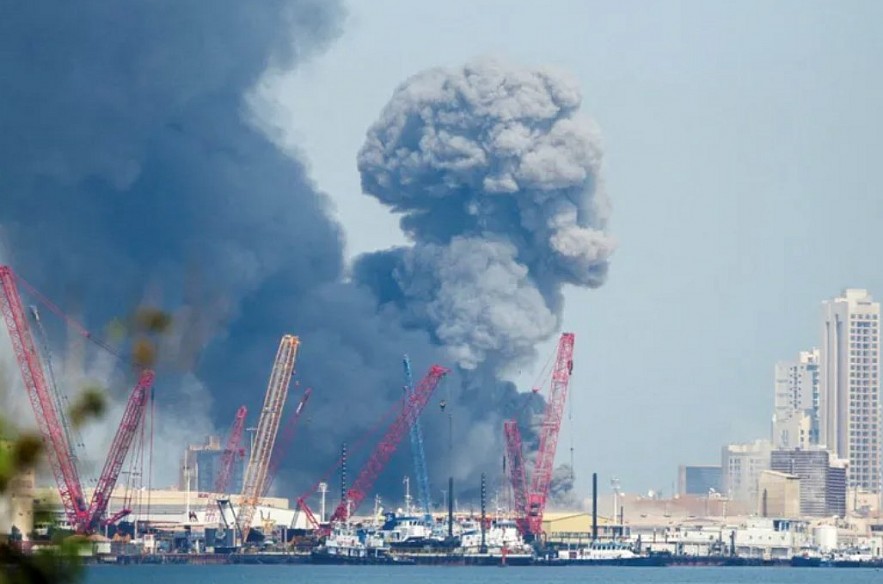 |
| Iran’s Revolutionary Guard Corps (IRGC) launched missiles and armed drones toward multiple U.S. military bases and allied assets across the Gulf |
US Military Bases in the Middle East — A Strategic Overview
The United States maintains one of the largest overseas military footprints in the world across the Middle East, a region central to global energy flows and geopolitical competition. As of early 2026, the U.S. operates dozens of permanent and rotational military sites across multiple countries — serving aviation, naval, ground, intelligence, and logistics missions.
Read more: U.S Homeland Attacks by Iran: FBI & DHS on High Alert - What Americans Should Do
Where U.S. Forces Are Positioned
Among the most critical U.S. military bases in the region are:
-
Al Udeid Air Base (Qatar): The largest U.S. Air Force installation in the Middle East, hosting tens of thousands of personnel and serving as the forward headquarters of U.S. Central Command (CENTCOM).
-
Naval Support Activity Bahrain (Bahrain): The home of the U.S. Fifth Fleet, responsible for naval power projection throughout the Persian Gulf and beyond.
-
Ali Al Salem Air Base (Kuwait): A key air hub for strategic lift, refueling, and support operations.
-
Al Dhafra Air Base (UAE): Shared with Emirati forces, supporting aerial refueling and reconnaissance missions.
-
Prince Sultan Air Base (Saudi Arabia): Hosts U.S. aircraft and command units strategically positioned near Iran.
-
Muwaffaq al-Salti Air Base (Jordan): Supports joint training, reconnaissance, and air operations.
-
Bases in Iraq: Including Camp Arifjan and Ain al-Asad, used for logistics and cooperation with Iraqi forces.
These installations span at least eight countries and form an integrated network that enables rapid deployment, air dominance, and intelligence across the Middle East, North Africa, and South Asia.
Read more: How Many U.S. Troops Have Died in the Iran War? Latest Casualties
Iran’s Retaliatory Strikes
Tensions exploded after a coordinated U.S.–Israeli offensive that targeted Iranian leadership and infrastructure in February 2026, triggering Iran’s large-scale retaliation across the region.
Iran’s Revolutionary Guard Corps (IRGC) launched missiles and armed drones toward multiple U.S. military bases and allied assets across the Gulf, asserting they were striking American and Israeli military interests. Regional Arab states including Bahrain, Qatar, Kuwait, the UAE, Jordan, and Saudi Arabia reported incoming strikes, explosions, or air-raid warnings.
Bases Iran Targeted
According to regional military sources and official statements, confirmed or widely reported strikes included:
-
Al Udeid Air Base (Qatar): Missiles and drones were launched at the base, which hosts large U.S. Air Force contingents. Qatar reported multiple waves of interception with no immediate confirmed U.S. casualties.
-
Naval Support Activity Bahrain (Bahrain): Iranian attacks struck near the Fifth Fleet headquarters, damaging radar installations and prompting reduction of on-base personnel to minimum levels.
-
Ali Al Salem Air Base (Kuwait): Kuwait’s defense reported attacks that were intercepted by air defenses, with no significant damage reported.
-
Al Dhafra Air Base (UAE): UAE air defenses engaged incoming missiles; some interceptor debris caused civilian injuries in residential areas outside the base.
In addition to these, Iranian forces reportedly launched attacks that set off sirens in Iraq, Saudi Arabia, and other Gulf nations, indicating broader targeting of U.S. and allied military infrastructure.
The bodies of the three American soldiers who were killed in an Iranian strike on a U.S. base in Kuwait have been transferred:
Confirmed Damage and Casualties
The picture of damage remains complex and evolving, with varying accounts from official, local, and regional media:
Military Infrastructure
-
Radar and support facilities at NSA Bahrain were damaged, though base core operations remained intact.
-
High-alert defenses across bases in Qatar, Kuwait, and the UAE successfully intercepted most incoming projectiles, limiting catastrophic damage.
Human Casualties
-
The U.S. Department of Defense confirmed at least three U.S. service members killed and five critically wounded in the conflict, marking the first significant U.S. combat deaths in the region’s latest escalation.
-
Civilian casualties were reported outside military zones, including in UAE residential areas hit by interceptor debris.
Why It Matters — Strategic Implications
The 2026 confrontation marks one of the most serious tests of U.S. force posture in the Middle East in decades. The clustering of major bases in Gulf monarchies and neighboring states has enabled rapid military action — but also exposed American forces to long-range missile and drone threats from Iran and its proxies.
The scale of the retaliation has unsettled regional governments, disrupted commercial airspace, and raised fears of further escalation that could entangle global energy markets and foreign diplomatic alliances.
Conclusion
The Middle East’s strategic calculus hinges on a complex web of U.S. military basing, allied cooperation, and regional rivalry. Iran’s February–March 2026 strikes against American bases underline the risks embedded in this arrangement — revealing both the reach of U.S. force and the vulnerabilities of dispersed overseas installations.