How UK Travellers Can Still Find Cheap Flights This Expensive Summer

If you’ve searched for flights recently from the UK, you’ve probably had that familiar moment: you spot a £35 fare to Barcelona… then watch it jump to £78 before you’ve even decided whether to bring a suitcase.
That feeling is not bad luck. It reflects a deeper shift in how airlines price tickets in 2026.
Airfare hasn’t just become more expensive. It has become more dynamic, reactive, and slightly unforgiving. But if you understand a few new patterns shaping the UK market this year, you can still travel smart—and often surprisingly cheaply.
Read more: 10 Largest Airlines in the UK by Passenger Numbers (2026 Rankings)
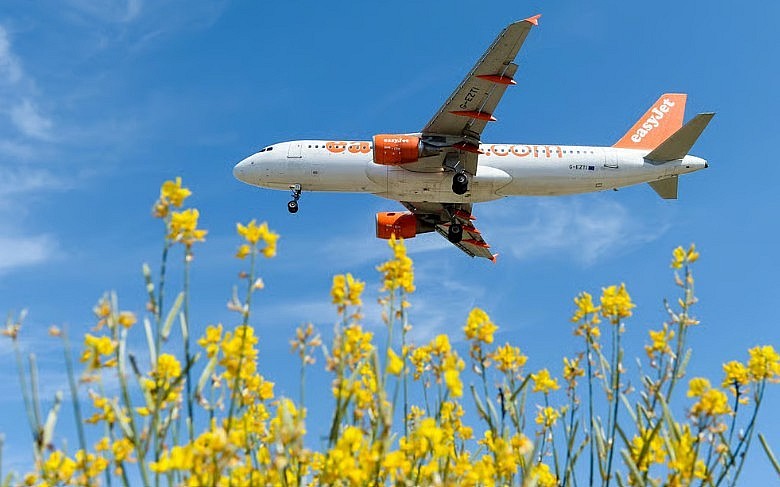 |
| How to Find Cheap Flights in the UK |
The Big Shift in 2026: Prices Move Faster Than You Think
Airlines in the UK and across Europe are leaning harder into demand-based pricing. That means:
- Prices rise faster when routes get popular
- Cheap seats disappear earlier
- Waiting “just one more day” can cost you
At the same time, there’s a subtle cooling in parts of the market. Budget carriers have hinted that demand isn’t as explosive as last year, which is why you’re still seeing aggressive fare sales pop up—sometimes out of nowhere.
Translation: prices spike quickly, but they also drop quickly. The window is just shorter.
- How to Find Cheap Flights This Expensive Summer: Airfare Hacks for U.S. Travelers
The Hidden Cost Factor Many UK Travellers Ignore
Everyone talks about ticket prices. Fewer people talk about what’s baked into them.
In the UK, Air Passenger Duty (APD) quietly shapes long-haul fares more than most travellers realise. Short-haul flights remain relatively affordable, but long-haul tickets—especially premium cabins—carry significantly higher taxes from 2026 onward.
That’s one reason why:
- A £40 flight to Italy feels possible
- But a flight to the U.S. or Asia feels stubbornly expensive
And it’s also why some experienced travellers consider starting long-haul trips from Europe (Paris, Dublin, Amsterdam) when the savings justify the extra leg.
“Positioning Flights”
Flying London → Paris → New York can sometimes be cheaper than London → New York direct.
It’s not always worth it—but when savings exceed £150–£300, it’s worth checking.
Budget Airlines Still Win—If You Play Their Game
The UK remains one of the best places in the world for low-cost flying. Airlines like Ryanair, easyJet, Jet2 and Wizz Air still dominate short-haul travel.
But in 2026, their pricing strategy feels sharper than ever.
Cheap fares are real—but they are:
- Limited in quantity
- Strict in conditions
- Designed to upsell extras
This creates a strange paradox: budget airlines are both cheaper and easier to overspend on.
The True Cost of a £29 Flight
£29 base fare
£20 cabin bag
£18 seat selection
£25 airport transfer
= £92 real trip cost
The takeaway is not to avoid budget airlines. It’s to use them consciously.
Read more: Top 10 Best Websites to Book Cheap Flights in 2026
The Airport Strategy That Separates Smart Travellers
Most UK travellers search from their nearest airport. Smart travellers search from multiple regions.
For example:
- London travellers should compare Gatwick vs Stansted vs Luton vs Heathrow
- Northern travellers should compare Manchester vs Liverpool vs Leeds vs Newcastle
- Scottish travellers should check Glasgow vs Edinburgh
But here’s the nuance many miss:
It’s not just about fare—it’s about total friction.
A slightly more expensive ticket from a convenient airport can often be the better decision once you factor in:
- Travel time
- Transport cost
- Early departure stress
A Quiet Trend: Cheaper “Unexpected” Destinations
One of the most interesting trends in 2026 is that the cheapest flights are often not going where everyone wants to go.
Instead of:
- Barcelona
- Paris
- Rome
You may find better value in:
- Turin
- Cologne
- Eindhoven
- Luxembourg
- Lesser-known Spanish coastal cities
These destinations benefit from lower demand but still offer strong travel experiences.
There’s something quietly satisfying about this shift. It nudges travellers away from predictable trips—and toward more interesting ones.
Read more: Positioning Flights: The Advanced Strategy Americans Use to Slash International Airfare
Updated Strategy Table (2026 UK Market)
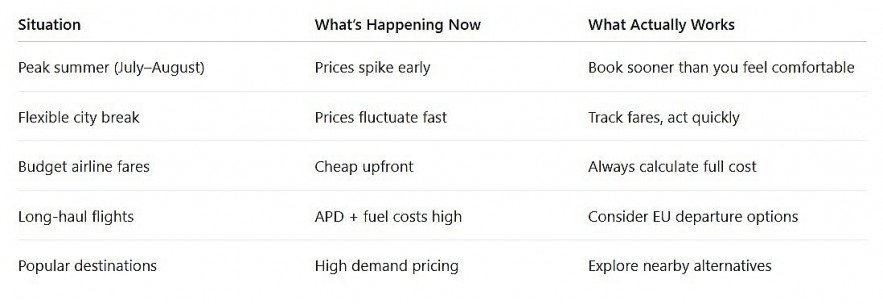 |
| Strategy Table |
The Psychological Trap: Waiting for the “Perfect Deal”
This is where most people lose money.
They hesitate.
They refresh.
They wait for something slightly better.
And then the price moves.
In 2026, the smartest travellers are not the ones who find the absolute cheapest fare. They are the ones who recognise a good deal early—and trust their judgement.
- Don’t Skip Long Layovers: A Smart Way to Save on International Flights
- Cheap Flights Aren’t Gone - Americans Are Still Finding Them in 10 Tips
A Better Question to Ask
Not: “Will this get cheaper?”
But: “Would I regret losing this price?”
That shift sounds small. In reality, it changes everything.
The UK Still Has an Advantage
Despite rising costs and new pressures, UK travellers still enjoy something many others don’t: real competition.
Short-haul Europe remains one of the most competitive airline markets in the world. That means deals will continue to exist.
But they won’t wait for you.
The travellers who win this summer are not the most patient. They are the most prepared.
They compare. They stay flexible. And when a good deal appears—they move.