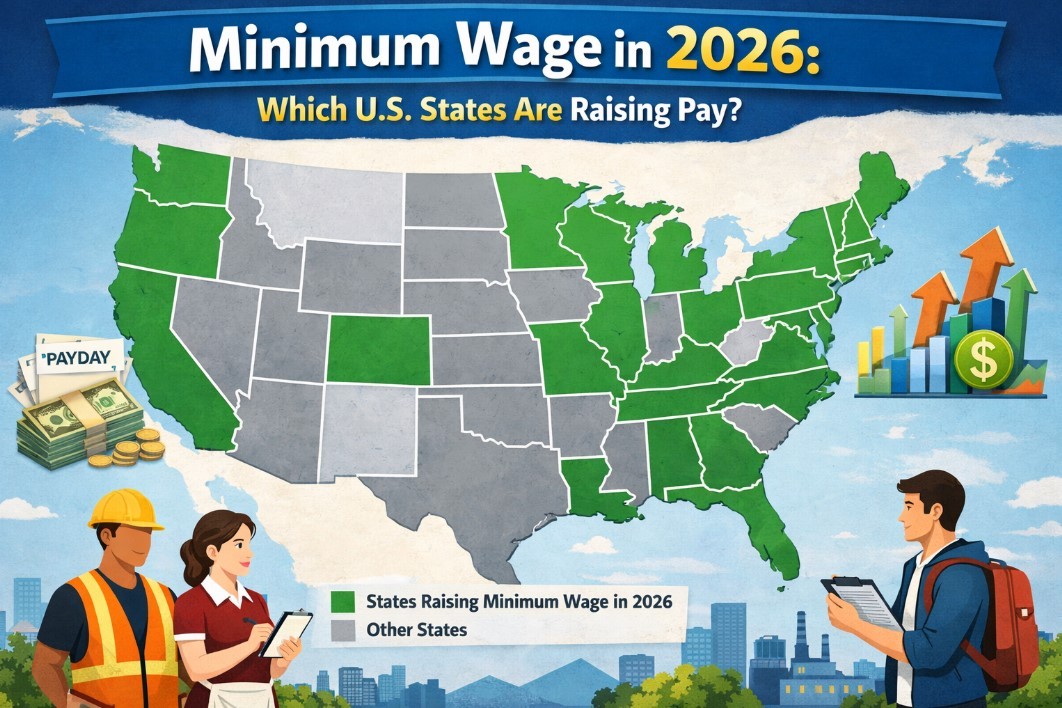
Minimum Wage Increases in 2026: How Much More Workers Actually Earn Each Month
 Top 10 Countries Have The Highest Minimum Wage in the World Top 10 Countries Have The Highest Minimum Wage in the World |
 Top 10 States in America With the Highest Average Wages Top 10 States in America With the Highest Average Wages |
 How Many States Have a $15 Minimum Wage in 2025? How Many States Have a $15 Minimum Wage in 2025? |
 |
| How much more will I earn minimum wage 2026 |
When minimum wage rates rise, the headline number often sounds encouraging. But for workers trying to budget rent, groceries, and transportation, the real question is simpler: How much more money will actually show up in my paycheck each month?
With minimum wage increases taking effect across many U.S. states on January 1, 2026, the answer depends on three main factors: your hourly increase, how many hours you work, and how much is taken out in taxes.
Here’s what the math looks like in real terms.
The basic math: hourly increase to monthly pay
Most minimum wage increases in 2026 range between $0.50 and $1.05 per hour, depending on the state and local inflation formulas.
For a full-time hourly worker (40 hours per week):
-
$0.50/hour increase
≈ $20 more per week
≈ $87 more per month
≈ $1,040 more per year (before taxes) -
$1.00/hour increase
≈ $40 more per week
≈ $173 more per month
≈ $2,080 more per year (before taxes)
For part-time workers, the increase scales directly with hours worked. Someone working 25 hours a week would see roughly 62% of the amounts above.
What workers take home after taxes
The numbers above reflect gross pay, not what lands in your bank account.
For most low- to moderate-income workers, deductions include:
-
Federal income tax
-
Social Security (6.2%)
-
Medicare (1.45%)
-
State income tax, where applicable
After deductions, workers typically take home 65% to 75% of the gross increase, depending on filing status and state tax rules.
That means a $173 monthly gross increase often becomes $115–$130 in take-home pay.
Read more: Minimum Wage in 2026: Which U.S. States Are Raising Pay and Who Benefits
Examples from high-wage states
In states with higher minimum wages, the dollar increase may look larger, but so do living expenses.
-
Washington
Washington’s inflation-indexed wage increase in 2026 adds roughly $1 per hour for many workers. Full-time employees may earn over $2,000 more per year before taxes, but housing and childcare costs remain among the highest in the country. -
California
California’s statewide minimum wage remains above $16 per hour, with many cities enforcing higher local rates. While the wage floor is high, rent and transportation costs often absorb much of the increase. -
New York
Tiered minimum wages mean workers in New York City see higher pay than those upstate. Even so, higher wages in metro areas frequently track with higher everyday expenses.
Does the increase keep up with inflation?
In states where minimum wages are indexed to inflation, 2026 increases are designed to preserve purchasing power, not dramatically raise living standards.
In practical terms:
-
Wage increases help offset rising prices
-
They reduce income erosion over time
-
They rarely create large new financial cushions
For many households, the additional income covers necessities like utilities, groceries, or gas rather than discretionary spending.
Why monthly gains still matter
Even modest increases can have meaningful effects:
-
A $120 monthly boost can cover a phone bill or part of a utility payment
-
Higher base pay can lift wages slightly above minimum through pay compression
-
Raises often improve eligibility for better job opportunities
Over time, consistent increases compound, especially for workers who remain steadily employed.
What workers should check in 2026
To understand your real income change:
-
Confirm your new hourly rate after January 1, 2026
-
Compare pay stubs before and after the increase
-
Review tax withholding, which may adjust slightly
-
Factor in local cost-of-living changes
If your pay did not increase and your state enacted a higher minimum wage, your employer may be out of compliance.
Bottom line
In 2026, minimum wage increases translate into roughly $80 to $175 more per month before taxes for full-time workers, depending on the state. While the gains may feel modest, they play a critical role in keeping hourly wages aligned with rising costs—and for many workers, every dollar still counts.