St. Patty’s Day or St. Paddy’s Day? Here’s the Real Difference

 |
| Is it St. Patty's Day or St. Paddy's Day |
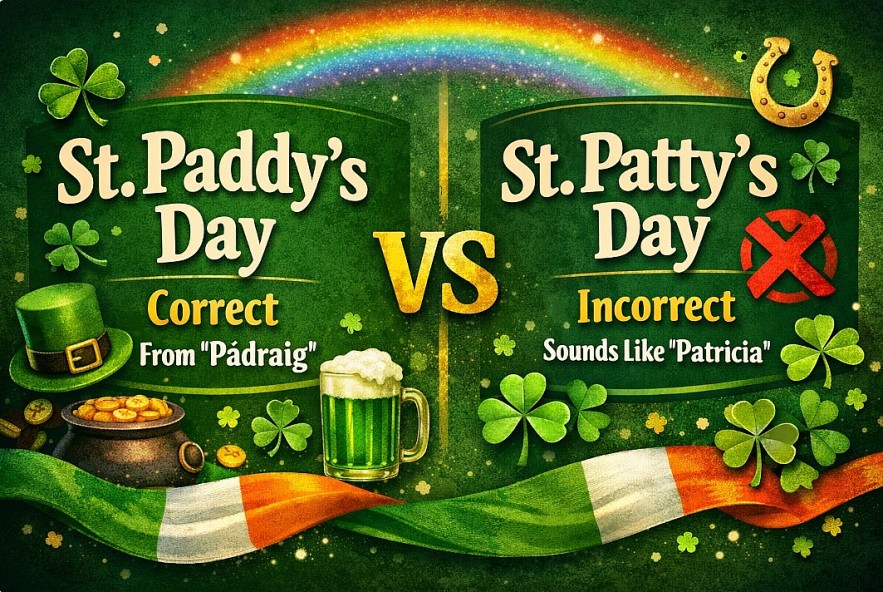
Every March 17, people around the world celebrate St. Patrick’s Day, a holiday honoring Ireland’s patron saint, St. Patrick. The day has become famous for parades, green outfits, shamrocks, and Irish-themed parties. But one small language question returns every year: should it be called “St. Patty’s Day” or “St. Paddy’s Day”? The short answer is simple: “St. Paddy’s Day” is the correct form.
The reason comes from the Irish language. In Irish, the name Patrick is written as Pádraig. From that name, the common short form becomes Paddy, not Patty. English dictionaries and Irish language sources both point to this connection. That is why many Irish people, and many language experts, strongly prefer “St. Paddy’s Day.”
So why do some people say “St. Patty’s Day”? Usually, it is not meant as disrespect. It often happens because English speakers see Pat in Patrick and naturally build Patty from it. The problem is that Patty is more commonly associated with Patricia, not Patrick. As a result, to Irish ears, “St. Patty’s Day” sounds inaccurate and culturally off. Merriam-Webster notes this exact point, explaining that Paddy is tied to the Irish form of Patrick, while Patty can be mistaken for a nickname linked to Patricia.
Read more: St. Patrick’s Day: Tradition, History, and Modern Celebrations
In practical terms, both versions may appear online, especially in casual social media posts. However, if you want to sound informed, respectful, and culturally accurate, use “St. Paddy’s Day.” It is the better choice for articles, marketing content, greetings, and SEO writing aimed at readers searching for the correct term. It also matches the holiday’s Irish roots more closely.
Remember this easy rule: Patrick in Irish is Pádraig, and Pádraig becomes Paddy. That is why the holiday nickname should be “St. Paddy’s Day,” not “St. Patty’s Day.” One letter makes a big difference, and in this case, it shows cultural awareness as well as good spelling.