Who is Joanna Dennehy: Britain’s Most Dangerous Female Killer


 |
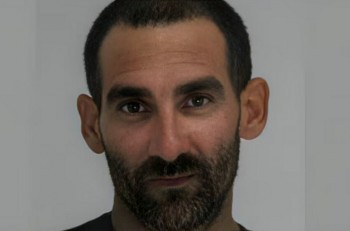
| Joanna Dennehy |
The Crimes That Terrified Britain
In March 2013, over just ten days, Joanna Dennehy carried out a series of murders that stunned the country. The case became known as the Peterborough ditch murders after three men were found stabbed and dumped in remote countryside ditches.
Her victims included Lukasz Slaboszewski, John Chapman and Kevin Lee. Slaboszewski was killed first, his body hidden in a wheelie bin. Chapman, Dennehy’s housemate, was found soon after. Lee, her landlord and occasional lover, was left in a ditch wearing a black dress — a sick act believed to be staged deliberately for shock value.
While fleeing Cambridgeshire, Dennehy attacked two strangers walking their dogs in Hereford. Both survived, and their testimonies later helped police track her down.
The spree was fast, chaotic and fuelled by a chilling intent. When arrested, Dennehy showed no guilt.
In her own words, she had killed “to see if I was as cold as I thought I was.”
Who Is Joanna Dennehy
Born in August 1982 in St Albans and raised in Harpenden, Dennehy grew up in what was described as a normal household. By her early thirties she was a mother of two and living a transient lifestyle marked by crime, abusive relationships and heavy drinking.
But beneath the surface, psychologists later discovered a severe mix of antisocial personality disorder, borderline personality disorder and sadomasochistic traits. These conditions, combined with impulsivity and manipulation, shaped one of the most violent criminal profiles the UK has ever recorded.
What made her particularly unusual was her victim preference. She targeted only men. She reportedly told acquaintances that she would never kill a woman, especially a mother, and her crimes supported that claim.
Her motive was not jealousy, revenge or financial gain. It was pleasure. After her first murder she said killing felt “moreish,” a word that horrified investigators and psychiatrists alike.
A Trial That Exposed Her Coldness
In November 2013, in a move rarely seen in such cases, Dennehy pleaded guilty to three murders and two attempted murders without contest. She did not argue diminished responsibility. She offered no explanation. She simply accepted the charges with a smirk that left the courtroom stunned.
During sentencing in February 2014, the judge called her “cruel, calculating and manipulative.” He issued a whole-life order — one of the harshest penalties in the UK. This means Dennehy will never be released. She became one of only a handful of women in British history to receive this sentence.
Two accomplices, who helped conceal bodies and assisted her while on the run, were also convicted. Prosecutors said they fell under her influence, though both were deemed responsible for their decisions.
The case also exposed failures in the probation system. Before the killings, Dennehy was already under supervision for violent offences. The murders raised serious concerns about how high-risk offenders were being monitored.
Life Behind Bars: Still a Threat
Imprisonment did not dull Dennehy’s danger. She initially served her sentence at HMP Bronzefield, where officers discovered a detailed escape plot in her diary. The plan involved attacking a guard, severing a finger and using it to bypass biometric locks. Because of this she spent nearly two years in solitary confinement.
In 2019 she was transferred to the high-security unit at Low Newton Prison. Reports surfaced that she threatened other notorious inmates, including serial killer Rose West, though prison authorities denied specific incidents. Regardless, the move reflected ongoing concerns about her volatility and influence over others.
Criminologists describe her as one of the rare female offenders who kills for the thrill of violence. Many believe she remains beyond rehabilitation, given her psychological profile and continuing behaviour behind bars.
Why Joanna Dennehy’s Case Still Matters
Dennehy’s crimes continue to draw public and academic attention for several reasons.
She breaks the mould of female criminality.
Women who kill usually do so in domestic settings or due to long-term abuse. Dennehy killed for excitement and power, placing her among a very small group of female sadistic killers.
Her spree blurred criminal categories.
Although labelled a serial killer, her murders happened in rapid succession. Some experts classify her as a spree killer, a distinction that keeps her case under study today.
She slipped through a flawed system.
Despite her known risk factors, she was able to commit three murders while supposedly under supervision.
She remains dangerous even in captivity.
Not many inmates need years of solitary confinement for planning violent escape attempts. Dennehy is one of them.
FAQs
How many people did Joanna Dennehy kill?
She murdered three men and attempted to murder two more.
Why did she commit the murders?
She said she killed for pleasure, explaining that violence felt addictive. Psychiatrists diagnosed severe personality disorders that contributed to her lack of empathy and impulse control.
What sentence did she receive?
A whole-life order, meaning she will never be released from prison.
Is she considered a serial killer?
Technically yes, although her killings happened over a very short period. Many experts classify her as a spree killer due to the 10-day timeline.
Is Joanna Dennehy still a threat?
Yes. She has plotted violence in prison and remains one of the UK’s highest-risk female inmates.
Conclusion
Joanna Dennehy is one of the most disturbing criminals in modern British history. Her fast, brutal killings, her lack of remorse, her manipulation of accomplices and her ongoing danger behind bars make her case unique. She shattered expectations about female offenders and forced the UK to re-evaluate how it supervises violent individuals.
Even today, locked away under the strictest conditions, she remains a chilling reminder that some of the darkest personalities can come from the most unexpected places.