Who Was El Mencho? Mexico’s Most Wanted Cartel Boss Reportedly Killed in Army Raid

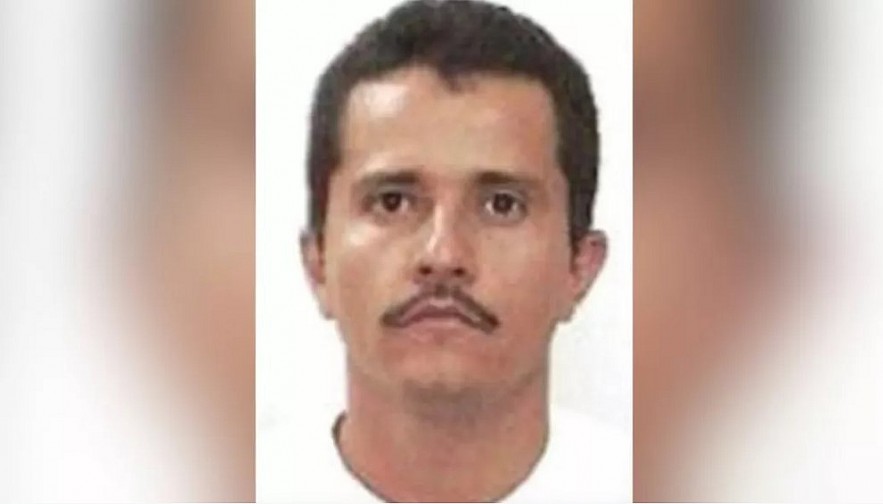 |
| After ‘El Mencho’ killing, chaos spreads across several Mexican states |
On February 22, 2026, Mexican military forces reportedly killed Nemesio Rubén Oseguera Cervantes, better known as El Mencho, the long-time leader of the powerful Jalisco New Generation Cartel (CJNG). The operation, carried out in Tapalpa, Jalisco, triggered violent retaliation from cartel members across several Mexican states and drew global attention.
El Mencho’s death — confirmed by multiple international news outlets and government sources — marks a defining moment in Mexico’s fight against organized crime. Still, his life story reflects how deeply entrenched cartel power became in parts of Mexico over the last two decades.
Read more: Mexican Resort Town and Airport Under Siege After Death of Cartel Leader
From Humble Beginnings to Cartel Kingpin
Nemesio Rubén Oseguera Cervantes was born on July 17, 1966, in Aguililla, Michoacán, a rural and economically challenged region in western Mexico. He grew up in poverty, dropped out of primary school, and worked in agriculture before beginning a life that would lead him deep into organized crime.
In the 1980s, Oseguera crossed into the United States illegally, living in California’s Central Valley. There he was arrested several times — including for narcotics and weapon offenses — before being deported back to Mexico in the early 1990s.
After his return, he briefly worked in local police forces in Jalisco but soon entered the world of drug trafficking. He joined the Milenio Cartel, eventually rising through its ranks and gaining a reputation for ruthlessness and strategic acumen. When several senior leaders were arrested or killed around 2010, Oseguera seized the moment and formed his own organization: the Cartel de Jalisco Nueva Generación (CJNG).
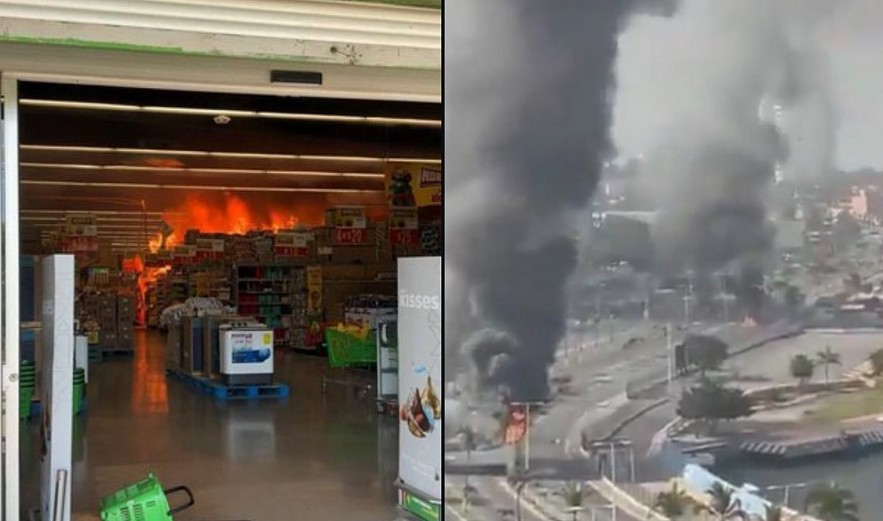 |
| Mexico has erupted into chaos after CJNG chief El Mencho was killed in a reported joint operation between the U.S. and Mexico |
Building the CJNG Empire
Under El Mencho’s leadership, CJNG grew rapidly — blending territorial expansion with extreme violence and sophisticated criminal operations. What set CJNG apart was its ability to adapt: the group not only trafficked cocaine, methamphetamine, and heroin but also became a major source of fentanyl, a synthetic opioid tied to a deadly overdose crisis in the United States.
By the early 2020s, CJNG was considered one of Mexico’s most powerful cartel organizations, expanding its influence across multiple states including Jalisco, Colima, Guanajuato, Nayarit, and Veracruz. Its reach extended internationally, with links to criminal networks in North America, Europe, Asia, and beyond.
El Mencho was known for promoting aggressive territorial control, clashing with rival cartels like Los Zetas and the Sinaloa Cartel. Unlike other traffickers who tried to avoid direct conflict, CJNG under El Mencho’s command often confronted security forces head-on, using heavy weaponry, drones, and other tactics that blurred lines between gang violence and paramilitary action.
Most Wanted and Official Bounties
As CJNG’s power grew, so did the attention from law enforcement. The U.S. Department of State offered up to $15 million USD for information leading to El Mencho’s capture — one of the highest rewards ever issued for a Mexican cartel leader.
He was also charged in U.S. federal courts for trafficking and organized crime offenses, making him one of the most wanted fugitives in the world. Mexican prosecutors had placed enormous bounties on his head as well, and for years, joint Mexican and U.S. intelligence efforts sought to locate him in rugged, rural terrain where he was believed to hide.
Despite these efforts, El Mencho had never been incarcerated before Sunday’s operation — an unusual and dangerous feat for a criminal of his notoriety.
Reported Death and Its Aftermath
According to Mexican defense officials, El Mencho was wounded during the raid in Jalisco and died while being transported by air for medical care. Seven cartel members were also killed in the operation, and authorities seized weapons, armored vehicles, and other materials used by the organization.
His reported death sparked immediate violence, including roadblocks, burning vehicles, and attacks in several states as cartel allies sought to disrupt security operations. Governments in Mexico, the United States, and Canada issued safety warnings and travel advisories in affected regions.
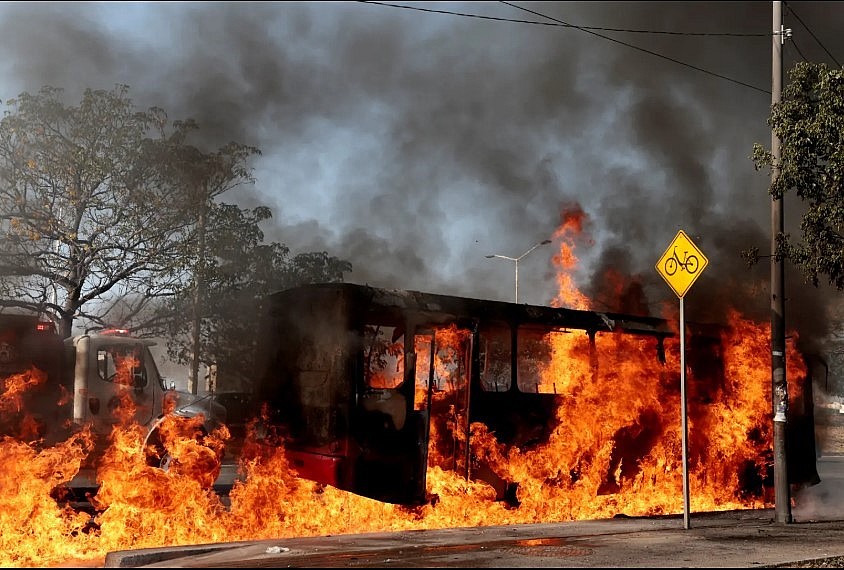 |
| Mexican resort town, airport under siege |
Legacy: Violence, Power Vacuums, and Uncertain Future
El Mencho’s legacy is complicated. For Mexican and U.S. officials, his reported death is a major symbolic victory in the battle against transnational organized crime. However, experts warn that removing a leader of his stature can create power vacuums that lead to internal cartel strife, increased violence, and territorial battles among rival groups.
As Mexico and its neighbors continue to grapple with cartel influence, El Mencho’s life and death highlight both the scale of the challenge and the resilience of criminal networks that adapt to leadership losses.
Bottom Line
Nemesio “El Mencho” Oseguera Cervantes rose from humble beginnings in rural Mexico to lead one of the most violent and powerful drug organizations in the world. His reported death on February 22, 2026 marks a potential turning point in the ongoing conflict between organized crime and state forces, but it also raises new questions about what comes next in Mexico’s long fight against cartel power.
FAQs
Who was El Mencho’s real name?
El Mencho’s real name was Nemesio Rubén Oseguera Cervantes, a 59-year-old Mexican drug lord and the founder of the Jalisco New Generation Cartel (CJNG). He was considered one of the most powerful and dangerous cartel leaders in the world.
Where and how was El Mencho killed?
According to Mexican defense officials, El Mencho was wounded during a military raid in Tapalpa, Jalisco, on Sunday. The operation reportedly involved a heavy shootout between cartel gunmen and federal forces. He later died while being transported by helicopter to Mexico City for medical treatment.
What weapons were seized during the raid?
Authorities said they confiscated a cache of high-powered weapons, including rocket launchers, armored vehicles, military-grade firearms, and tactical equipment. The seizure highlights the scale of firepower used by CJNG in confrontations with security forces.
Why were there roadblocks across multiple Mexican states?
In the hours following reports of El Mencho’s death, suspected CJNG members set up burning vehicle barricades and roadblocks in at least eight states. Officials described the actions as coordinated retaliation aimed at disrupting highways, intimidating authorities, and demonstrating the cartel’s continued operational reach.
How did the United States react to El Mencho’s reported death?
U.S. officials welcomed the news, noting that El Mencho had been the subject of a $15 million reward offered by the State Department for information leading to his capture. His reported death comes amid heightened U.S. pressure on Mexico to curb cartel violence and fentanyl trafficking, particularly in the context of ongoing border security debates.