Australia Fans Heading to World Cup 2026: What the Visa Rules Don’t Tell You

 How Many South American Teams Qualified for 2026 World Cup? Full CONMEBOL List How Many South American Teams Qualified for 2026 World Cup? Full CONMEBOL List |
 First-Time FIFA World Cup Teams 2026: Meet the Four New Countries First-Time FIFA World Cup Teams 2026: Meet the Four New Countries |
 Top 6 Young Stars Set to Shine at the 2026 World Cup Top 6 Young Stars Set to Shine at the 2026 World Cup |
 |
| For supporters from Australia, attending the FIFA World Cup 2026 will still be one of the great travel experiences in sport. |
If you’ve ever flown from Australia to a World Cup, you already know the feeling.
It’s not a quick getaway. It’s a commitment. You plan it months in advance, juggle time zones in your head, and quietly accept that once you leave, there’s no easy reset button.
Now add something new to that equation: the FIFA World Cup 2026 isn’t in one country. It stretches across the United States and Canada.
And that changes the nature of the trip in a way that isn’t obvious at first.
This isn’t just about getting in. It’s about moving through.
It Looks Easy on Paper—And That’s Exactly Why People Get Caught Out
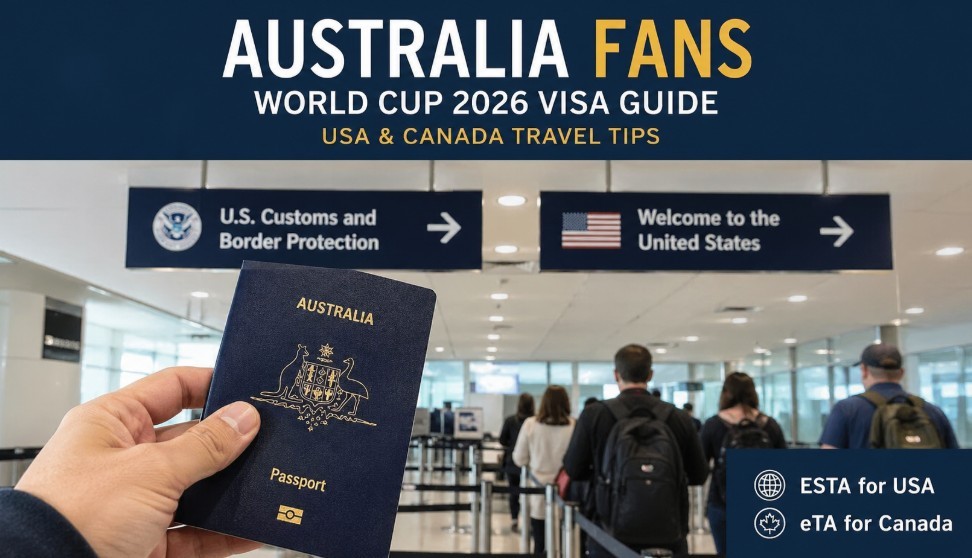
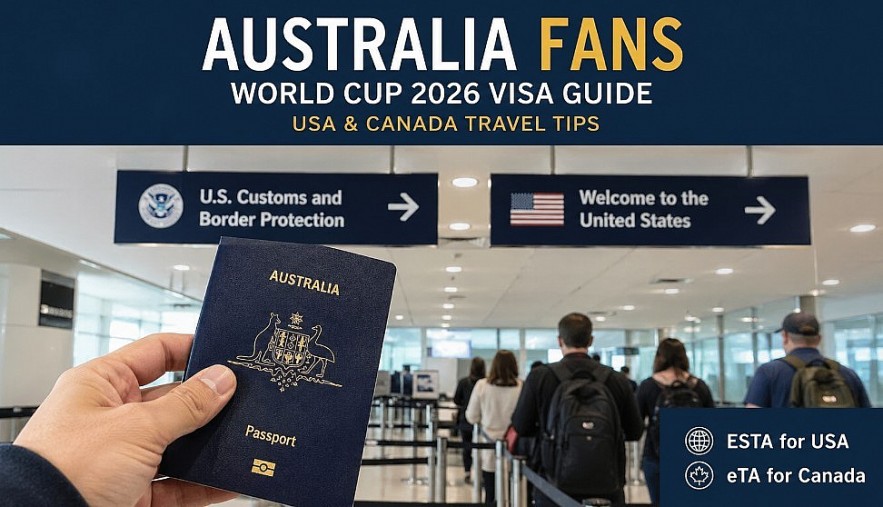
For Australian passport holders, the headline sounds reassuring:
- No traditional visa required for short stays in the U.S.
- No traditional visa required for Canada
Instead, you apply for:
- ESTA (for the U.S.)
- eTA (for Canada)
Both are online. Both are relatively fast.
It almost feels too easy for something this big.
And that’s the subtle trap. When something looks simple, we tend to treat it casually.
This is not something to treat casually.
The U.S. Entry Moment You Can’t Fully Control
Most fans will go through ESTA without any issue. You fill out the form, get approval, and move on.
But the real moment isn’t when you click “submit.” It’s when you land.
You’re standing there after a long-haul flight, slightly disoriented, maybe rehearsing your answers in your head. A border officer asks a few questions that seem ordinary—but they’re quietly assessing whether your story makes sense.
Why are you here?
How long are you staying?
Where are you going next?
For most people, it’s over in minutes.
But it’s worth understanding this:
ESTA doesn’t guarantee entry. It gives you the chance to ask for it.
It’s a small distinction, but it feels very real in that moment.
Canada Feels Softer—But It Still Has Edges
Canada’s eTA system is smoother. Approval often comes quickly, and the process feels less intense.
That can create a false sense of security.
Because just like the U.S., entry isn’t automatic. It depends on whether your travel plans hold together when someone else looks at them.
And during a World Cup, those plans can look messy.
Multiple cities. Short stays. Crossing borders. Doubling back.
From your perspective, it’s excitement.
From theirs, it needs to look coherent.
The Part Nobody Talks About: You’ll Be Re-Entering Countries
This is where 2026 quietly becomes different from every other World Cup.
In past tournaments, once you arrived, you settled in.
Here, you may cross borders more than once.
You might start in the U.S., head to Canada for a match, then return to the U.S. again.
Each time, you’re not continuing a journey—you’re starting a new one in the eyes of border control.
That means:
- Your ESTA still needs to be valid
- Your eTA still needs to be valid
- Your story still needs to make sense
And after 20 hours of travel from Australia, that’s not something you want to improvise.
Distance Changes Everything for Australian Fans
There’s a reality here that’s easy to overlook if you’re reading global advice.
If something goes wrong for a European fan, it’s frustrating.
If something goes wrong for an Australian fan, it’s expensive, exhausting, and difficult to fix.
You don’t just “try again next week.”
That’s why preparation isn’t just helpful. It’s protective.
The Quiet Mistake That Costs the Most
It usually happens in this order:
You get excited.
You book flights.
You secure tickets.
You start picturing yourself there.
And only then do you sort out your ESTA and eTA.
It feels natural. It’s also the point where risk creeps in.
Because if something delays or complicates your travel authorization, you’re now locked into plans you can’t easily change.
A calmer approach—less exciting, but far safer—looks like this:
Sort your ESTA and eTA first.
Wait for approval.
Then commit to the big bookings.
It doesn’t feel like progress. It is.
What You Actually Need to Be Ready For
You don’t need to overprepare. You don’t need a stack of documents.
But you do need clarity.
If someone asks about your plans, you should be able to explain them without hesitation. Not perfectly—just naturally.
Where you’re going.
How long you’re staying.
What comes next.
When your trip involves multiple cities and countries, that clarity matters more than you think.
Timing Isn’t Urgent—Until It Suddenly Is
Right now, it feels like there’s time.
But as the tournament gets closer, demand rises—not just for tickets and flights, but for everything around them.
A simple timeline that tends to work well:
- Check your passport well in advance
- Apply for ESTA and eTA at least 1–2 months before departure
- Finalize bookings once everything is approved
You’re not racing the system. You’re staying ahead of it.
The Situations That Deserve a Second Look
For most Australian fans, the process will be smooth.
But there are cases where things shift:
- Previous visa issues
- Certain travel histories
- Dual citizenship situations
If you’re not eligible for ESTA, you may need a full U.S. visa interview.
That’s not a minor detour. It’s a different journey entirely—and one that takes time.
A Different Kind of World Cup Experience
There’s something quietly different about this tournament.
It’s still about football. That part hasn’t changed.
But everything around it—travel, movement, logistics—feels more layered.
You’re not just attending matches. You’re navigating a system that stretches across countries and expectations.
For some fans, that adds to the adventure.
For others, it becomes the part they remember most.
Final Thought
For supporters from Australia, getting to the FIFA World Cup 2026 will always be worth it.
But it won’t be effortless.
The difference between a smooth, memorable trip and a stressful one won’t come down to luck. It will come down to how early you prepare, how clearly you plan, and how seriously you treat the parts of the journey that aren’t glamorous.
Because once you finally make it through—after the flights, the queues, the questions—and you hear the noise of a World Cup stadium again, none of this will matter.
But until that moment, it matters more than you think.