CES 2026: Everything You Need to Know About the World’s Biggest Tech Event

 |
| CES 2026 Kicks Off in Las Vegas, Defining the Next Era of Global Technology |
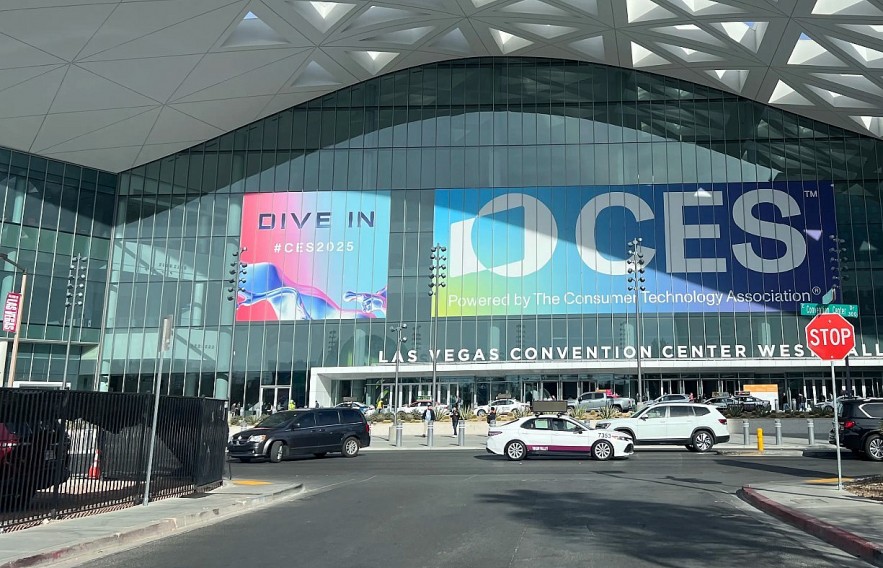
Consumer Electronics Show (CES) 2026, the world’s largest and most influential technology exhibition, officially kicks off on January 6 in Las Vegas. Organized by the Consumer Technology Association (CTA), the event once again brings together the global tech ecosystem, from industry giants and fast-growing startups to policymakers, investors, and international media.
Running from January 6 to January 9, CES 2026 spans multiple venues across the city, with the Las Vegas Convention Center as its central hub. As the first major technology event of the year, CES sets the tone for innovation trends that will shape consumer products, enterprise systems, and industrial technology throughout 2026 and beyond.
Why CES 2026 Matters
For nearly six decades, CES has been where the future is previewed. Many technologies that are now mainstream — smart TVs, voice assistants, connected cars, and wearables — were first introduced on the CES stage.
CES 2026 stands out because it reflects a maturing tech landscape. The focus is no longer just on eye-catching gadgets. Instead, companies are emphasizing real-world applications, scalable platforms, and technologies that are ready to move from demos to daily use.
With tens of thousands of attendees and thousands of exhibitors from over 150 countries, CES remains a critical meeting point for innovation, business strategy, and global collaboration.
Read more: Top 10 New Technology Trends for 2026 — AI, Automation, Robotics and More
Key Technology Trends at CES 2026
1. Artificial Intelligence Moves Into Everyday Life
Artificial intelligence is the defining theme of CES 2026. Unlike previous years, AI is no longer positioned as experimental or abstract. It is embedded directly into products and services consumers will use daily.
Expect to see AI powering personal devices, home appliances, healthcare tools, vehicles, and industrial systems. The emphasis is on practical AI — faster processing, on-device intelligence, improved privacy, and smoother user experiences.
2. Robotics and Physical AI Take Center Stage
Robotics has emerged as one of the most visually striking areas of CES 2026. From humanoid robots to logistics automation and home assistants, exhibitors are showcasing machines designed to operate safely and intelligently in physical environments.
These advances highlight the rise of physical AI, where perception, movement, and decision-making converge. Applications range from elder care and rehabilitation to manufacturing and warehouse operations.
3. Displays Enter a New Generation
Television and display technology remains a CES staple, and 2026 is no exception. This year’s show features next-generation display systems focused on improved brightness, color accuracy, and energy efficiency.
Manufacturers are pushing beyond traditional OLED and LED technologies, presenting new display architectures designed for immersive home entertainment, gaming, and professional use.
4. Smarter, More Predictive Homes
Smart home technology at CES 2026 is more integrated and less intrusive. Rather than controlling individual devices, new systems focus on holistic home intelligence — learning user habits, optimizing energy consumption, and improving security without constant manual input.
Edge computing plays a key role, allowing data to be processed locally for faster responses and better privacy protection.
5. Mobility, Automotive Tech, and Transportation
CES continues to grow as a major stage for automotive innovation. In 2026, the spotlight is on software-defined vehicles, in-car AI assistants, advanced driver-assistance systems, and smart mobility platforms.
Automakers and technology companies alike are presenting visions of transportation that are safer, more connected, and increasingly autonomous.
Major Players and Global Participation
CES 2026 features participation from many of the world’s most influential technology companies, alongside thousands of startups. Large corporations are using keynote stages to outline long-term strategies, while emerging companies leverage CES to gain visibility, attract partners, and enter global markets.
Beyond consumer brands, CES also draws strong representation from sectors such as healthcare, manufacturing, energy, agriculture, and smart cities — reinforcing its role as more than a consumer electronics show.
How CES 2026 Is Different From Previous Years
What sets CES 2026 apart is its emphasis on ecosystems over individual products. Companies are presenting complete solutions that connect hardware, software, and services into unified platforms.
There is also a noticeable shift from concept demos to near-market products. Many of the technologies on display are expected to reach consumers and businesses within the next 12 to 24 months.
Looking Ahead
As CES 2026 unfolds, it offers a clear message: technology is entering a phase where intelligence, automation, and connectivity are becoming invisible but essential. The innovations revealed in Las Vegas this January will influence how people live, work, and interact with technology throughout the coming decade.
CES 2026 is not just a showcase. It is a roadmap for where global technology is heading next.