The “Water-Powered Gas Stove” Scam Isn’t New - It’s Just Getting Smarter

 5 Smart Ways to Save Fuel as Gas Prices Keep Climbing 5 Smart Ways to Save Fuel as Gas Prices Keep Climbing |
 The California Anomaly: When $9 Gas Stops Feeling Impossible The California Anomaly: When $9 Gas Stops Feeling Impossible |
 Why Gas Prices Rise Fast, But Fall Slow? What is 'Rockets and Feathers'? Why Gas Prices Rise Fast, But Fall Slow? What is 'Rockets and Feathers'? |
 |
| Viral “Water-Powered Gas Stove” Videos Leave Many People Convinced |
Over the past few months, social media has been flooded with videos promoting so-called “water-powered stoves.” These clips claim you can cook using nothing but water—no gas, no electricity bills, just a simple device that turns water into fuel.
It sounds like a breakthrough. It isn’t.
What we’re seeing is an old scam, repackaged with better technology, sharper visuals, and a much wider reach.
Read more: Gas Price Scams Are Rising in the U.S. — From Fake Bills to “Water-Powered” Devices
What is the “water-powered stove” everyone is talking about?
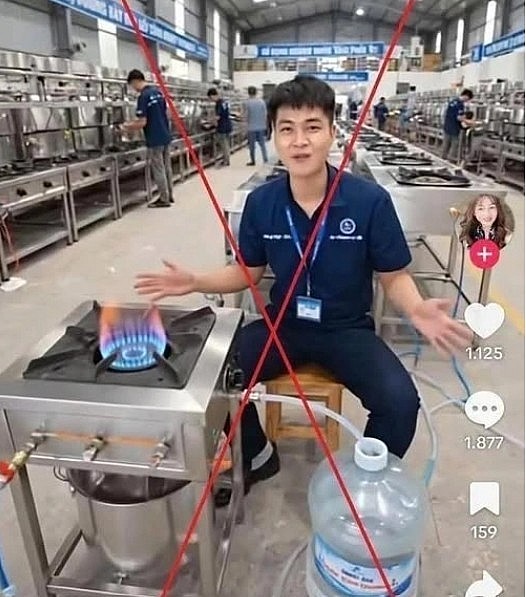
The trend first gained attention in countries like Vietnam, where viral videos show small tabletop stoves producing a steady flame after someone pours in water.
The demonstrations look convincing:
A container is filled with water
The device is switched on
A flame appears and burns like a gas stove
Some videos even show people cooking meals, claiming massive savings compared to LPG or natural gas.
Many viewers take it at face value. Some ask where to buy it. Others click on links attached to the videos.
That’s exactly what the scammers want.
Night vs Day Fueling: Are You Losing Money Without Knowing It?
The truth: it breaks basic science
The idea of a stove running directly on water goes against fundamental chemistry.
Water (H₂O) is already the result of burning hydrogen. It doesn’t contain usable fuel in its current form. To get energy from it, you would need to split it into hydrogen and oxygen using electrolysis—a process that requires a significant amount of electricity.
And here’s the key point:
You cannot get more energy out than you put in.
Even real hydrogen-based cooking systems:
- Need external power
- Are expensive and complex
- Are not designed for everyday low-cost use
So a cheap, plug-and-play “water-only” stove is simply not realistic.
 |
| “Water-Powered Gas Stove”: A New Scam That’s Tricking Many People |
Why the videos look so real
What makes this wave of scams different is how convincing the content has become.
Many of these clips are:
- AI-generated or heavily edited
- Designed with realistic lighting and flame effects
- Paired with confident voiceovers or subtitles
In the past, scams were easier to spot because they looked amateurish. Now, they can look like professional product demos.
Some even include fake comments and engagement to build trust.
That’s why people hesitate. Not because the idea makes sense—but because the video looks real enough.
What actually happens when you click
In most cases, there is no real product.
The links attached to these videos typically lead to:
- Affiliate marketing pages
- Unrelated cheap products
- Data-harvesting websites
- Or worse, phishing scams
The “water-powered stove” is just bait.
Even if a product is listed, it often turns out to be:
- A basic camping stove
- A low-quality gadget with no real function
- Something completely different from what was advertised
This scam has been around for decades
The concept behind this trend is not new.
For years, scammers have promoted variations of the same idea:
- Devices that turn water into fuel
- “Fuel-saving” gadgets that promise unrealistic efficiency
- Hidden technologies supposedly suppressed by big energy companies
These claims resurface again and again—especially during times of economic pressure.
The difference now is speed.
What used to spread slowly through word of mouth can now go viral in hours.
Why people are more likely to believe it now
It’s easy to assume people fall for these scams because they don’t understand science. That’s only part of the story.
There are three stronger factors at play:
1. Rising energy costs
When gas prices increase, people actively look for alternatives. A solution that promises lower costs becomes very attractive.
2. Emotional decision-making
The idea of saving money on a daily necessity like cooking creates urgency. That urgency reduces skepticism.
3. Social media dynamics
When a video gets thousands of likes and shares, it feels credible. People assume someone else has already verified it.
In reality, most viewers are reacting the same way—quickly and without checking.
New forms of gas-related scams are spreading globally
The “water stove” is just one example.
Around the world, similar scams are appearing in different forms:
- Fake LPG booking apps offering discounted gas cylinders
- Fraudulent “priority delivery” services during shortages
- Impersonation calls from fake gas company staff
- QR code scams asking for advance payments
These schemes all follow the same pattern: exploit urgency, promise savings, and push users to act quickly.
How to tell if a “water-powered stove” is fake
You don’t need technical expertise to spot the warning signs.
Look for these red flags:
- Claims that contradict basic science
- No explanation of how the technology works
- No credible manufacturer or certification
- Overly polished videos with no real-world verification
- Links that lead to unrelated or suspicious pages
If a product claims to replace fuel with water alone, it’s not a breakthrough—it’s a scam.
How to protect yourself online
A few simple habits can help you avoid falling into these traps:
- Pause before clicking: curiosity is what scammers rely on
- Verify the source: check official websites or trusted news outlets
- Avoid impulse purchases: especially from social media links
- Be skeptical of “miracle” solutions: especially in energy, health, or finance
These steps may sound basic, but they are often enough.
The bigger issue: how we consume information
The real concern goes beyond one fake product.
It’s about how easily misinformation spreads—and how quickly people accept it.
AI has made it easier than ever to create content that looks real. At the same time, social media encourages fast reactions, not careful thinking.
That combination is powerful.
And risky.
Final takeaway
The “water-powered stove” isn’t a new invention. It’s a recycled idea dressed up with modern technology.
The science hasn’t changed. But the way scams are presented has.
As energy prices continue to fluctuate, similar trends will keep appearing—each one more convincing than the last.
The safest approach is simple:
If something promises to break the laws of physics and save you money at the same time, it’s probably not innovation.
It’s manipulation.