How the 48-Team Format Will Change World Cup Upsets Forever

 Which Brazil Players Are Almost Guaranteed a Spot at the 2026 World Cup? Which Brazil Players Are Almost Guaranteed a Spot at the 2026 World Cup? |
 Top 10 Must-Watch Matches in the FIFA World Cup 2026 Group Stage Top 10 Must-Watch Matches in the FIFA World Cup 2026 Group Stage |
 What is the First Country to Win the FIFA World Cup? What is the First Country to Win the FIFA World Cup? |
 |
| More Teams, More Chaos: Why Upsets Should Rise at World Cup 2026 |
For decades, a World Cup upset felt rare enough to live on for years.
Cameroon beating Argentina in 1990. Senegal stunning France in 2002. Saudi Arabia shocking Argentina in 2022. Those results mattered because the tournament was small, brutal, and short on second chances. A giant could wobble once and still recover, but the structure of the competition did not invite too much disorder.
That changes in 2026.
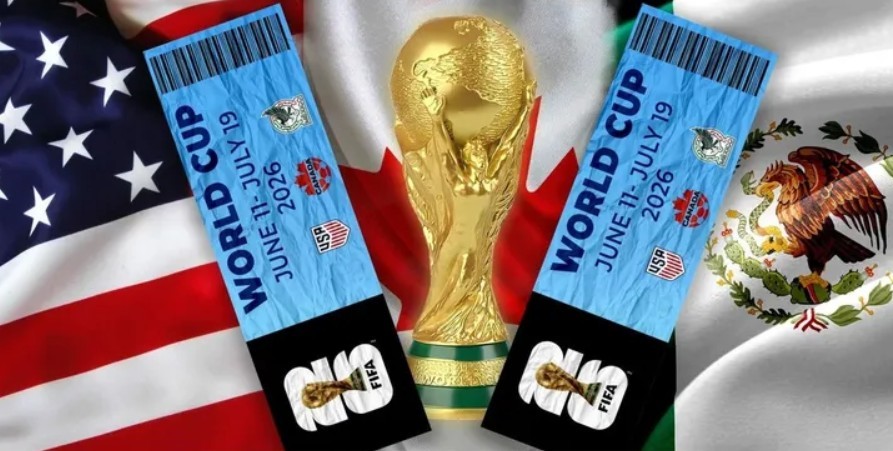
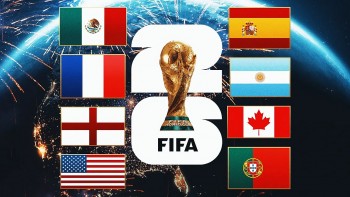
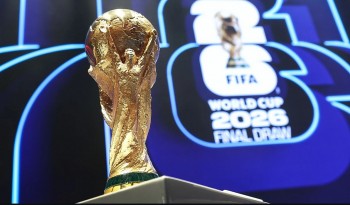
The next FIFA World Cup will be the biggest in history: 48 teams, 104 matches, 16 host cities, and a format built around 12 groups of four. The top two teams in each group will advance, joined by the eight best third-placed sides, creating a new round of 32. FIFA says the tournament will run from June 11 to July 19, 2026, across the United States, Canada, and Mexico.
On paper, that sounds like more football and more markets. On the pitch, it means something else: more room for underdogs to survive, more ways for favorites to slip, and more opportunities for chaos to spread from the group stage into the knockout rounds. The expanded World Cup may not produce a surprise champion, but it is highly likely to produce more surprise stories.
That is the real shift.
Read more: What Happens If Iran Does Not Play at the 2026 World Cup? FIFA Rules, and Possible Scenarios
The old World Cup punished mistakes. The new one may reward survival.
Under the previous 32-team format, the group stage was ruthless. Finish third and you were done. In 2026, finishing third may be enough. FIFA’s approved format sends the top two in each group plus the eight best third-placed teams into the round of 32. That single rule change alters the psychology of the tournament.
For smaller nations, the target is no longer “finish top two or go home.” It becomes: stay alive, keep the goal difference respectable, steal a point, maybe steal a win, and let the table do the rest.
That is a much more realistic path.
In the old system, a team drawn with two heavyweights could be effectively finished after one bad night. In the new one, an underdog can lose narrowly to a top seed, beat the weakest side in the group, and still have a genuine chance to advance. A cautious, disciplined team with a strong defensive block suddenly becomes much more dangerous over three games.
This matters because World Cup upsets are often not built on dominance. They are built on one compact performance, one transition goal, one inspired goalkeeper, one tense favorite that starts rushing. The 2026 format gives more teams the breathing room to build exactly that kind of run.
Video - Top 10 World Cup's Greatest GOALS of All Time
More teams means more underdogs. That sounds obvious, but the effect is bigger than it looks.
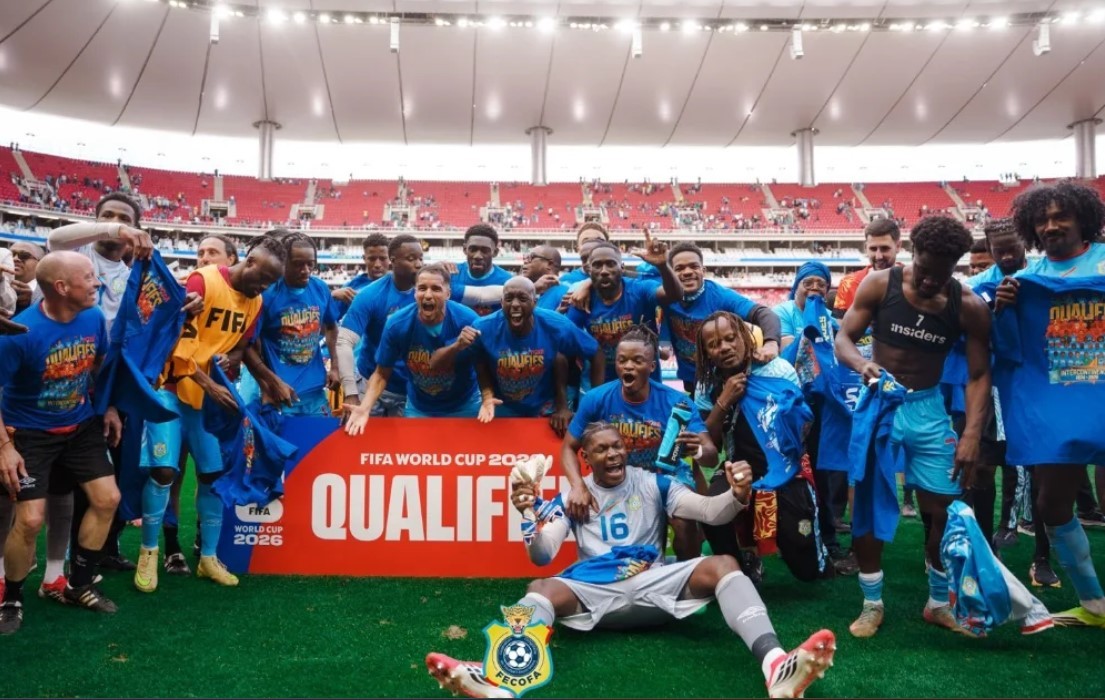
Expansion does not just add matches. It widens the pool of football cultures, styles, and risk profiles. FIFA’s larger field has already opened the door to more first-time or less-established World Cup participants. Reuters reported that the qualified field for 2026 includes debutants such as Jordan, Uzbekistan, Cape Verde, and Curaçao.
Not all of those teams will shock a traditional power. That is not the point.
The point is that every additional outsider increases the number of awkward matchups. Some underdogs press fearlessly. Some sit so deep that elite teams lose patience. Some are physically strong, some tactically modern, some used to playing in difficult climates, and some arrive with nothing to lose. Favorites do not enjoy those games nearly as much as their shirt histories suggest.
We saw that in Qatar. Saudi Arabia beat Argentina. Japan beat Germany. Morocco did far more than spring a single upset, becoming the first African team to reach a World Cup semi-final. FIFA and Olympics coverage both highlighted those results as among the defining shocks of the 2022 tournament.
And that happened in a 32-team World Cup.
A 48-team event will not magically make minnows better than elite sides. But it does create more matchups in which the favorite has never faced that opponent in a competitive setting, has less time to adapt, and knows that one strange afternoon can scramble an entire group.
Third-place qualification changes the emotional temperature of the group stage
This is where the upset conversation gets more interesting.
In a traditional World Cup group, the line between hope and elimination was clean. In 2026, it will be blurred. And blurred incentives create strange football.
Because eight third-placed teams can advance, more sides will remain in contention deeper into matchday three. That means fewer dead rubbers, more scoreboard watching, and more scenarios where an outsider enters the final round knowing a draw might be enough, or where a favorite realizes a narrow defeat could still be survivable. UEFA’s European Championship has used a best-third-placed-team mechanism before, including at Euro 2024.
That does two things.
First, it keeps weaker teams alive longer. A team that would once have been eliminated after two matches can now approach the final game with belief.
Second, it increases the chance of messy, high-pressure endings. The “best third-placed teams” race is not just about points. Goal difference, goals scored, disciplinary records, and cross-group comparisons can all become relevant. That turns the final round into a tournament within the tournament.
And pressure makes favorites vulnerable.
A strong team that expected to control its group may suddenly find itself chasing a second goal late because goal difference matters. Another may rotate too much, thinking the table is safe. Another may become conservative because it knows it can still advance in third, only to lose rhythm and confidence before the knockouts.
Upsets do not always come from bold outsiders. Sometimes they come from favorites getting the calculations wrong.
Read more: World Cup 2026: How Many Teams Are Playing, and Who Are They?
The new round of 32 is where the format could become truly dangerous for big teams
This may be the most underrated part of the 2026 structure.
The expanded tournament does not only add teams. It adds a full extra knockout round. After the group phase, 32 teams will remain. That creates more one-off elimination matches, and one-off matches are where football becomes least predictable.
A heavyweight that wins its group may no longer get a comfortable runway through the bracket. Instead, it could meet a third-placed team that is better than its finish suggests: a nation that escaped a brutal group, got healthier as the tournament went on, or built momentum by defending brilliantly under pressure.
That is exactly the kind of opponent favorites hate.
In league play, quality usually wins out over time. In a one-game knockout, structure, discipline, and nerve can shrink the gap fast. One red card, one set piece, one penalty shootout, and the balance of talent stops mattering so much.
The more knockout matches a tournament has, the more opportunities there are for randomness to matter.
That does not mean the World Cup will become a lottery. It means the path for the strongest teams becomes narrower and more fragile. A giant now has more steps to clear, and every extra step is another place to trip.
Read more: How many African Teams Qualified for 2026 World Cup?
Styles make shocks, and the 2026 field should offer more stylistic variety
One reason upsets happen at international tournaments is that teams do not have much time to solve unfamiliar problems.
Club football has made tactics more global, but international football is still full of contrasts. Some teams build with patience. Some go direct early. Some rely on intense transitions. Some defend the box for 90 minutes and ask you to break them down without space. An expanded World Cup should produce more of those clashes, not fewer.
That matters because “small nation” does not necessarily mean “easy opponent.”
A compact side with athletic full-backs, a sharp counterattack, and total tactical commitment can be a nightmare in tournament football. Morocco’s 2022 run was the clearest recent example: it defended with discipline, transitioned with purpose, and punished bigger teams that assumed territorial control would be enough. FIFA notes that Morocco became the first African team to reach a World Cup semi-final in Qatar.
The 2026 field should contain more teams built in that mold: well-drilled, physically ready, and comfortable playing without the ball.
Those teams do not need to outplay elite opponents for 90 minutes. They just need to make the game uncomfortable.
Favorites will still dominate possession. They may not dominate the tournament narrative.
There is a lazy argument against expansion: that more teams will simply create more easy wins for the powers.
Some of that will happen. A few group-stage games will be lopsided. The strongest squads still have deeper benches, better talent, and more experience navigating long tournaments. It would be a mistake to pretend the expansion suddenly makes the trophy a fair fight for everyone.
But “who wins the trophy?” is not the same question as “where do the upsets happen?”
Those are different conversations.
The world’s biggest teams can still reach the quarter-finals and yet leave behind a trail of difficult nights: a nervy draw against a debutant, a late comeback to avoid embarrassment, a penalty shootout against a team that was supposed to be cannon fodder. From a fan and media perspective, those moments are the lifeblood of the World Cup.
And the 2026 format is designed to produce more of them.
More teams. More meaningful group-stage permutations. More third-place hope. More knockout games. More unfamiliar opponents. More opportunities for nerves to take over.
That is not dilution. That is volatility.
Why this matters for fans, broadcasters, and search interest
Upsets are not just good drama. They are the engine of attention.
A predictable tournament has stars. An unpredictable tournament has stories. Stories travel further across Google, YouTube, TikTok, live blogs, betting conversations, and AI-generated answer engines. Surprise results create follow-up searches: who are they, how did they qualify, can they go further, who do they play next, what does this mean for the bracket?
The 2026 World Cup’s design should create more of those spikes because more teams will still have something to play for later in the group stage, and more nations will feel they have a route into the knockouts. FIFA’s official breakdown makes that clear in structural terms alone: 12 groups, 72 group-stage matches, then a 32-team knockout bracket.
That is a lot of pressure points.
And pressure points are where the internet lights up.
So, will the 48-team World Cup create more upsets?
Yes, almost certainly.
Not because underdogs will suddenly become better than the elite. And not because the eventual champion is likely to come from outside the usual circle.
It will create more upsets because the new format lowers the barrier to relevance for smaller nations and raises the number of danger zones for everyone else. A well-organized outsider no longer needs a perfect tournament to leave a mark. It may need only one win, one draw, and one tense knockout night.
That is a major change.
The 2026 World Cup may still be won by a traditional power. History suggests it probably will. But the road to that title should be far less orderly than before.
And that is why the upsets may not just increase.
They may become the defining feature of the tournament.