Positioning Flights: The Advanced Strategy Americans Use to Slash International Airfare

Positioning Flights: How Americans Cut International Airfare by Hundreds
For many Americans, international airfare feels stubbornly expensive—especially on long-haul routes to Asia or Europe. But seasoned travelers, flight deal analysts, and travel journalists rely on one advanced tactic that consistently unlocks dramatically lower prices: the positioning flight.
It takes more planning than booking a single ticket. But when done correctly, it can cut international airfare by hundreds of dollars—sometimes nearly in half.
 |
| The Hub Advantage |
What Is a Positioning Flight?
A positioning flight means splitting your journey into two separate tickets:
-
A cheap domestic flight from your home airport to a major international hub
-
A separate long-haul international flight departing from that hub
Instead of flying internationally from your hometown, you “position” yourself where airfare competition is fiercest.
A real-world example
-
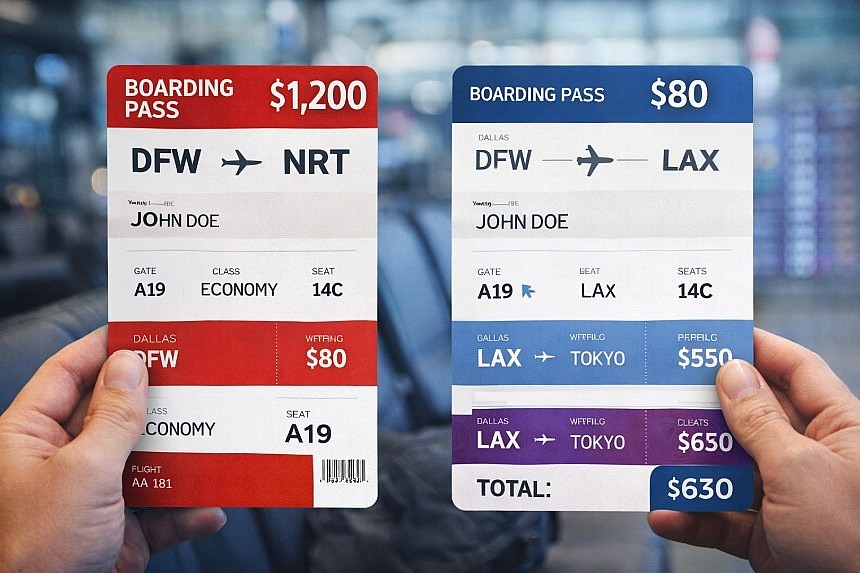
Dallas → Tokyo (single ticket): $1,200
-
Dallas → Los Angeles: $80
-
Los Angeles → Tokyo: $550
-
Total cost: ~$630
That’s nearly a 50% savings—without changing your destination.
Why Positioning Flights Work So Well
Major U.S. hubs like Los Angeles, New York, San Francisco, Chicago, and Miami have:
-
More airlines competing on the same routes
-
Higher flight frequency
-
Greater pricing pressure
Airlines aggressively price long-haul routes from these hubs. Travelers departing from smaller airports rarely see the same deals. Positioning flights allow you to tap into hub-level pricing without living near one.
This strategy works especially well for:
-
U.S. → Asia
-
U.S. → Europe
-
U.S. → Middle East
Read more:
- Don’t Skip Long Layovers: A Smart Way to Save on International Flights
- Cheap Flights Aren’t Gone - Americans Are Still Finding Them in 10 Tips
- Top 10 Best Websites to Book Cheap Flights in 2026
- Which is The Cheapest Place to Fly to From Each State in the US?
How to Use Positioning Flights the Right Way
This is where many travelers go wrong. The savings are real—but only if you manage the risks properly.
1. Book two completely separate tickets
Each flight is its own reservation. Airlines are not responsible if a delay on the first ticket causes you to miss the second.
2. Build in buffer time—seriously
For international trips, experienced travelers recommend at least one overnight stay in the hub city. This protects you from:
-
Weather delays
-
Mechanical issues
-
Missed connections
If you’re determined to fly same-day, leave a very long buffer and understand the risk.
3. Travel light if possible
Checked bags usually won’t transfer between separate tickets. Carry-on-only travel makes positioning flights much smoother.
4. Consider travel insurance
If the savings are substantial, insurance can help cover disruptions, missed departures, or unexpected overnight stays.
 |
| The Split Ticket Shock |
When Positioning Flights Make Sense—and When They Don’t
They’re a great option if:
-
You’re flying long-haul internationally
-
You want maximum savings
-
Your schedule allows flexibility
They’re not ideal if:
-
You have strict arrival deadlines
-
You’re traveling with small children
-
You’re uncomfortable managing separate bookings
Positioning flights reward planners—not last-minute travelers.
The Bottom Line
Positioning flights aren’t a beginner tactic. But for Americans willing to plan carefully, they remain one of the most reliable ways to beat high international airfare in 2026.
If a nonstop ticket looks outrageously priced, don’t assume that’s the market reality. Sometimes the cheapest way across the world starts with a short hop in the opposite direction.