Why U.S. Students Are Studying Abroad: Trends, Destinations, And Majors

 |
| Why More U.S. Students Are Studying Abroad |
In an increasingly globalized world, studying abroad has become a defining experience for many U.S. college students. While American students still study abroad at lower rates than peers in some other nations, recent data shows a notable increase in global mobility, diverse destinations, and evolving motivations linked to careers, cultural experiences, and academic opportunities.
Growth and Context
According to the latest Open Doors 2025 Report from the Institute of International Education (IIE), the number of U.S. students studying abroad for academic credit rose to 298,180 in the 2023/24 academic year, representing a ~6% growth over the prior year. This figure includes short-term summer, semester, and academic-year programs and reflects a rebound following pandemic disruptions. Europe remains the dominant global region for study abroad participation.
In total, more than 444,000 American students participated in global education experiences when including non-credit internships, volunteer programs, research stays, and online global learning.
Despite this growth, study abroad still represents a minority experience relative to overall U.S. undergraduate enrollment. National analyses suggest that less than 10% of U.S. college students study abroad during their academic careers, highlighting both opportunities and barriers in access.
Read more: U.S. Students Studying Abroad: Top 10 Destination Countries and Why
Where Do U.S. Students Go?
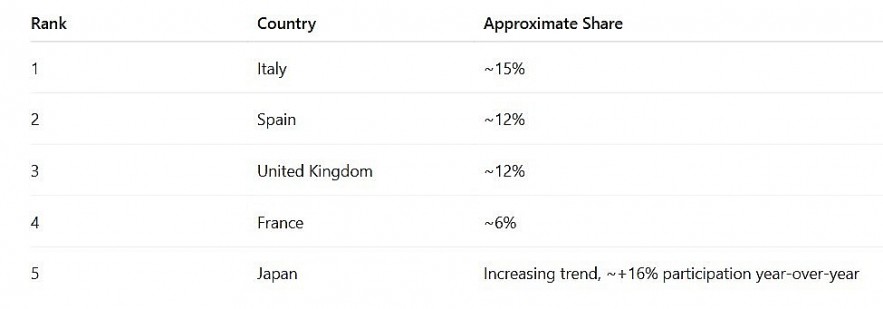
Top Destinations — 2023/24 Academic Year
 |
| Where Do U.S. Students Go |
Europe continues to be the favored region, drawing nearly two-thirds (≈64%) of U.S. study abroad participants. Italy’s enduring popularity stems from its deep academic partnerships with U.S. institutions, well-established American programs, vibrant cultural environments, and a wide selection of English-taught courses.
Japan is also emerging as a fast-growing destination, with reports indicating a strong year-over-year increase in interest for academic and cultural immersion programs.
 |
| Countries With Most Students Studying Abroad |
Fields of Study Abroad
U.S. students tend to seek academic experiences that support both academic and career goals.
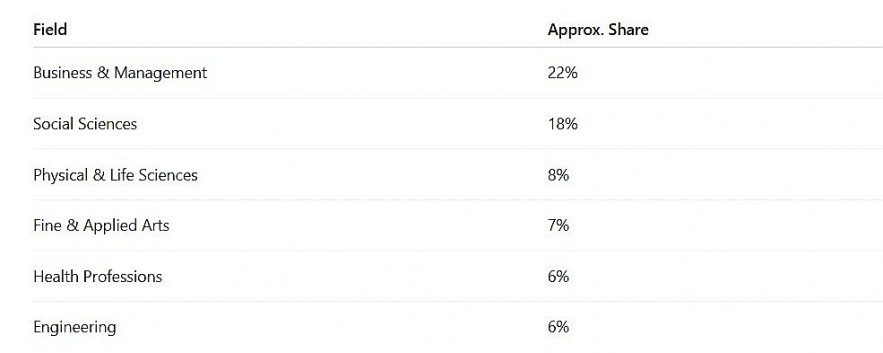
Leading academic fields among U.S. study abroad students:
 |
| Fields of Study Abroad |
These figures show that students increasingly choose study abroad locations and programs that align with career-oriented interests and interdisciplinary exploration.
Motivations: Career, Culture, or Escape?
Contrary to misconceptions that study abroad is mostly a “gap year escape”, research indicates that American students’ motivations tend to fall into four broad categories:
1. Career Advantage
Global experience builds skills coveted by employers: cultural literacy, language ability, adaptability, and international networks.
2. Personal Growth
Exposure to new societies fosters independence, confidence, and global awareness.
3. Academic Enrichment
Students pursue specialized coursework, research collaborations, or experiential learning unavailable at home institutions.
4. Cultural & Lifestyle Experience
Many seek opportunities to expand their horizons, including language immersion, travel, and life experiences beyond traditional classroom settings.
Although some students may wish to escape stress or cost pressures at home, most study abroad terms—including semester and summer sessions—focus on credit-bearing academic engagement rather than long-term relocation or immediate income opportunities. Visa regulations in host countries typically limit full-time employment during study.
Full Degrees Abroad vs Study Abroad Programs
Short-Term Programs
-
Typically last from one session to one academic year
-
Credits usually transfer back to U.S. institutions
-
Popular for liberal arts, business, and language study
Full Degree Programs Abroad
A smaller but growing group pursues undergraduate or graduate degrees entirely overseas. These students often cite lower costs, post-graduation work prospects, and global career positioning as key drivers. Although detailed up-to-date figures for U.S. full-degree enrollment abroad are less centralized, estimates suggest tens of thousands of U.S. students are enrolling in full degree paths internationally.
Barriers to Wider Participation
Despite the appeal of study abroad, significant barriers remain:
-
Cost and financial constraints
-
Academic credit transfer challenges
-
Visa and immigration policy uncertainty
-
Unequal access for under-represented students
National policy advocates argue for strengthened funding and program diversity to broaden participation and address equity gaps.
What’s Next for U.S. Study Abroad?
As the academic landscape evolves post-pandemic, trends suggest:
-
Continued interest in Europe, Asia, and emerging destinations
-
Broader integration of virtual global learning options
-
Increasing student emphasis on career alignment and experiential learning
Programs that combine academic rigor with employability outcomes will likely attract growing student interest.
FAQs
1. How many U.S. students study abroad?
About 298,180 studied abroad for academic credit in 2023/24.
2. What are the most popular destinations?
Italy, Spain, the U.K., France, and Japan are among the top choices.
3. Do most students work while abroad?
No—work opportunities are usually limited due to visa regulations.
4. Does study abroad improve job prospects?
Yes, international experience can strengthen resumes and global competencies.
5. Is studying abroad expensive?
Costs vary widely by country and program duration, and financial aid availability differs.