Who Is Jonathan Ross? The Engineer Behind Groq—and What the Nvidia $20 Billion Deal Means for His Fortune



It is about Jonathan Ross, a low-profile but highly influential Silicon Valley engineer whose work has shaped modern AI hardware—and whose company, Groq, has become one of the most talked-about names in AI inference.
In late 2025, Ross returned to the spotlight after reports of a major Nvidia–Groq deal, widely described in headlines as a “$20 billion agreement.” While the structure of the deal is more complex than a simple acquisition, it has raised a key question: how rich is Jonathan Ross, and why does his work matter so much right now?
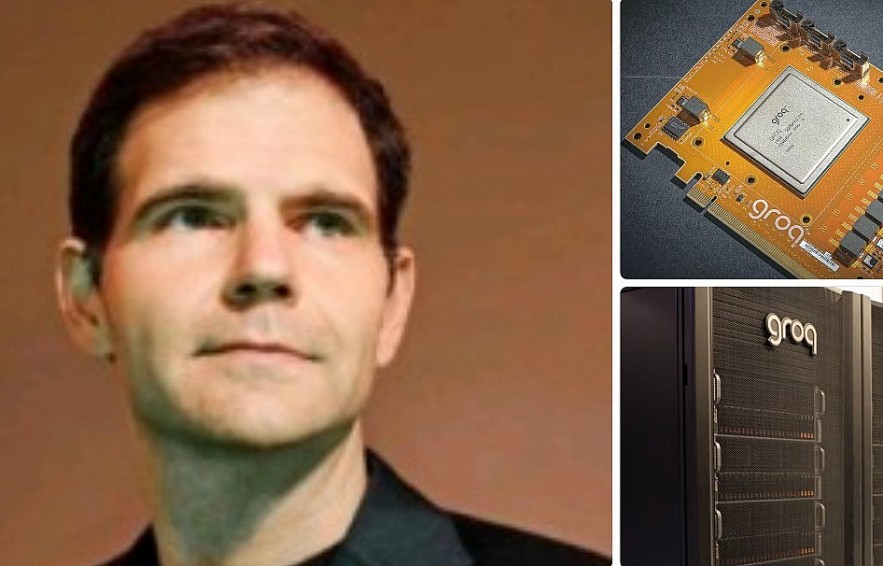 |
| How rich is the Groq founder after $20 billion Nvidia deal? |
Jonathan Ross: background and education
Jonathan Ross is known first and foremost as an engineer. Unlike many tech founders, he has never cultivated a public persona, and details about his early life remain scarce in open sources. What is clear is that Ross built his reputation inside one of the most demanding engineering environments in the world: Google.
Ross was part of the team that helped originate Google’s Tensor Processing Unit (TPU) program, a custom AI accelerator initiative that began as an internal experiment and later became a cornerstone of Google’s machine-learning infrastructure. His work focused on designing chips optimized not for general computing, but for running neural networks efficiently at scale.
Publicly available information about Ross’s formal education is limited, and he has not highlighted degrees or institutions in interviews. In Silicon Valley terms, his credibility comes from execution rather than credentials.
From Google TPU to founding Groq
Ross left Google in 2016 to found Groq, driven by a belief that AI computing needed a radical rethink. At the time, most of the industry was focused on training ever-larger models. Ross saw a different bottleneck: inference, the process of running trained models to generate outputs in real time.
Groq was built around a proprietary processor architecture often described as an LPU (Language Processing Unit) or Tensor Streaming Processor. The philosophy was simple but bold: eliminate unpredictability. While GPUs excel at parallelism, they can suffer from latency spikes. Groq’s chips aim for deterministic execution, delivering extremely fast and consistent response times.
This design made Groq especially attractive for applications such as:
-
Large language model chatbots
-
Real-time AI assistants
-
Financial, industrial, and defense systems where latency matters
Over time, Groq expanded from chips into GroqCloud, offering customers direct access to its inference hardware without owning physical servers.
Funding, valuation, and market position
Groq remained relatively quiet until the AI boom reignited interest in custom silicon. As demand for inference exploded, the company attracted major investment and strategic partnerships.
By 2025, Groq was reported to be valued at approximately $6.9 billion, placing it among the most valuable private AI hardware startups in the world. The company also announced large-scale deployment plans in the Middle East and partnerships aimed at distributing inference capacity globally.
Despite competing with giants like Nvidia, Groq carved out a niche by focusing narrowly on speed, predictability, and efficiency—rather than trying to replace GPUs across all workloads.
Family and personal life
Jonathan Ross keeps his private life out of the public eye. There is no confirmed, reliable public information about his wife or children, and Ross has never used family details as part of his public narrative.
This discretion is consistent with his overall profile: Ross rarely gives interviews, avoids social media attention, and allows his technology to speak for itself.
The Nvidia–Groq $20 billion deal explained
In December 2025, reports emerged that Nvidia had entered into a non-exclusive licensing agreement with Groq. Under the deal:
-
Nvidia licenses Groq’s inference technology
-
Jonathan Ross and other senior Groq leaders join Nvidia
-
Groq continues to operate as an independent company
-
A new CEO, Simon Edwards, takes over day-to-day leadership at Groq
Some media outlets cited a $20 billion figure, fueling speculation that Nvidia had acquired Groq outright. However, publicly available statements describe the arrangement as licensing plus talent acquisition, not a completed acquisition.
In practical terms, Nvidia gains access to Groq’s architecture and the engineer who designed it, while avoiding the regulatory and strategic risks of buying the entire company.
How rich is Jonathan Ross?
This is the question most readers want answered—and the hardest to answer precisely.
What we know
-
Groq is a private company, so ownership stakes are not public
-
Its most cited valuation is around $6.9 billion
-
The Nvidia deal’s financial terms have not been disclosed
What can be reasonably inferred
As Groq’s founder, Ross almost certainly owns a significant equity stake, even after dilution from multiple funding rounds. If his stake is in the low double-digit percentage range, his paper wealth could plausibly be in the hundreds of millions of dollars.
However:
-
The Nvidia deal does not appear to be a full cash buyout
-
Any compensation Ross receives from Nvidia may include salary, stock grants, or long-term incentives rather than a single payout
Bottom line: Jonathan Ross is almost certainly very wealthy on paper, but there is no verified public figure for his net worth, and headlines suggesting a personal $20 billion windfall are misleading.
Why Jonathan Ross matters in AI’s next phase
Training large AI models has been the glamour segment of AI. Inference is where the money will be made.
Every AI-powered product—search engines, copilots, customer service bots, autonomous systems—depends on inference being fast, cheap, and reliable. That is the exact problem Ross has spent nearly a decade trying to solve.
By bringing Ross into Nvidia’s orbit, the world’s dominant AI chipmaker signals that inference is now a strategic priority, not an afterthought.
FAQs
Is Jonathan Ross the same person as the British TV host?
No. They share a name, but they are completely different individuals.
Did Nvidia buy Groq for $20 billion?
No confirmed acquisition has been announced. The deal is best described as licensing plus executive hiring.
Is Groq still operating as a company?
Yes. Groq continues to operate independently with new leadership.
What is Jonathan Ross’s net worth?
There is no public number. Estimates based on valuation are speculative.
Why is Groq important in AI?
Groq focuses on ultra-fast, predictable AI inference, a critical bottleneck for real-world AI applications.