Who Replaces Ruben Amorim at Manchester United? Inside the Shortlist

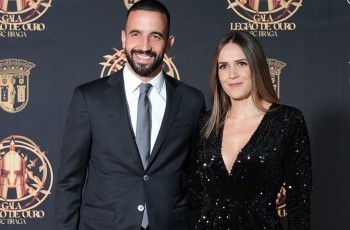 Who Is Maria João Diogo, Wife of Rúben Amorim: Early Life, Love Story, Career, and Net Worth Who Is Maria João Diogo, Wife of Rúben Amorim: Early Life, Love Story, Career, and Net Worth Maria João Diogo is more than just the wife of Rúben Amorim, the celebrated football manager currently leading Manchester United. She is a woman of ... |
 First Match Rúben Amorim as Manchester United: Fan Expectations, Watch and More First Match Rúben Amorim as Manchester United: Fan Expectations, Watch and More Rúben Amorim’s debut as Manchester United’s manager is highly anticipated by fans, with his first match scheduled against Ipswich Town on November 24, 2024. |
 |
| Who Replaces Ruben Amorim at Manchester United |
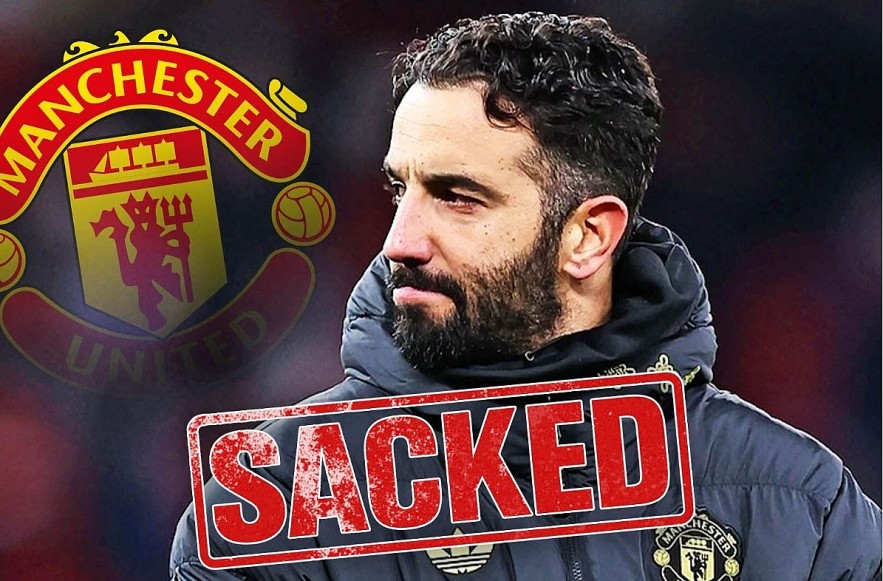
Manchester United have dismissed Ruben Amorim after 14 months in charge, ending an era that promised a modern “head coach” model but collapsed under poor results and internal friction. The club confirmed his departure on Monday morning, with Darren Fletcher set to take the team in the immediate term.
The next appointment will not simply shape tactics on the pitch. It will reveal whether the club have finally learned how modern elite football is supposed to be run.
Amorim arrived with a reputation as one of Europe’s brightest minds: tactically bold, articulate, and successful in Portugal. Yet his 14 months at Old Trafford unravelled quickly. Performances were inconsistent, results failed to justify patience, and crucially, trust between the coach and the hierarchy eroded. Sources close to the club point to disagreements over squad construction, tactical flexibility, and decision-making authority. When alignment disappears, failure follows.
That context is vital. United are not just replacing a coach. They are redefining the job itself.
Read more: Who Is Maria João Diogo, Wife of Rúben Amorim: Early Life, Love Story, Career, and Net Worth
The real lesson from Amorim’s failure
For too long, Manchester United have chased the idea of a saviour. Each new appointment is framed as “the one” who will restore identity, dominance, and belief. Amorim’s exit should finally kill that myth.
The modern United model, shaped increasingly by sporting executives rather than a single dominant manager, requires a very specific profile. The next coach must be comfortable as a head coach, not a traditional all-powerful manager. Recruitment, long-term squad planning, and structural decisions will sit above him. Accepting that is not a weakness. It is the job.
Amorim struggled precisely because he wanted more control than the system was designed to give. His successor cannot afford the same mistake.
Read more: Top 10 things to know about Ruben Amorim’s first match as Manchester United Manager
The front-runner: Oliver Glasner
Among the names circulating, Oliver Glasner stands out as the most coherent fit.
Glasner has built his reputation on clarity rather than charisma. His teams are compact, disciplined, and tactically intelligent. He improves players rather than redesigning squads from scratch. Perhaps most importantly for United’s hierarchy, he is known as a coach who works with a club structure, not against it.
That matters at Old Trafford. After years of internal friction, the board will prioritise stability and cooperation over star power. Glasner offers authority without ego, organisation without dogma. He may not be the most glamorous name, but right now, Manchester United need substance more than theatre.
The project options: Maresca and McKenna
If United decide to chase upside rather than immediate security, two profiles emerge.
Enzo Maresca represents the modern positional-school coach. His ideas are sophisticated, his teams structured, and his philosophy aligned with elite European trends. The risk is timing. United are a club in need of short-term recovery as much as long-term vision. Maresca’s approach may demand patience that Old Trafford historically struggles to provide.
Then there is Kieran McKenna, a familiar name within the club’s ecosystem. Intelligent, progressive, and respected for his coaching detail, McKenna embodies the “next-generation” manager. Appointing him would be a statement of belief in process and development. It would also be a gamble. United have paid heavily in recent years for confusing potential with readiness.
The headline names and the temptation of noise
Inevitably, bigger reputations are mentioned. Julian Nagelsmann appeals to those craving tactical innovation and prestige. Gareth Southgate would bring authority, calm, and man-management, but also controversy and stylistic debate. Marco Silva offers Premier League experience and reliability, though questions remain about his ceiling at an elite club.
These options would dominate headlines and soothe nerves in the short term. But United’s recent past is littered with “statement appointments” that failed because the structure beneath them was unstable.
What the next coach must deliver
Whoever takes the job must satisfy three non-negotiables.
First, tactical flexibility. United’s squad is unbalanced and injury-prone. Rigid systems collapse under that reality.
Second, political intelligence. The next coach must understand where his authority begins and ends, and work inside it rather than fighting it.
Third, immediate credibility. The dressing room has lived through too many resets. The next voice must command respect from day one.
A defining choice
This appointment will tell us whether Manchester United are finally evolving from a club obsessed with personalities into one committed to structure. The smartest move may not excite social media or dominate talk shows. It may simply work.
If United choose a coach like Glasner, they are choosing coherence. If they chase a higher-risk visionary, they are choosing belief in patience they have rarely shown.
Either way, this is not about replacing Ruben Amorim. It is about deciding what Manchester United want to be next.