Renee Nicole Good Shooting: Why the ICE Agent Remains Unnamed?

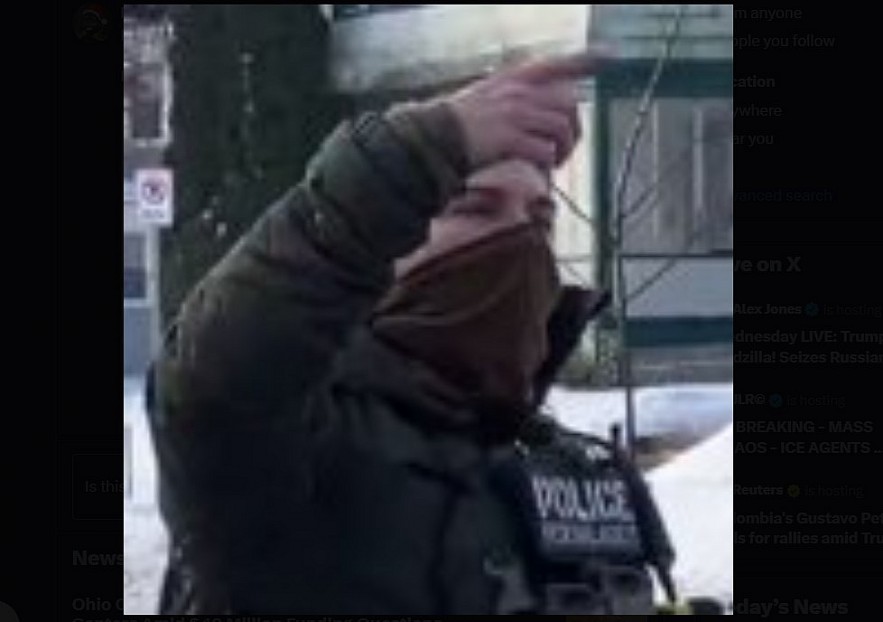 |
| Social Media Circulates Alleged Image of ICE Agent in Minneapolis Shooting |
The fatal shooting of Renee Nicole Good by an Immigration and Customs Enforcement agent has sparked outrage across the country — and one persistent, unresolved question:
Why does the ICE agent who fired the deadly shots remain unnamed?
The answer is not procedural confusion or temporary secrecy. It is the result of a deliberate federal system that treats ICE agents differently from local police, even in cases involving civilian deaths. That system is also why the same agent’s name was withheld in a prior, documented case where he himself was the victim of serious violence.
Read more: Renee Nicole Good Shooting: When Must an ICE Agent Be Named?
A key fact often missed: anonymity is the default
ICE agents operate under the Department of Homeland Security, not under city or state governments. That distinction matters.
Unlike local police departments, DHS:
-
Is not subject to state public-records laws
-
Faces no statutory deadline to release officer identities
-
Has no civilian oversight board with subpoena power
There is no federal law requiring DHS to publicly identify an agent after a shooting — even a fatal one. As a result, anonymity is standard practice unless disclosure is legally forced.
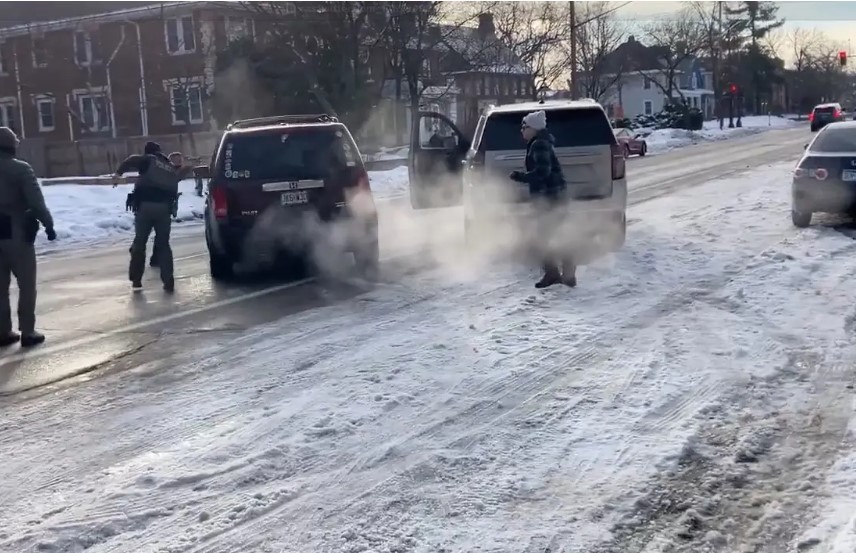
Video - This angle clearly shows the ICE agent being hit and dragged on by the car:
The prior incident that explains DHS’s position
Reporting by the New York Post revealed that the ICE agent involved in the Minneapolis shooting was seriously injured in a separate enforcement operation in June 2025 in Bloomington, Minnesota.
In that case:
-
The agent was conducting a traffic stop when the driver fled
-
The agent’s arm became trapped, and he was dragged roughly 100 yards
-
He was hospitalized with significant arm and hand injuries
The driver was later identified as Roberto Carlos Munoz-Guatemala, who was convicted by a federal jury of assaulting a federal officer.
Despite a named defendant, a prosecution, medical records, and sworn testimony, the ICE agent’s identity was never released.
That precedent matters. It shows DHS applies the same anonymity rule whether an agent is the victim or the shooter.
Why DHS protects identities so aggressively
Federal officials argue that naming ICE agents carries unique risks, especially amid intense national polarization over immigration enforcement.
DHS has cited concerns including:
-
Threats and harassment against agents and families
-
Doxxing campaigns tied to immigration protests
-
Long-term safety risks for agents working undercover or in the field
From DHS’s perspective, once an agent’s name becomes public, it cannot be “retracted.” The policy favors permanent anonymity unless disclosure is unavoidable.
So when must an ICE agent be identified?
An ICE agent involved in a fatal shooting is not automatically required to be publicly named. Disclosure happens only under specific legal conditions.
In practice, an agent’s identity is typically revealed in four situations:
-
If criminal charges are filed
Should the Department of Justice charge the agent, his name would appear immediately in court documents. -
If the victim’s family files a civil lawsuit
In a federal wrongful-death or civil-rights case, the agent may initially be listed as “John Doe.” His identity can later be disclosed during court-ordered discovery or in amended filings. -
If a judge orders disclosure
A federal court can require DHS to reveal the agent’s name if it is deemed necessary for due process or the fair resolution of a case. -
If Congress launches a formal investigation
Congressional hearings or reports can compel DHS to identify agents involved in controversial incidents.
Absent one of these triggers, DHS is under no legal obligation to release the agent’s name, even in cases involving civilian deaths.
The bottom line
The ICE agent who killed Renee Nicole Good remains unnamed for the same reason he was unnamed when he was nearly killed a year earlier: federal law enforcement defaults to anonymity unless disclosure is compelled by law or courts.
That policy is legal. It is consistent. And it is now under unprecedented scrutiny.
Whether it survives this case may determine not only who is named — but how accountable federal law enforcement is when civilians die.