What Happens When an ICE Agent Fires a Fatal Shot?

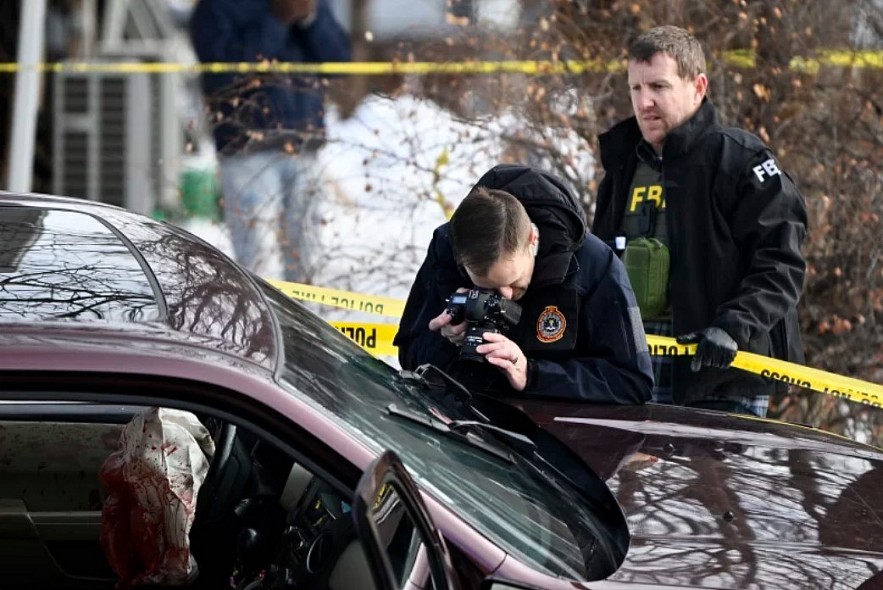 |
| The fatal ICE shooting of a Minneapolis woman: Members of law enforcement photograph a vehicle suspected to be involved in a shooting by an ICE agent during federal law enforcement operations on Wednesday in Minneapolis. |
When a civilian is killed by a federal law enforcement officer, the process that follows is very different from a typical local police shooting. The fatal shooting of Renee Nicole Good in Minneapolis has drawn renewed attention to a question many Americans are now asking: What actually happens when an ICE agent fires a fatal shot?
Here’s how the system works — and why it often feels opaque to the public.
Read more: Who Is the ICE Agent Who Shot Renee Nicole Good?
Step 1: Immediate federal control of the scene
When an ICE agent uses deadly force, the incident is treated as a federal officer–involved shooting. Unlike local police cases, jurisdiction does not automatically fall to city or county prosecutors.
ICE agents operate under the Department of Homeland Security, meaning initial control and reporting flows through federal channels, not local ones. Local police may secure the scene, but they do not lead the case.
Step 2: Federal and state investigations begin
In most fatal ICE shootings, investigations are handled by the Federal Bureau of Investigation, often alongside a state-level agency such as the Minnesota Bureau of Criminal Apprehension.
These investigations typically examine:
-
Video evidence (bystander footage, body cameras if available)
-
Witness statements
-
Ballistics and forensic findings
-
Radio communications and command structure
-
The agent’s training and use-of-force history
Unlike local police cases, body cameras are not universally required for ICE agents, a fact that can significantly limit available evidence.
Step 3: The agent’s identity is usually withheld
One of the most controversial aspects of federal shootings is anonymity.
ICE and DHS generally do not immediately release the agent’s name, citing safety concerns and investigative integrity. While this is legally permissible, it often clashes with public expectations shaped by local police transparency practices.
In high-profile cases, an agent’s identity may never be released unless criminal charges or civil litigation force disclosure.
Read more: Is Timmy Ray Macklin Jr. the ICE Agent Who Shot Renee Nicole Good in Minneapolis?
Step 4: Use-of-force standards are reviewed
ICE agents are governed by DHS use-of-force policies, which allow deadly force only when an agent reasonably believes there is an imminent threat of death or serious bodily harm.
Investigators assess:
-
Whether the threat was immediate
-
Whether the agent had alternatives
-
Whether de-escalation was attempted
-
Whether the agent followed training protocols
Importantly, the legal standard focuses on what the agent reasonably perceived at the moment, not what later video may appear to show with hindsight.
Step 5: Criminal charges are rare but possible
Federal agents can be criminally charged, but it is extremely rare.
To bring charges, prosecutors must show the agent acted outside policy and without legal justification — a high bar under federal law. Most cases end with a finding that the shooting was “justified” or “within policy,” even when public controversy remains.
Step 6: Civil lawsuits become the primary accountability path
For families, civil litigation is often the only remaining avenue.
Wrongful death lawsuits may target:
-
The individual agent
-
The federal government under limited liability rules
-
DHS policies and training failures
These cases can take years and often hinge on evidence that was not publicly released during the initial investigation.
Read more: Who Was Renee Nicole Good? The Poet Killed in the Minneapolis ICE Shooting
Why ICE shootings feel different to the public
ICE operates with less local oversight, fewer transparency obligations, and limited public-facing accountability compared to city police departments. That gap becomes especially visible when a civilian dies during an enforcement action.
In the Minneapolis case, conflicting official statements, viral video, and delayed disclosures have intensified distrust — not only toward the agent involved, but toward the federal system itself.
The bottom line
When an ICE agent fires a fatal shot, the aftermath is shaped by federal law, federal investigations, and federal discretion. The process is legal, structured, and slow — but often feels inaccessible to the public and devastating for families seeking answers.
As debates over immigration enforcement and federal policing continue, cases like this highlight a deeper question Americans are increasingly asking: Who watches the watchers when federal agents use deadly force?