Would the US Use Nuclear Weapons Against Iran?

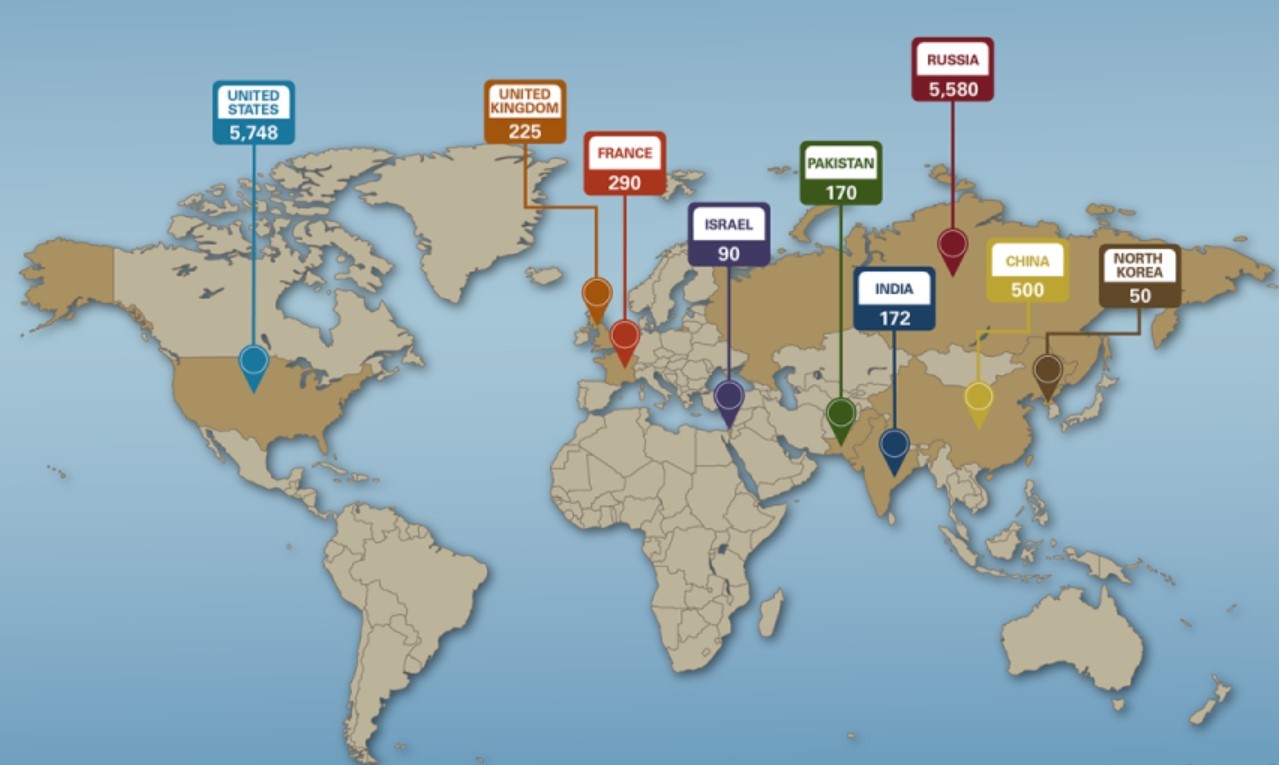
 Which Countries Possess Nuclear Weapons in 2026? List of 9 Nations Are Nuclear-Ready Which Countries Possess Nuclear Weapons in 2026? List of 9 Nations Are Nuclear-Ready After Ukraine relinquished its nuclear arsenal, only nine countries officially possess nuclear weapons as of 2026, with no new nuclear-armed states formally recognized worldwide. |
 |
| Would the US Use Nuclear Weapons Against Iran |
When a US president Trump talks about an entire civilization dying, the world has to take notice.
That is exactly what happened after President Donald Trump escalated his rhetoric toward Iran, even as the White House denied that Washington was considering a nuclear strike. The immediate trigger was a fast-moving crisis around Iran, the Strait of Hormuz, and a looming US deadline. But the deeper question is larger, darker and more consequential: Would the United States actually use nuclear weapons against Iran?
The most credible answer is this: it is highly unlikely, but not unthinkable in the abstract. Those two things can be true at the same time.
That distinction matters. Nuclear threats work precisely because they do not need to be likely in order to be terrifying. Yet if the question is whether Washington would choose nuclear weapons to “destroy Iranian civilization,” the balance of evidence points strongly in the opposite direction. Such a move would be strategically irrational, legally explosive, diplomatically ruinous and militarily unnecessary in most plausible scenarios.
Read more: US Strikes Military Targets on Kharg Island, Iran
Why the nuclear fear surfaced at all
The fear did not emerge from nowhere. Al Jazeera reported that the White House publicly denied plans to use nuclear weapons after Trump’s language and Vice President JD Vance’s comments fueled speculation that the administration might be signaling a wider escalation ladder. Reuters also reported that US strikes on Kharg Island were described by officials as attacks on military targets, not a change in overall strategy, and that Washington was still framing its pressure campaign around coercive diplomacy.
In other words, the nuclear anxiety is real, but the available reporting still points to a familiar pattern: maximalist rhetoric, conventional military pressure and deliberate ambiguity.
That ambiguity is not accidental. For years, US policy has preserved room for nuclear first use in “extreme” circumstances to defend the vital interests of the United States and its allies, rather than adopting a formal no-first-use pledge. At the same time, the purpose publicly described by US defense officials is deterrence, not casual battlefield employment.
I found no official 2026 policy document showing a new US doctrine that makes nuclear use against Iran more likely.
Why a US nuclear strike on Iran is still improbable
The first reason is simple: the United States does not need nuclear weapons to punish Iran militarily.
Iran can inflict serious regional damage, especially through missiles, proxies, maritime disruption and attacks on energy infrastructure. The Strait of Hormuz remains one of the world’s most critical energy chokepoints, with around 20 million barrels per day moving through it in 2025 and roughly a quarter of global seaborne oil trade transiting the passage. That gives Tehran leverage, but it does not mean the US lacks conventional options. Washington already possesses overwhelming conventional strike capacity against Iranian military, industrial and command targets.
Even against hardened nuclear facilities, the military logic does not automatically lead to atomic weapons. In 2025, the United States used heavy conventional bunker-buster munitions against Iranian nuclear sites, and reporting at the time centered on the Massive Ordnance Penetrator, not tactical nuclear weapons, as the key tool for hitting deeply buried targets like Fordow. That matters because it undercuts one of the strongest arguments for nuclear use: the idea that only a nuclear device could destroy Iran’s hardest facilities.
The second reason is escalation control. A nuclear strike would not end the crisis neatly. It would break the post-1945 nuclear taboo, likely trigger massive regional and global fallout, and create pressure on other nuclear or threshold states to rethink their own deterrence posture. It would also make every US claim about restraint, rules and nonproliferation far harder to sustain. For Washington, that is not a side effect. That is the strategic disaster.
The third reason is political. A conventional escalation can still be denied, calibrated, paused or reframed. Nuclear use cannot. Once crossed, that line would define the presidency, fracture alliances and likely transform the global debate on US power for a generation.
The legal barrier is not cosmetic
There is also a legal point that should not be treated as decoration.
The International Court of Justice’s 1996 advisory opinion did not create a total universal ban on nuclear weapons in every imaginable circumstance. But it did say that the threat or use of nuclear weapons must comply with the UN Charter and international humanitarian law, and that such use would generally be contrary to the rules of armed conflict. The Court also emphasized the uniquely catastrophic nature of nuclear weapons, including their inability to contain destruction in space or time and their potential to damage human life and the environment across generations.
That framework becomes even more relevant in Iran because nuclear facilities themselves carry radiological risk. In March 2026, IAEA Director General Rafael Grossi said the agency was monitoring the danger of radiological emergencies linked to military operations in Iran. Reuters reported this week that Iranian officials warned the IAEA about repeated attacks near Bushehr, Iran’s only operating nuclear power plant, arguing that such strikes could have devastating consequences beyond Iran’s borders.
So when people talk loosely about “wiping out” Iran, they are not discussing a clean military option. They are discussing a scenario that would collide with the core legal principles of distinction, proportionality and civilian protection.
What Washington is more likely doing
The likelier interpretation is that the administration is using apocalyptic language as coercive signaling, not as a literal preview of nuclear operations.
That kind of signaling serves several purposes at once. It pressures Tehran. It unsettles Iran’s decision-making circle. It warns regional actors that Washington is prepared to go further. And it tries to restore deterrence through fear, even if the actual policy toolkit remains conventional.
There is a rough logic to that. Trump’s rhetoric is often designed to blur the line between bluff and intent. But analysts should be careful not to confuse ambiguity with inevitability. The White House denial does not make the situation safe. It does, however, suggest the administration understands that open nuclear signaling would impose costs it may not want to pay.
The Iran factor that keeps the question alive
Still, dismissing the risk entirely would be careless.
Iran remains a uniquely difficult case because the nuclear file is still unresolved. The IAEA reported in February 2026 that it could not conclude there had been no diversion of declared nuclear material from peaceful activities because access and reporting remained incomplete for affected facilities. The agency also said it had observed activity at sites including Natanz and Fordow but could not confirm the nature or purpose of that activity without access.
That uncertainty is dangerous. In a crisis, uncertainty can feed worst-case thinking. Worst-case thinking can make leaders feel that time is running out. And once leaders believe time is running out, the argument for extreme action can move from fringe to mainstream faster than outsiders expect.
That does not make a US nuclear strike probable. It does explain why the question refuses to disappear.
So, would the US use nuclear weapons to destroy Iran’s civilization?
On the evidence available now, probably not.
The United States has stronger conventional options, more to lose than to gain from crossing the nuclear threshold, and no obvious strategic need to turn Iran into the site of the first wartime nuclear use in more than eight decades. A civilization-destroying strike would not look like deterrence. It would look like an admission that deterrence had failed.
But the larger warning should not be ignored. When leaders begin speaking in civilizational terms, they normalize a scale of violence that would have once sounded unthinkable. Even if nuclear use remains unlikely, language like this lowers the moral and political barrier to mass destruction.
That is why the real danger is not only what Washington may do. It is what the repeated public rehearsal of annihilation makes easier to imagine.
FAQs
Could the US legally use nuclear weapons against Iran?
Only under an argument that survived the UN Charter and international humanitarian law, which is a very high bar. The ICJ said nuclear use would generally be contrary to the rules of armed conflict.
Does the US have a no-first-use policy?
No formal no-first-use policy is reflected in the US material reviewed here. Pentagon explanations have long preserved the option of first use in extreme circumstances.
Would the US need nuclear weapons to hit Iran’s hard targets?
Not necessarily. Reporting on prior US strikes focused on heavy conventional bunker-buster weapons, especially against deeply buried facilities such as Fordow.
Why does the Strait of Hormuz matter in this crisis?
Because it is one of the world’s most important energy chokepoints, with about 20 million barrels per day of crude oil and oil products moving through it in 2025.