Another Shooting Involving ICE Agents Raises Alarm After Minneapolis Death

Just one day after an ICE agent fatally shot Renee Nicole Good in Minneapolis, another shooting involving federal agents unfolded in Portland, Oregon, deepening national concern over the use of force by immigration authorities.
According to reporting by the New York Post and local outlets, federal agents shot two people in Portland during an enforcement operation on Thursday, heightening tensions already inflamed by the Minneapolis killing.
Read more: Renee Nicole Good Shooting: Why the ICE Agent Remains Unnamed?
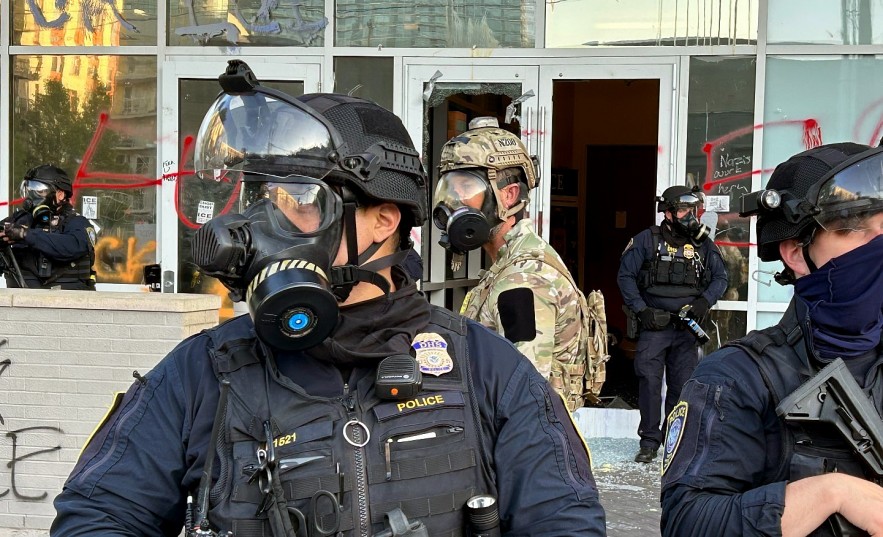 |
| Federal agents shoot 2 people in Oregon — day after ICE agent killed Minneapolis |
What happened in Portland
The shooting occurred as federal agents were carrying out what authorities described as a law-enforcement operation involving immigration enforcement in a residential area of Portland. Two individuals were struck by gunfire and taken to area hospitals. Their conditions were not immediately released.
Federal officials said the agents involved were part of a multi-agency task force, though it was not immediately clear whether Immigration and Customs Enforcement officers fired the shots or whether other federal personnel were involved.
Authorities have offered limited details, citing an active investigation. No agent names have been released.
A troubling back-to-back pattern
The Portland shooting came less than 24 hours after the Minneapolis incident, in which an ICE agent shot and killed Good during a confrontation involving her vehicle. That killing sparked nationwide protests, with demonstrators demanding ICE withdraw from cities and calling for greater accountability.
The rapid succession of shootings — in two different states — has intensified criticism from civil-rights groups and local officials, who argue that federal immigration operations are increasingly militarized and prone to violent escalation.
“This is no longer an isolated incident,” one Portland community organizer said. “People are asking why armed federal agents are repeatedly firing on civilians.”
Read more: Renee Nicole Good Shooting: When Must an ICE Agent Be Named?
Federal response and limited transparency
The Department of Homeland Security, which oversees ICE, has defended its agents in Minneapolis, saying the shooting there was an act of self-defense. In Portland, officials have not yet offered a detailed public account of what led to the gunfire.
As in Minneapolis, the identities of the agents involved in Portland have not been released, consistent with DHS policy. Federal investigations are underway, and officials say more information will be provided once reviews are complete.
Growing political and public pressure
The Portland shooting adds momentum to calls from Democratic leaders and civil-liberties organizations demanding oversight of federal law enforcement. New York City Mayor Zoran Mamdani and Minneapolis Mayor Jacob Frey have both publicly criticized ICE’s tactics following the Minneapolis death.
In Oregon, local officials said they were not given advance notice of the federal operation, a familiar complaint echoed by leaders in Minnesota and other states.
A national reckoning over ICE use of force
Taken together, the Minneapolis and Portland shootings have become a flashpoint in the broader debate over immigration enforcement, particularly under the Trump administration’s aggressive deployment of federal agents to Democratic-led cities.
Civil-rights advocates argue that ICE agents operate with fewer transparency requirements than local police, including limited body-camera use and no obligation to publicly identify officers after shootings.
Supporters of ICE counter that agents face increasing danger during enforcement operations and must be allowed to protect themselves in volatile situations.
What comes next
Federal and state investigators are now reviewing both shootings, including whether the use of force complied with policy and whether criminal charges are warranted. For families and communities affected, the investigations cannot move fast enough.
As protests continue and political pressure mounts, the back-to-back shootings have sharpened a question already gripping the nation: How many more times will federal immigration enforcement end in gunfire before the rules change?