Benghazi Attack Reopened: New Arrest Brings Long-Hidden Facts to Light

 Shamsud Jabbar: How Did a U.S Army Veteran Become a Cold-Blooded Terrorist? Shamsud Jabbar: How Did a U.S Army Veteran Become a Cold-Blooded Terrorist? Retracing the journey that turned Shamsud-Din Jabbar, a decorated US Army veteran who fought in Afghanistan, into a terrorist with confession videos before carrying out ... |
 Who Are the Ex-Wives, Tiera, and Children of Shamsud-Din Jabbar? Who Are the Ex-Wives, Tiera, and Children of Shamsud-Din Jabbar? New Orleans terrorist Shamsud-Din Jabbar was Beaumont native with 3 ex-wives and 3 children. |
 Who Was Guy Edward Bartkus? Inside the Mind of the Palm Springs IVF Clinic Bomber Who Was Guy Edward Bartkus? Inside the Mind of the Palm Springs IVF Clinic Bomber A car bomb outside a Palm Springs fertility clinic left four injured and the suspect dead. Authorities identified the attacker as Guy Edward Bartkus, a ... |
 What Is Antifa? Breaking Down the Anti-Fascist Movement Trump Declared a Terrorist Threat What Is Antifa? Breaking Down the Anti-Fascist Movement Trump Declared a Terrorist Threat In the aftermath of conservative activist Charlie Kirk’s assassination — allegedly at the hands of a man who once expressed support for Antifa — President ... |
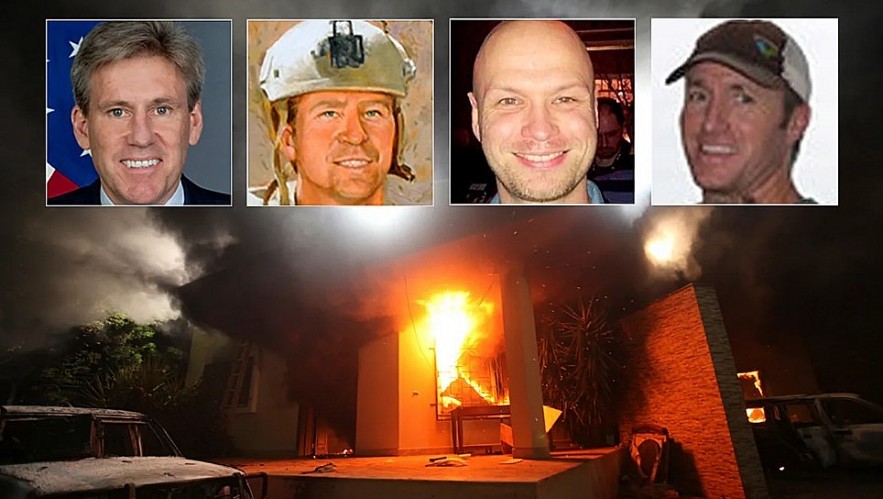 |
| The U.S. Consulate in Benghazi is seen in flames on September 11, 2012 |
More than 13 years after the September 11, 2012 assault on U.S. facilities in Benghazi, Libya, a new arrest has reopened a case many Americans assumed had gone cold.
But the bigger story is not the politics-it’s what newly unsealed allegations say happened that night, and what they reveal about how organized the operation really was.
On February 6, 2026, the U.S. Department of Justice announced that Zubayar Al-Bakoush (also reported as “Zubayr”) is now in U.S. federal custody and facing an eight-count indictment tied to the Benghazi attack that killed Ambassador J. Christopher Stevens, State Department employee Sean Smith, and security contractors Tyrone Woods and Glen Doherty.
What follows are the lesser-known, newly emphasized details emerging from the unsealed case narrative-and why they matter.
The “New” Benghazi Facts: What the Unsealed Case Adds
Surveillance inside the compound, not just a chaotic breach
The DOJ account alleges that around 10 p.m., Al-Bakoush entered the U.S. Mission compound with other conspirators and conducted surveillance of key locations, including the Tactical Operations Center and the ambassador’s residence (Villa C). This is a crucial shift in emphasis: it suggests purposeful movement and target-checking inside the perimeter, not only an uncontrolled mob.
A tactical pause, then a second coordinated strike
According to the indictment summary, after attempting to access vehicles belonging to mission staff, the group temporarily retreated outside the mission—then later assembled and launched a second violent attack at about 11:15 p.m. using rifles, grenades, and rocket-propelled grenades. That pattern—assault, regroup, re-attack—reads less like spontaneous unrest and more like an operation that could adapt in real time.
A document grab tied to the CIA annex
One of the most striking underreported allegations: after re-entering the compound, attackers allegedly plundered the mission’s office for “documents, maps, and computers” containing sensitive information about the location of the CIA annex nearby. This detail directly supports the long-standing question of how militants located and pressured the annex later that night.
The annex assault and “precision mortar” context
The DOJ narrative reiterates the sequence: after the mission assault, conspirators attacked the annex with small arms and rocket-propelled grenades, and later the violence included a precision mortar attack in the early hours of September 12. The mortar element has always been central to the tragedy; what’s newly reinforced is the allegation that the operation persisted in phases with changing tactics.
Timeline: Benghazi, Then the Long Hunt for Suspects• Sept. 11–12, 2012: Attack on U.S. Mission and CIA annex; four Americans killed. • 2014–2020: U.S. captures/convicts other defendants, including Ahmed Abu Khatallah and Mustafa al-Imam (per DOJ). • Feb. 6, 2026: DOJ announces Al-Bakoush in U.S. custody; indictment unsealed. • Feb. 8, 2026: Fox News coverage highlights Jeanine Pirro’s comments following the arrest. |
Who Is Zubayar Al-Bakoush? Identity and Alleged Role
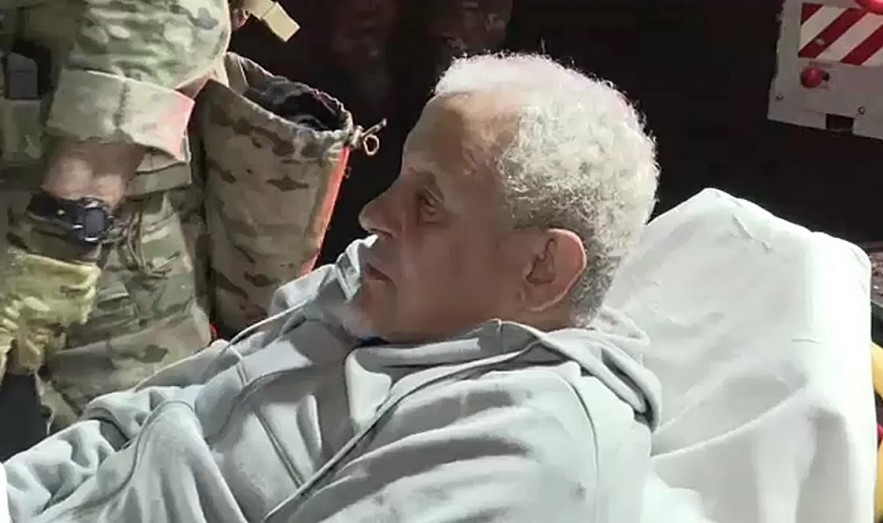 |
| Zubayr Al-Bakoush, a suspect in the 2012 attack on the U.S. consulate in Benghazi, Libya, landed in Virginia early Friday to face federal charges of murder, terror and arson |
Name: Zubayar Al-Bakoush (also spelled Zubayr in some outlets)
Alleged affiliation: DOJ says he was a member of Ansar al-Sharia (AAS), described as an Islamist extremist militia in Benghazi aiming to impose Sharia law in Libya.
Alleged actions during the attack:
-
Part of the armed group that assembled outside the mission gate
-
Entered the compound and allegedly conducted surveillance of mission sites
-
Took part in the second attack phase
-
Linked to the alleged theft of sensitive materials that included information about the CIA annex
Custody and legal posture:
-
DOJ says he is now in federal custody and the indictment was unsealed February 6, 2026.
-
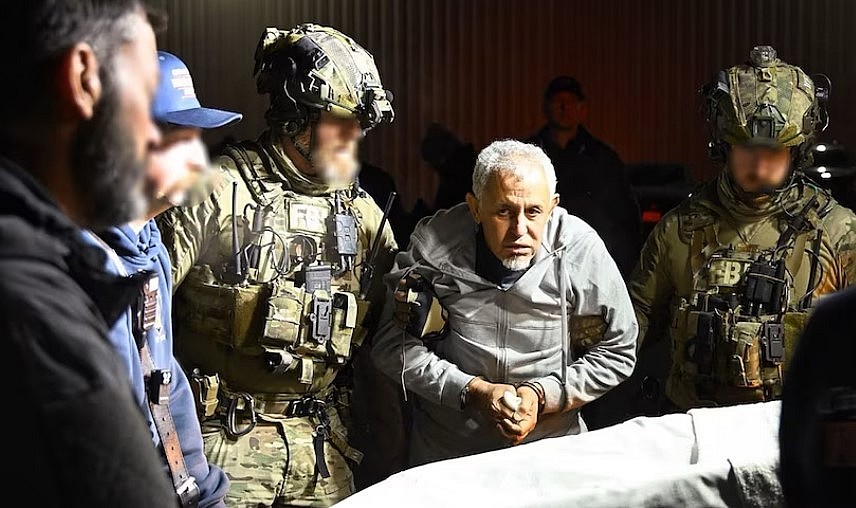
Reporting from AP states he had been wanted for more than a decade, arrived in Virginia after a “transfer of custody,” and faced court proceedings in Washington, D.C.
-
The Washington Post reports he was arrested in an undisclosed country and notes court filings describe him as identified by a cooperating FBI witness as among the attackers.
Charges (high level): The unsealed DOJ list includes terrorism-related material support counts resulting in death, murder charges, attempted murder, arson, and property destruction counts.
Important note on “biographical” details: As of the reporting and DOJ release available now, widely published specifics like exact age, birthplace, or family background are not consistently provided in public summaries. This article sticks to what’s explicitly stated in official filings and major outlets.
Pirro: Justice for Benghazi Victims Was Delayed, Not Abandoned
On Fox & Friends Weekend, Jeanine Pirro said the United States has never stopped pursuing justice for the Americans killed in the 2012 Benghazi attack. She acknowledged that U.S. forces failed to arrive in time that night, but argued that the recent arrest of a key suspect proves accountability has not been abandoned. Pirro warned extremist groups that time does not protect them, saying the U.S. has now caught one of those responsible and that more action may follow. She also criticized how the attack was handled by the administration at the time, pointing to errors and a delayed response. Disputes over how the attack was described and managed later fueled years of intense political controversy. |
What’s Actually “New” Here?
Newly emphasized facts from the unsealed case narrative:
• Surveillance inside the compound (Tactical Operations Center + Villa C)
• A pause and regroup followed by a second assault phase
• Alleged theft of documents/maps/computers tied to locating the CIA annex
Why it matters: These details point to operational intent, not just ideology—and may shape what prosecutors can prove about planning and leadership.
Why This Arrest Reframes the Benghazi Story
Benghazi became a political shorthand in the U.S., but the legal record is steadily building a different kind of clarity: how militants moved, what they searched for, and how the attack escalated across targets.
Reuters notes Al-Bakoush is the third person to face criminal charges connected to the attack, underscoring the slow, transnational nature of counterterrorism prosecutions.
And DOJ’s filing narrative puts renewed focus on the information theft allegation—one of the most consequential operational claims because it connects the mission breach to the later pressure on the CIA annex.
FAQs
Was the Benghazi attack a protest that spiraled out of control?
Major reporting and official accounts describe it as a deliberate extremist attack; early public narratives evolved as evidence emerged.
What group is Al-Bakoush accused of belonging to?
DOJ says he was a member of Ansar al-Sharia (AAS) in Benghazi.
What’s the single most surprising new allegation?
That attackers allegedly plundered documents, maps, and computers with sensitive information about the CIA annex location—a detail that directly ties the mission attack to the annex targeting.
What happens next?
He faces federal court proceedings in Washington, D.C., where prosecutors will have to prove these allegations beyond a reasonable doubt.