CDC’s New Vaccine Guidance: 11 Shots for All Kids - What’s Changed and Why It Matters



 |
| The CDC’s 2026 vaccine recommendatio |
In a major overhaul of U.S. childhood immunization policy, the Centers for Disease Control and Prevention (CDC) has reduced the number of vaccines recommended for all children from 17–18 diseases to just 11 diseases in its updated schedule. The announcement, issued January 5, 2026, ushers in a new three-tiered framework that distinguishes between:
-
Universal recommendations for all children
-
Vaccines for high-risk children only
-
Vaccines based on shared clinical decision-making between clinicians and parents
The changes are sweeping and controversial — with health officials defending them as aligning U.S. policy with international peers, and medical experts warning they could undermine decades of disease prevention progress.
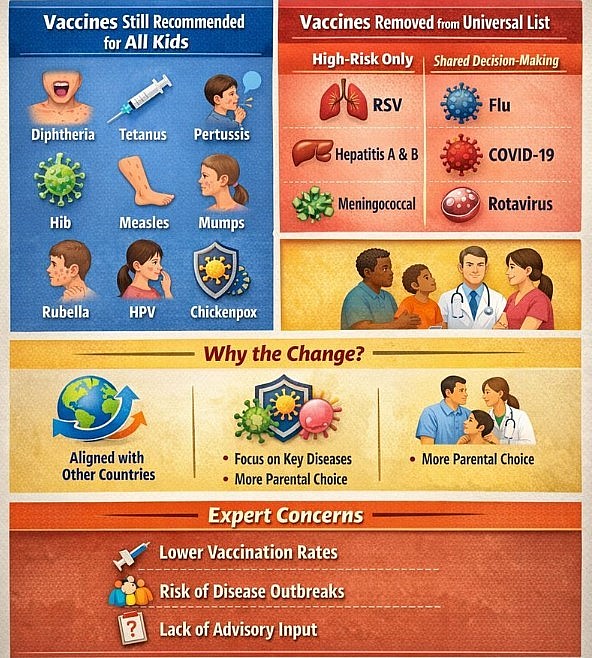 |
| CDC’s New Childhood Vaccine Recommendations (2026) |
Vaccines Still Recommended for All Children (11-Disease Core List)
Under the new CDC guidance, all children should still routinely receive vaccines protecting against the following diseases:
-
Diphtheria
-
Tetanus
-
Pertussis (whooping cough)
-
Haemophilus influenzae type b (Hib)
-
Pneumococcal disease
-
Polio
-
Measles
-
Mumps
-
Rubella
-
HPV (human papillomavirus)
-
Varicella (chickenpox)
This core list represents the vaccines for which the CDC says there is international consensus among peer countries and sufficient evidence of broad benefit.
Vaccines Removed from Universal Recommendation: What Has Changed
Several vaccines that were previously part of the routine schedule for all children are no longer recommended universally. Instead, they now fall into one of two categories:
High-Risk Only
These vaccines are recommended only for children with certain risk factors:
-
Respiratory Syncytial Virus (RSV)
-
Meningococcal disease (some formulations)
-
Hepatitis A and B
Shared Clinical Decision-Making
For these, the CDC recommends parents and pediatricians discuss benefits and risks and decide together whether vaccination is appropriate:
-
Influenza (seasonal flu)
-
COVID-19
-
Rotavirus
-
Meningococcal vaccines not high-risk only
In practical terms, these changes mean flu shots, COVID-19 vaccines, and rotavirus shots — long part of standard pediatric care — are now optional based on individualized decisions rather than universal recommendation.
Why the CDC Made This Shift
According to CDC and Department of Health and Human Services officials, the updated schedule reflects:
1. International Comparison
A government-led review compared the U.S. vaccine schedule to those of other wealthy nations and concluded that America’s prior routine recommendations covered more diseases than in many peer countries. CDC Acting Director Jim O’Neill said the update focuses on vaccines with international consensus and shifts others to risk-based or shared decision categories.
2. Shared Decision-Making and Parental Choice
The CDC emphasizes giving clinicians and parents more flexibility in deciding about vaccines where broad consensus, clear risk-benefit data, or epidemiological necessity is less certain.
3. Maintain Coverage
Despite removing universal recommendations, the CDC and HHS emphasize that all vaccines remain available and — importantly — still covered by insurance under the Affordable Care Act and federal programs like Medicaid and the Vaccines for Children program.
Expert Reaction: Strong Pushback from Public Health Leaders
Not everyone agrees with the CDC’s approach. Leading pediatric and public health authorities have loudly criticized the overhaul:
American Academy of Pediatrics (AAP)
The AAP called the changes “dangerous and unnecessary,” arguing that longstanding U.S. recommendations were based on robust evidence and are similar to those used in other countries. It warns that removing routine guidance for vaccines like flu and rotavirus could lower uptake and increase outbreaks.
Dr. Michael Osterholm, Vaccine Integrity Project
In comments to news outlets, Osterholm warned that “abandoning recommendations for vaccines that prevent influenza, hepatitis and rotavirus … will lead to more hospitalizations and preventable deaths among American children.”
Public Health Experts
Analysts have also expressed concern about the process: the new schedule was issued without formal input from the CDC’s Advisory Committee on Immunization Practices (ACIP), which historically guides vaccine policy with independent experts. Legal and scientific observers argue this bypass may reduce transparency and scientific rigor.
What This Means for Parents and Providers
-
Pediatricians will need to discuss many vaccines individually with families, rather than simply administering them by default.
-
Vaccine confidence and uptake may shift, depending on how clinicians communicate the changes.
-
State school-entry requirements, which often follow but are not bound by CDC recommendations, may vary in how they adjust.
Conclusion
The CDC’s 2026 vaccine recommendation overhaul marks a turning point in U.S. public health policy. By narrowing the routine list to 11 vaccines and reframing others as risk-based or optional, the agency aims to align with international norms and emphasize individualized care. But public health experts warn the changes could introduce confusion, reduce vaccine coverage, and jeopardize progress against preventable diseases.
For American parents, clinicians, and policymakers alike, the months ahead will determine how these new guidelines translate into real-world immunity and disease prevention.
FAQs: CDC’s New Childhood Vaccine Recommendations (2026)
Did the CDC eliminate vaccines for children?
No. The CDC did not ban or remove any vaccines from availability. All previously recommended childhood vaccines remain approved, available, and covered by insurance. What changed is whether they are recommended for all children or for specific situations.
What does “shared clinical decision-making” mean?
It means parents and healthcare providers should discuss benefits, risks, and individual circumstances before deciding whether a child should receive certain vaccines. These vaccines are no longer automatically recommended for every child but are still considered safe and effective.
Will insurance still cover these vaccines?
Yes. According to the Department of Health and Human Services, all childhood vaccines remain covered under the Affordable Care Act, Medicaid, and the Vaccines for Children (VFC) program — even if they are no longer universally recommended.
Will this affect school vaccine requirements?
Possibly, but not immediately. School vaccine mandates are set at the state level, not by the CDC. Some states may keep existing requirements, while others may revise them over time.
What should parents do now?
Health experts across the spectrum agree on one point:
Parents should talk directly with their child’s pediatrician and make decisions based on medical history, risk factors, and local disease trends.
Are vaccines still considered safe?
Yes. The CDC, FDA, and major medical associations continue to state that all approved childhood vaccines are safe and effective. The debate is about policy and recommendations — not vaccine safety.