Iran War Latest News: Missile and Drone Attacks Across Middle East
 |
| Iran war lates updates |
A Regional War Rapidly Expanding Across the Middle East
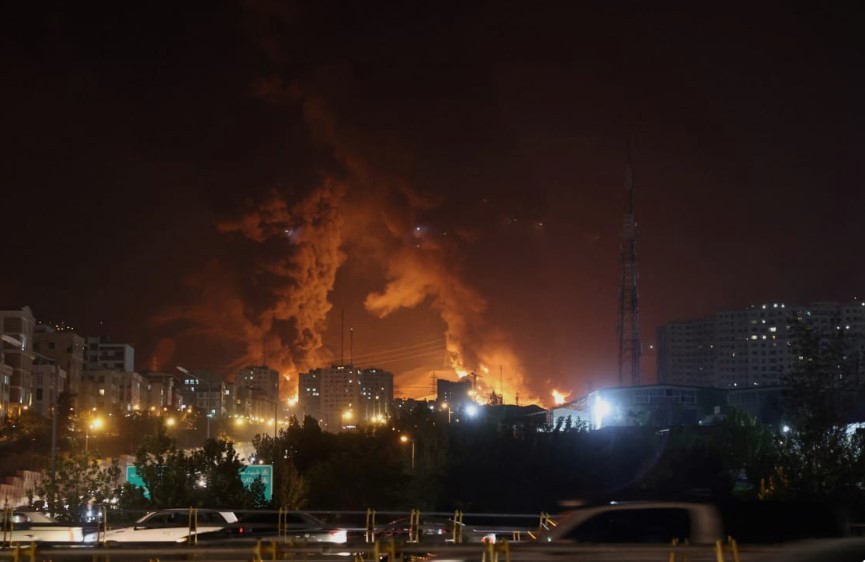
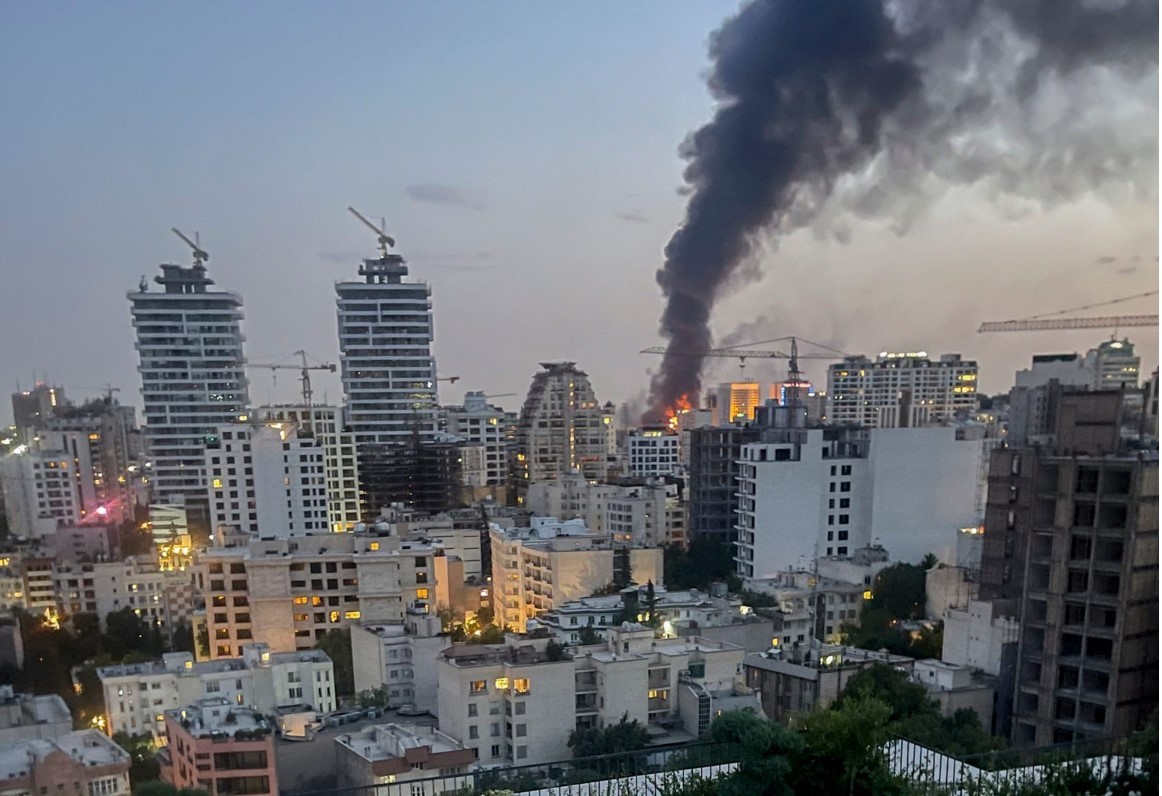
The war centered on Iran has rapidly evolved into one of the most dangerous regional conflicts in decades, stretching across the Persian Gulf, the Eastern Mediterranean, and parts of the Caucasus.
What began as coordinated airstrikes by the United States and Israel against Iranian nuclear and military infrastructure has triggered a massive retaliatory campaign by Tehran, involving ballistic missiles, cruise missiles, and large-scale drone swarms targeting U.S. bases, Gulf states, and Israeli territory.
In just the first days of the conflict, attacks or military incidents have been reported in at least 12 countries, including:
-
Iran
-
Israel
-
Lebanon
-
Iraq
-
Syria
-
Saudi Arabia
-
United Arab Emirates
-
Qatar
-
Kuwait
-
Bahrain
-
Oman
-
Azerbaijan
The conflict now spans thousands of kilometers and involves multiple militaries, proxy groups, naval forces, and air-defense systems.
Security analysts warn that the war is beginning to resemble a multi-theater regional conflict, rather than a limited confrontation between Iran and Israel.
Timeline of Key Events in theIran War
The rapid escalation of the conflict can be traced through a series of major military events.
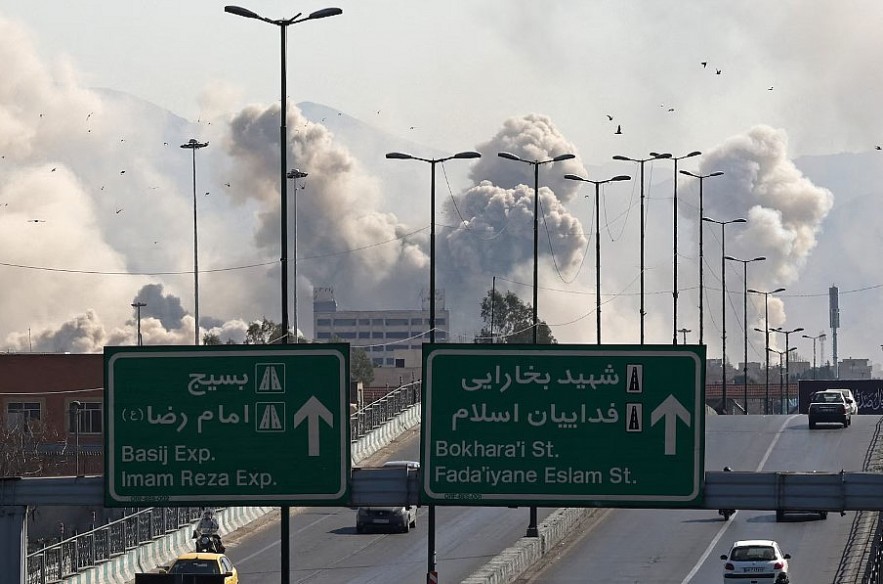
Day 1: Large-scale U.S. and Israeli airstrikes inside Iran
American and Israeli forces launch coordinated strikes on Iranian nuclear facilities, missile bases, and military command centers.
Targets reportedly include:
-
Islamic Revolutionary Guard Corps (IRGC) bases
-
underground missile storage facilities
-
air defense systems
-
nuclear research infrastructure
Early reports indicate that Iran’s Supreme Leader Ayatollah Ali Khamenei was killed during the opening phase of the campaign.
Day 2–3: Iranian retaliation across the Gulf
Iran launches large waves of drones and ballistic missiles toward countries hosting U.S. forces.
Explosions are reported across several cities including:
-
Dubai
-
Doha
-
Kuwait City
-
Manama
Air defense systems in multiple countries intercept incoming projectiles.
Day 3–5: Naval battles and attacks on energy infrastructure
U.S. naval forces engage Iranian vessels in the Gulf of Oman.
At least one Iranian warship is sunk by a U.S. submarine near the port of Chabahar.
Meanwhile, Iranian drones strike oil and port infrastructure in Oman and threaten tankers passing through the Strait of Hormuz.
Day 5 onward: War spreads across multiple fronts
Hezbollah launches rockets and drones into northern Israel.
Iran-backed militias in Iraq begin attacking U.S. bases.
Missile interceptions are reported across several Gulf states.
International evacuations begin as civilian air traffic is disrupted.
Iran’s Drone Warfare Strategy: Volume Over Precision
One of the defining characteristics of the conflict has been Iran’s large-scale use of drones.
Instead of relying solely on expensive ballistic missiles, Iran has deployed large drone swarms designed to overwhelm air-defense systems through sheer numbers.
Defense officials say hundreds of drones have been detected across the region.
For example:
-
The United Arab Emirates detected 689 drones launched toward its territory.
-
Kuwait reported intercepting more than 280 drones.
-
Qatar detected nearly 100 drones alongside ballistic missiles.
Many of these drones are believed to be variants of Shahed-type loitering munitions, which Iran has previously supplied to allied groups and used in other conflicts.
The strategy behind these attacks is straightforward.
Drone swarms can saturate air-defense networks. Even if most are intercepted, the defenders must use expensive interceptor missiles to shoot them down.
In many cases, the cost imbalance is dramatic:
-
An interceptor missile may cost hundreds of thousands to several million dollars.
-
A drone may cost tens of thousands of dollars or less.
This cost asymmetry allows Iran to sustain prolonged pressure on regional air-defense systems.
Military analysts say the tactic is similar to strategies used in the war in Ukraine, where drones have been used to exhaust air defenses over time.
Gulf States Become the Primary Battlefield
Several Gulf states hosting American military bases have become central targets in the conflict.
United Arab Emirates
The UAE reported that Iranian forces launched:
-
174 ballistic missiles
-
689 drones
toward Emirati territory.
Most were intercepted, but some debris caused damage in Dubai and Abu Dhabi.
Fires were reported near residential districts and hotel areas.
Qatar
Qatar’s government reported detecting:
-
101 ballistic missiles
-
98 drones
-
3 cruise missiles
Some projectiles landed near infrastructure linked to the country’s natural gas industry.
Qatar temporarily halted operations at parts of the Ras Laffan LNG complex, one of the largest natural gas export hubs in the world.
Kuwait
Kuwait reported intercepting:
-
97 ballistic missiles
-
283 drones
Some missiles targeted American military installations including:
-
Ali Al Salem Air Base
-
Camp Buehring
A tragic friendly-fire incident during the air defense response reportedly resulted in the downing of three U.S. aircraft.
Thousands Cross From Lebanon Into Syria as Israeli Bombing Intensifies
As Israeli airstrikes across Lebanon intensify amid the widening Middle East conflict, thousands of civilians are fleeing across the border into neighboring Syria, creating a rapidly growing humanitarian crisis.
Many of those crossing are Syrian refugees who had previously sought safety in Lebanon during the Syrian civil war but are now being forced to return as violence spreads across the region. Border crossings in Syria’s Homs province, particularly near the town of Jousieh, have seen a surge in arrivals over the past several days.
Local authorities and humanitarian organizations say families are arriving with few belongings, often after traveling for hours through areas hit by Israeli airstrikes targeting Hezbollah positions in southern and eastern Lebanon.
At reception points near the border, newly arrived refugees are being directed to registration centers operated by the United Nations, Syrian authorities, and international aid groups, where they receive food, medical assistance and temporary shelter.
Officials warn that the number of arrivals could increase sharply if the bombing campaign continues.
Israeli Strikes and Evacuation Orders Trigger Mass Displacement in Lebanon
The displacement comes as Israel intensifies its military campaign against Hezbollah in Lebanon, part of the broader regional war linked to the conflict with Iran.
Israeli forces have carried out airstrikes across southern Lebanon and the southern suburbs of Beirut, areas considered strongholds of Hezbollah. Authorities in Lebanon say the latest wave of strikes has killed more than 100 people and injured hundreds, while tens of thousands have fled their homes.
The Israeli military has also issued evacuation warnings covering large sections of Beirut’s southern suburbs, instructing civilians to leave immediately before further strikes. The warning triggered a mass exodus as roads filled with vehicles attempting to flee the capital.
Humanitarian agencies estimate that more than 83,000 people have already been displaced across Lebanon since the latest escalation began.
Many of the displaced are Syrian refugees who had been living in Lebanon for years after fleeing the war that began in Syria in 2011.
Border Crossings in Homs Province Struggle to Handle Refugee Flow
At border points in Syria’s Homs province, the influx of returnees has stretched local resources.
Officials say thousands of people have crossed into Syria in recent days, with many traveling from Lebanese cities such as Tyre, Sidon and the Beqaa Valley, where Israeli strikes have intensified.
Humanitarian workers at the border describe scenes of exhaustion among families arriving with children, elderly relatives and minimal belongings.
Some refugees told aid workers they had been living in Lebanon for more than a decade but felt they had no choice but to return to Syria as the fighting escalated.
Aid groups are attempting to provide:
-
temporary shelters
-
emergency food assistance
-
medical treatment
-
registration and documentation services
However, humanitarian agencies warn that the situation could deteriorate quickly if the conflict continues.
UN Agencies Open Emergency Shelters for Displaced Families
The United Nations Relief and Works Agency (UNRWA) and other humanitarian organizations have opened emergency shelters to accommodate displaced civilians in Lebanon.
Philippe Lazzarini, UNRWA’s commissioner-general, said the escalating violence is forcing thousands of people in southern Lebanon to flee their homes.
Emergency shelters have been set up in coordination with Lebanese authorities and civil society organizations to support displaced communities, including Lebanese citizens, Palestinian refugees, and Syrians who had previously taken refuge in the country.
Aid officials say the humanitarian needs are increasing rapidly as bombing intensifies and civilians continue to move north or attempt to cross international borders.
Iran’s Foreign Minister Warns Trump That “Plan A Failed”
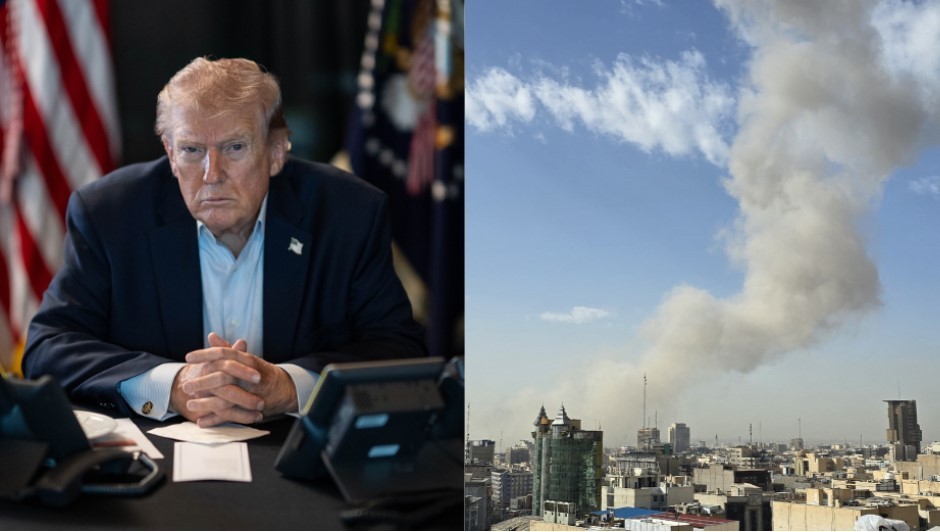
Amid the escalating conflict, Iran’s Foreign Minister Abbas Araghchi issued a direct message to U.S. President Donald Trump.
In a statement posted on social media, Araghchi said Washington’s strategy for a rapid military victory had failed.
“Plan A for a clean rapid military victory failed, Mr. President. Your Plan B will be an even bigger failure,” he wrote.
Araghchi also claimed that diplomatic opportunities had been destroyed during the latest round of negotiations, accusing Washington of undermining potential agreements.
The comments reflect growing tensions between Tehran and Washington as the conflict expands across the region.
Israel’s UN Envoy Says Military Campaign Must Continue
At the United Nations, Israel’s ambassador Danny Danon said it was too early to pursue diplomacy while Iran still possesses significant military capabilities.
Danon told reporters that Israel and the United States must first dismantle additional Iranian missile and drone capabilities before any negotiations could begin.
He also suggested that within days it may become much harder for Iran to threaten shipping routes through the Strait of Hormuz, one of the world’s most important oil transit chokepoints.
The strait handles roughly one-fifth of global oil shipments, making it a critical strategic target in the ongoing conflict.
Syria Reinforces Border as Conflict Expands
The Syrian government has responded to the escalating regional war by reinforcing its border with Lebanon.
Security sources say thousands of Syrian troops and rocket units have been deployed along the frontier, partly to prevent cross-border infiltration by militant groups and to stabilize the border region as refugees arrive.
Officials say the troop deployment is also intended to prevent weapons smuggling and contain potential spillover from the expanding conflict between Israel, Hezbollah and Iran.
Humanitarian Crisis Could Worsen if War Continues
Humanitarian agencies warn that the displacement crisis could rapidly worsen if fighting continues.
Lebanon has long hosted one of the world’s largest refugee populations relative to its size, including more than 1.5 million Syrian refugees who fled the Syrian civil war.
As Israeli strikes intensify and the regional war expands, many of these refugees now face a painful decision: remain in a country under bombardment or return to a homeland that is still recovering from years of conflict.
Aid organizations warn that without rapid humanitarian support, border areas in Syria may struggle to cope with the growing number of arrivals.
For now, the steady stream of families crossing from Lebanon into Syria highlights how the expanding Middle East war is creating new waves of displacement across a region already marked by years of instability and conflict.
Threats to Global Energy Supply
The conflict has also threatened global energy infrastructure.
Iranian drones targeted the Ras Tanura oil refinery in Saudi Arabia, one of the largest oil processing facilities in the world.
Although the drones were intercepted, the refinery temporarily halted operations.
Even brief disruptions at facilities like Ras Tanura can have global consequences because Saudi Arabia is one of the world’s largest oil exporters.
Meanwhile, drone attacks in Oman targeted the ports of Duqm and Salalah.
Several oil tankers in nearby waters were damaged by explosions, highlighting the vulnerability of maritime trade routes.
Much of the world’s oil supply passes through the Strait of Hormuz, making the conflict particularly dangerous for global energy markets.
The Maritime Front: Naval Battles in the Gulf
Naval forces are increasingly involved in the conflict.
U.S. forces operating in the Gulf of Oman have engaged Iranian naval vessels during combat operations.
One major escalation occurred when a U.S. submarine sank an Iranian Jamaran-class warship near the Iranian port of Chabahar.
American officials say the strike was intended to degrade Iran’s naval capabilities.
President Donald Trump later claimed that U.S. forces had destroyed nine Iranian naval vessels during the early phase of the conflict.
Iran condemned the sinking as a war crime and vowed retaliation.
The naval dimension of the conflict is particularly concerning because it threatens commercial shipping routes through the Persian Gulf.
Hezbollah Opens a Second Front Against Israel
The conflict has expanded beyond the Gulf with the opening of a northern front between Israel and Hezbollah in Lebanon.
Hezbollah forces have launched rockets and drones toward Israeli cities in the north.
Israel has responded with airstrikes against Hezbollah positions in:
-
southern Lebanon
-
Beirut suburbs
Israeli authorities have issued evacuation warnings for hundreds of thousands of residents in southern Beirut.
This raises fears that Israel could launch a major ground operation in Lebanon if the fighting intensifies.
Iran’s Proxy Network Joins the Conflict
Iran’s regional network of allied militias has also joined the war.
In Iraq, groups aligned with Iran have launched dozens of attacks against U.S. forces.
Targets have included:
-
Harir Air Base near Erbil
-
military facilities near Baghdad
-
infrastructure used by coalition forces
These attacks complicate the security environment for U.S. troops and expand the conflict beyond direct Iranian involvement.
Iran-aligned groups in Syria and other areas are also believed to be preparing additional attacks.
Leadership Crisis Inside Iran
The war comes at a moment of political upheaval inside Iran.
Following the reported death of Supreme Leader Ayatollah Ali Khamenei during early strikes, Iran’s clerical leadership must select a successor.
The Assembly of Experts, the body responsible for appointing the supreme leader, is reportedly meeting under heightened security conditions.
Among the leading candidates is Mojtaba Khamenei, the late leader’s son.
He is believed to have strong ties to Iran’s security establishment and the Islamic Revolutionary Guard Corps.
The leadership transition will likely shape Iran’s strategic direction during the war.
Some analysts believe a hardline successor could escalate the conflict further, while others suggest that internal instability could weaken Iran’s ability to sustain prolonged warfare.
Europe Moves Closer to the Conflict
European nations are increasingly being drawn into the conflict.
Iran has threatened military action against bases hosting U.S. forces in Europe and the Mediterranean.
A drone strike reportedly targeted a British military base in Cyprus, prompting additional defensive deployments by European allies.
Several European governments are strengthening air defenses and increasing naval patrols in the Mediterranean and Red Sea.
Although European leaders say they want to avoid direct combat involvement, continued attacks on regional infrastructure could force deeper engagement.
Mass Evacuations and Civilian Impact
The escalating war has triggered widespread evacuations.
The U.S. State Department says more than 17,500 American citizens have returned to the United States since the conflict began.
Commercial flights across the Middle East have been disrupted as airspace closures and missile interceptions create major aviation risks.
Several countries have issued travel warnings urging citizens to leave the region immediately.
Meanwhile, civilian casualties continue to rise across multiple countries.
Estimates suggest:
-
more than 1,200 deaths in Iran
-
over 100 casualties in Lebanon
-
dozens of deaths in Israel and Gulf states
These figures are expected to rise if the war continues to expand.
What Happens Next: Four Possible Scenarios
Military analysts say the conflict could evolve in several directions.
1. Prolonged missile and drone warfare
Iran could continue launching drone swarms and missile strikes to exhaust regional air defenses.
2. Major ground war in Lebanon
Israel could launch a ground offensive against Hezbollah if attacks continue.
3. Escalation involving additional global powers
European forces or NATO allies could become more directly involved if their bases or ships are attacked.
4. Internal instability inside Iran
The leadership transition could create political turmoil that affects Iran’s ability to manage the war.
A Conflict With Global Consequences
The Iran war is no longer a localized confrontation.
It now involves multiple militaries, proxy groups, naval forces, and energy infrastructure across one of the world’s most strategically important regions.
With drone swarms, missile barrages, naval clashes, and political upheaval all unfolding simultaneously, the conflict has the potential to reshape the geopolitical landscape of the Middle East for years to come.
For now, the situation remains highly volatile, and the next phase of the war could determine whether the region moves toward wider war or a fragile diplomatic settlement.