Congress Gets Unredacted Epstein Files - Will Americans Ever See the Full Truth?



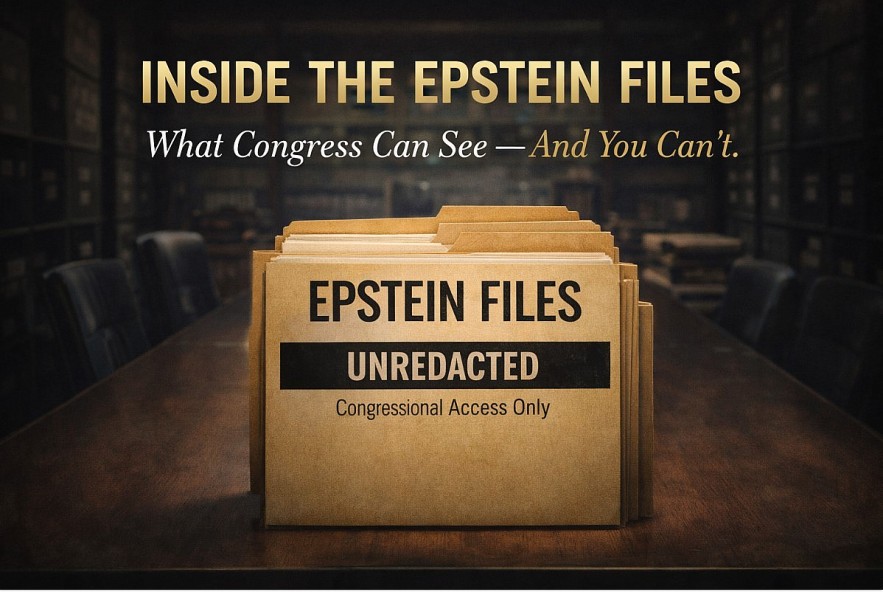 |
| Inside the Epstein Files |
On February 9, 2026, members of the U.S. Congress were granted access to unredacted Epstein files for the first time—an extraordinary step that reignited public demands for full transparency in one of America’s most disturbing criminal sagas.
The files, held by the United States Department of Justice, contain raw investigative materials related to Jeffrey Epstein: emails, photos, schedules, contact lists, and internal memoranda that have largely remained hidden behind heavy redactions.
For many Americans, the question is simple: If Congress can see everything, why can’t the public?
Epstein Files: Key Facts at a Glance• Who: Jeffrey Epstein • Conviction: 2008 (Florida) • Death: August 2019 (federal custody) • Files include: Emails, photos, schedules, contacts • Public access: Heavily redacted • Congress access: Unredacted, secured (Feb. 9, 2026) • Public release: Partial, selective, ongoing |
What changed on Feb. 9—and why it matters
Until now, most Epstein-related disclosures released to the public were aggressively redacted. Names were blacked out. Locations removed. Context stripped away. Lawmakers argued those redactions made meaningful oversight impossible.
Citing its constitutional authority, United States Congress demanded access to the unfiltered records to evaluate whether federal agencies failed—systemically and repeatedly—to stop Epstein after his 2008 conviction.
The Justice Department agreed, granting lawmakers secure, controlled access. The move marks the first time the legislative branch has reviewed the Epstein record without censorship.
But this access comes with limits.
Why unredacted files don’t mean full public release
The uncomfortable truth is that Congress seeing everything does not guarantee the public will.
There are three main reasons:
• Victim protection
Epstein’s files include sensitive personal information about survivors and potential witnesses. Federal law strongly restricts the public release of material that could retraumatize victims or expose them to retaliation.
• Legal exposure and due process
Appearing in Epstein’s files does not equal criminal guilt. Releasing unverified names or partial communications could expose the government to defamation claims and undermine due process protections.
• Ongoing litigation and sealed evidence
Several Epstein-related civil cases are still active. Courts often prohibit public disclosure of evidence that could influence testimony or prejudice proceedings.
In short, transparency must be balanced against legal and ethical constraints—an argument the Justice Department continues to emphasize.
Read more: The New Epstein Photo That Shocked: Men at Work, a Bikini-Clad Woman Crawling Beneath the Table
What Congress can do next
While lawmakers cannot simply publish the files online, they can act in meaningful ways:
• Hold closed or public hearings to question DOJ and FBI officials about failures, delays, and decision-making.
• Release summaries or findings that describe patterns, timelines, and institutional breakdowns without naming private individuals.
• Propose legislative reforms, including changes to plea agreements, prosecutorial discretion, and inmate supervision policies.
Several lawmakers have already signaled interest in targeted disclosures that focus on process, not personalities.
Why the public still may not get “everything”
Public frustration is understandable. Epstein operated for years despite warnings, accusations, and a criminal conviction. Many Americans believe full disclosure is the only path to accountability.
But full, uncensored public release—names, images, and all—is unlikely.
Transparency in this case will likely arrive incrementally: through hearings, reports, and selective disclosures rather than a single, explosive document dump.
FAQs
Will the unredacted Epstein files be released to the public?
Not in full. Congress can review them, but public release is constrained by law and court orders.
Does appearing in the files mean someone committed a crime?
No. Many individuals may appear due to contact, correspondence, or proximity without wrongdoing.
Why now?
Mounting public pressure, civil litigation, and concerns about institutional failure prompted congressional action.
What should Americans expect next?
Hearings, investigative reports, and possible legislative reforms—rather than raw document publication.
The bottom line
Congress now sees what the public cannot. Whether that access leads to meaningful accountability—or simply quiet oversight—will define the next chapter of the Epstein case.
For Americans seeking the unfiltered truth, the answer may not be a single revelation, but a slow reckoning with how power, secrecy, and institutional caution shaped what was hidden—and what may finally come to light.