Holiday Travel Chaos: Powerful Winter Storm Cancels and Delays Thousands of U.S. Flights

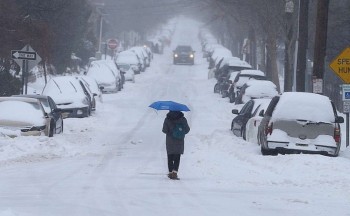 What Is Driving the Winter Storm Putting 18 Million Americans Under Alerts? What Is Driving the Winter Storm Putting 18 Million Americans Under Alerts? |
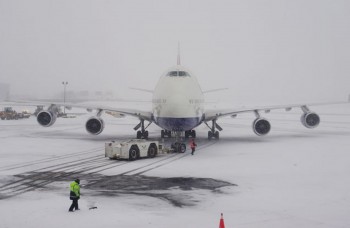 Why New York’s Airports Are Hit Hardest by Winter Storms as 1,800 Flights Are Cancelled Why New York’s Airports Are Hit Hardest by Winter Storms as 1,800 Flights Are Cancelled |
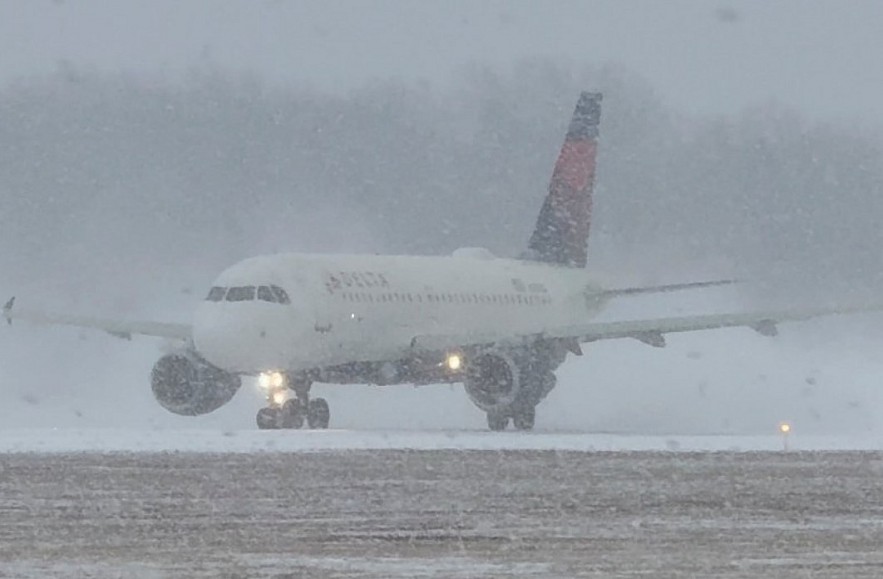 |
| US snowstorm affects 1500 flights |
Winter Storm Hits at the Worst Possible Time
A major winter storm swept across the U.S. Northeast and Great Lakes from Friday night into early Saturday, disrupting one of the busiest travel weekends of the year. Heavy snow, sleet and freezing rain combined to cancel and delay thousands of flights, snarl highways and force emergency measures across multiple states.
The storm arrived just as millions of Americans were traveling between Christmas and New Year’s, creating widespread frustration for families and holiday travelers already facing packed airports and limited rebooking options.
Read more: What Travelers Can Still Do When Winter Storms Cancel Hundreds of Flights
Flights Grounded Across the Northeast and Great Lakes
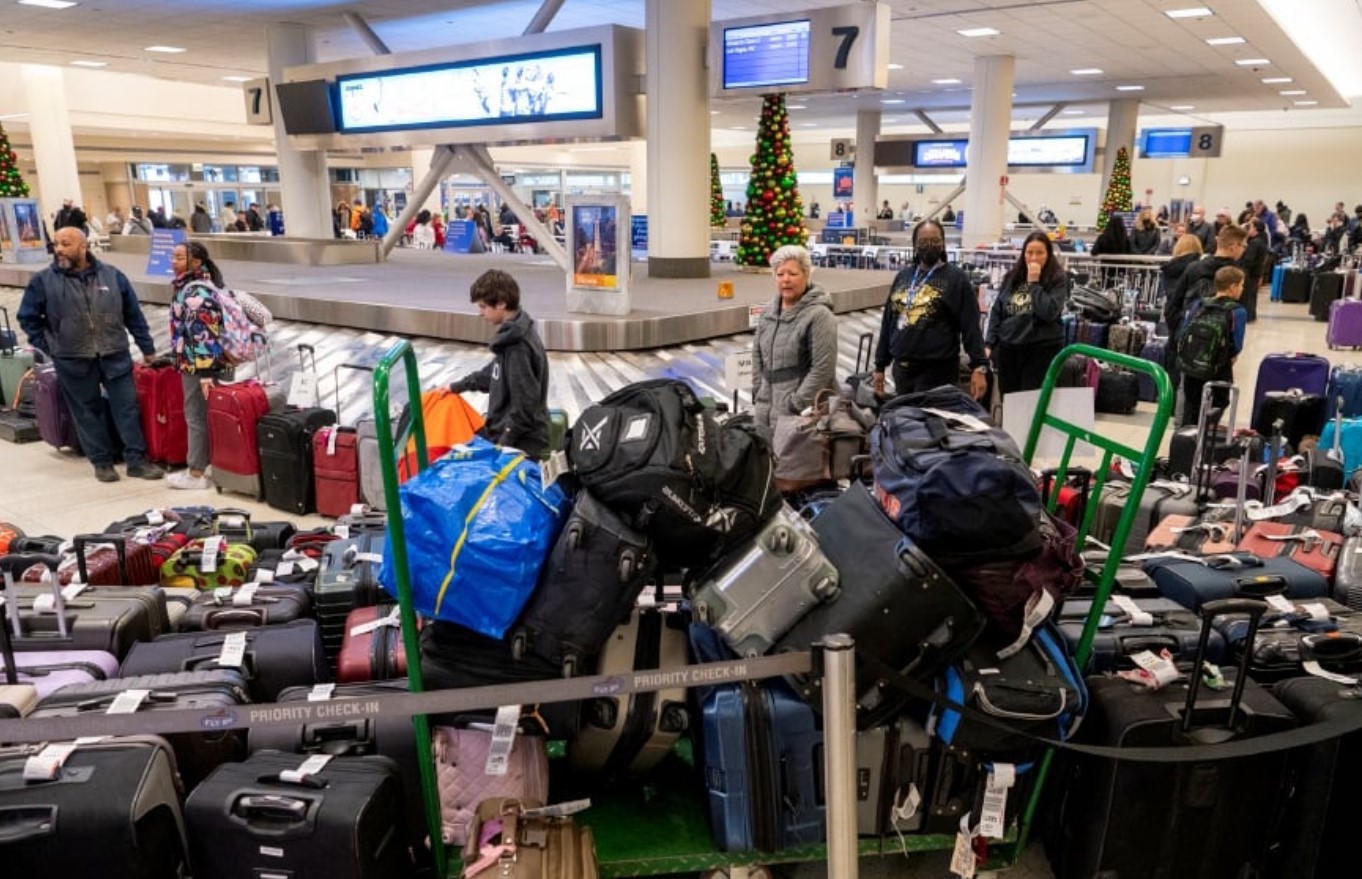
More than a thousand flights were canceled, and several thousand more were delayed nationwide as the storm intensified. The hardest-hit airports were concentrated in the Northeast, including major hubs serving New York and surrounding states.
Airports in the New York metro area, along with facilities in Boston, Philadelphia, Chicago and Detroit, reported cascading delays as snowfall reduced visibility and slowed runway operations. Airlines were forced to cancel early to reposition aircraft and crews, a move that rippled across the national air travel system.
Carriers including JetBlue, Delta, American and United issued travel waivers, allowing passengers to rebook without change fees. Even so, limited seat availability left many travelers waiting hours or days for alternative flights.
Snowfall Totals and Hazardous Conditions
The storm dropped 4 to 8 inches of snow across much of the region, with higher totals in localized areas. Parts of upstate New York, the Catskills and interior New England recorded heavier accumulations, while coastal areas dealt with a mix of snow and icy precipitation.
According to the National Weather Service, the combination of snow and freezing rain created particularly dangerous conditions for both aviation and road travel. Even after snowfall eased, lingering ice continued to pose risks on untreated surfaces.
States of Emergency and Road Restrictions
Officials moved quickly to prepare for the storm’s impact. Governors in New York and New Jersey declared states of emergency ahead of the worst conditions, enabling faster deployment of snow crews and emergency services.
New Jersey temporarily restricted commercial truck traffic on major highways to prevent accidents and keep roads clear for plowing. Authorities repeatedly urged residents to avoid unnecessary travel, especially overnight when visibility and road conditions deteriorated.
Despite aggressive snow removal efforts, numerous minor accidents and spin-outs were reported, particularly on secondary roads.
Inside the Airports: Delays, Lines and Uncertainty
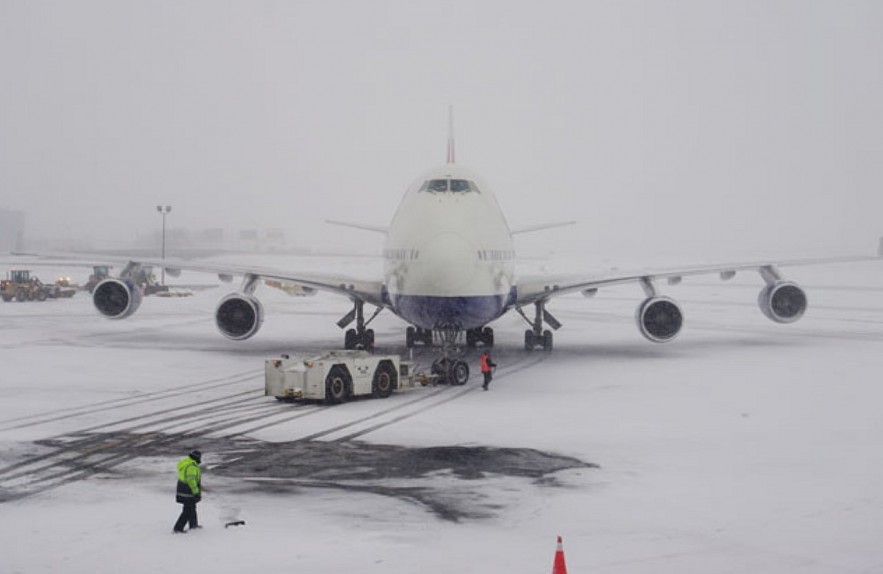 |
| A winter storm cancelled over 1,800 US flights. Here’s why New York’s airports suffer the most and how snow in NYC ripples across the entire air travel network. |
For travelers who made it to the airport, conditions were tense. Departure boards filled with red “Canceled” and “Delayed” notices as snow slowed ground operations. Long lines formed at airline service counters as passengers scrambled to rebook flights or request refunds.
Airports serving New York, including John F. Kennedy International Airport, LaGuardia Airport and Newark Liberty International Airport, were among the most affected due to both local snowfall and their role as national connecting hubs.
Airlines warned that weather-related disruptions are outside their control, meaning hotels and meal vouchers were not guaranteed for stranded passengers.
Great Lakes Region Also Impacted
While the Northeast drew most of the attention, the storm also affected parts of the Great Lakes region. Snow bands associated with lake-effect weather reduced visibility and slowed operations at airports in Illinois, Michigan and Ohio.
These conditions compounded delays as aircraft and crews arriving late from the Northeast triggered secondary disruptions in the Midwest.
What Travelers Can Expect Next
Weather models show the storm system moving offshore, but cold air lingering behind it means icy patches may persist through the weekend. Airlines are expected to gradually restore schedules, though full recovery could take time given the volume of displaced aircraft and passengers.
With New Year’s travel still underway, transportation experts warn that even minor weather systems in the coming days could cause outsized impacts.
Travelers are advised to:
-
Check flight status before leaving for the airport
-
Rebook as early as possible using airline apps
-
Allow extra time for security and boarding
-
Monitor local weather and road conditions closely
A Familiar Holiday Pattern
This storm follows a familiar pattern seen in recent years, where winter weather increasingly collides with record-level holiday travel demand. With planes flying near capacity, even modest disruptions can quickly overwhelm airport and airline operations.
For many travelers, flexibility and preparation remain the best defenses against winter travel chaos.
FAQs
Why were so many flights canceled instead of delayed?
Airlines often cancel flights preemptively during winter storms to reposition aircraft and crews safely and prevent larger systemwide disruptions.
Are airlines required to compensate passengers for weather cancellations?
No. Weather is considered outside airline control, so compensation such as hotels or meals is not guaranteed.
Which regions were most affected by the storm?
The Northeast, especially New York and New England, along with parts of the Great Lakes region, experienced the most severe impacts.
Is more winter weather expected soon?
Forecasters warn additional systems are possible later in the season, which could again disrupt travel.
What is the best way to avoid holiday travel disruptions?
Travel early in the day, monitor forecasts, choose nonstop flights when possible and build buffer time into your schedule.