Homelessness in New York City Surges to Record Levels as Shelter System Strains

 |
| Homeless in NYC |
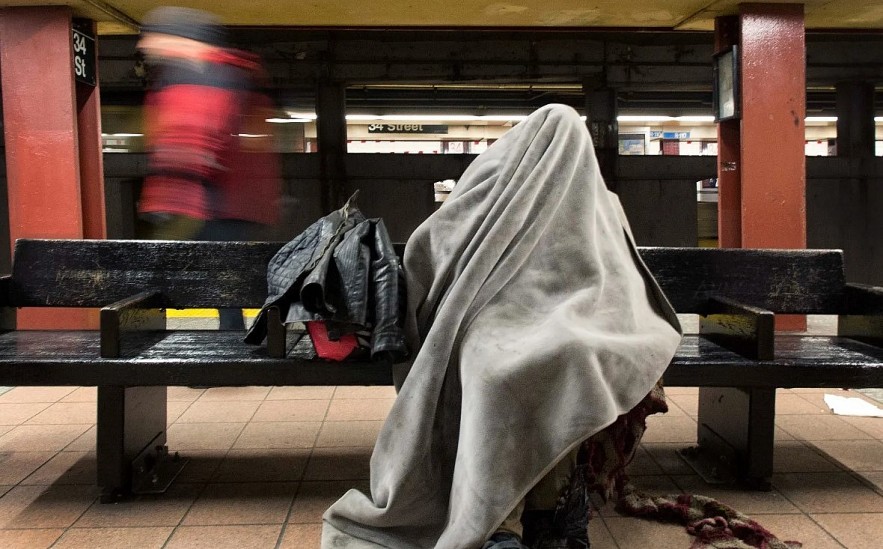
Homelessness in New York City is at one of the highest levels recorded in decades. Nearly 90,000 people now sleep inside the municipal shelter system every night, while thousands more remain outside it. Behind the headlines are stark numbers that illustrate the scale and structure of the crisis.
Here is a data-driven breakdown of the current situation.
Total Homeless Population: Over 350,000 Affected
According to data compiled by the Coalition for the Homeless, more than 350,000 New Yorkers experience homelessness annually when measured broadly.
This figure includes:
-
People staying in shelters
-
Individuals sleeping outdoors
-
Families doubling up temporarily with relatives or friends
-
Households cycling in and out of unstable housing
It reflects how homelessness in NYC extends far beyond those visible on sidewalks or subway platforms.
Read more: Top 10 States With the Most Homeless People in the U.S. in 2026
Nightly Shelter Census: Nearly 90,000 People
As of November 2025, the city’s official shelter census reported 89,732 people sleeping in Department of Homeless Services (DHS) and related shelters each night.
Breakdown of the shelter population:
-
30,868 children
-
31,388 adults in families
-
26,873 single adults
-
Of single adults:
-
19,932 men
-
7,544 women
-
Families represent a large share of the system. On a typical night, roughly 18,000–19,000 families with children are housed in shelters.
New York is unique in the U.S. because of its legally mandated “right to shelter,” which guarantees a bed to anyone who requests one. That mandate makes the city’s shelter system far larger than most others nationwide.
Read more: The Hidden Homeless: Why Millions of Americans Are One Paycheck Away From Losing Everything
Unsheltered Population: Thousands Remain Outside
Despite the right-to-shelter policy, not everyone enters the system.
City outreach surveys estimate that more than 4,500 people sleep outdoors in public spaces on a given winter night.
Advocates suggest the true number may fluctuate higher during the year, potentially ranging between 8,000 and 16,000 people experiencing street homelessness at different times.
Compared with cities on the West Coast, New York has a lower proportion of unsheltered homeless residents. However, the visibility of individuals living in subway stations and parks has become a focal point of public debate.
Families and Children: A Defining Feature of NYC Homelessness
Unlike many U.S. cities where single adults dominate homeless counts, New York’s crisis is heavily centered on families.
Current data show:
-
More than 30,000 children are in shelter nightly.
-
Approximately 18,000–19,000 families with children depend on the shelter system.
-
During the 2024–2025 school year, about 154,000 public school students were identified as homeless under federal definitions.
These students may live in shelters, temporary housing, or doubled-up arrangements. The number represents one of the highest recorded totals in the city’s history.
This underscores a key point: in New York City, homelessness is deeply tied to housing instability among working families.
Read more: Student Homelessness in America Is Exploding: The Education Crisis Hiding in Plain Sight
Restore Hope Women’s Shelter: Upper East Side Project Sparks DebateA planned 200-bed facility known as the Restore Hope Women’s Shelter is scheduled to open on Manhattan’s Upper East Side in 2026. Key details: Capacity: 200 beds Population served: Single adult women Operator: Nonprofit housing services provider Security: Surveillance cameras, controlled entry, on-site staff Services: Counseling, case management, employment support The shelter has drawn opposition from some local residents, who argue it does not belong in a wealthy residential neighborhood and could affect safety or property values. City officials say the facility reflects a broader effort to distribute shelter sites more evenly across neighborhoods rather than concentrating them in lower-income areas. The controversy highlights a persistent tension in New York’s homelessness policy: how to expand capacity while addressing community concerns. |
Shelter Capacity and Services
New York City operates one of the largest shelter systems in the United States, with tens of thousands of beds available nightly.
Services typically include:
-
Temporary housing in standalone shelters or converted hotels
-
Case management and housing placement support
-
Job readiness and employment assistance
-
Mental health services
-
Outreach teams to engage unsheltered individuals
The system spans multiple categories:
-
Family shelters
-
Single adult shelters
-
Specialized shelters for women
-
Facilities for individuals with mental health needs
-
Supportive housing programs
However, length of stay in shelters has increased in recent years, as affordable housing options remain limited and rents continue to rise.
Key Trends in 2025
Recent patterns show:
-
Shelter populations remain near record highs compared to pre-2020 levels.
-
Family homelessness continues to account for a large share of the total.
-
Student homelessness has reached record numbers.
-
Outreach and emergency response during extreme weather remain under scrutiny.
While New York’s right-to-shelter mandate keeps most people indoors, the size of the system continues to grow, putting financial and logistical pressure on city agencies.
The Bottom Line
New York City’s homelessness crisis in 2025 is defined by scale:
-
Nearly 90,000 people in shelters nightly
-
More than 30,000 children in shelter
-
Over 150,000 students affected
-
Thousands still unsheltered
The numbers reveal a system that is massive, complex and under strain. They also show that homelessness in New York is less about isolated street encampments and more about widespread housing instability affecting families across the city.
If current housing pressures persist, these figures are unlikely to fall quickly.