How $4 Gas Is Quietly Rewriting the US Supply Chain in 2026

A few weeks ago, I paid just over $4 a gallon and didn’t think much of it. That surprised me more than the price itself.
Not long ago, that number would’ve felt like a warning sign. Now it just blends into the routine—fill up, tap the card, move on. But later that day, standing in a grocery store, I started noticing something else. Not one big jump in prices, but a pattern. Things costing a little more. Packages feeling a little lighter.
That’s when it clicks: the real impact of fuel prices doesn’t stay at the pump. It spreads out, quietly, into almost everything else.
 Smart Fueling Habits: How to Get the Most Value Every Time You Pump Gas Smart Fueling Habits: How to Get the Most Value Every Time You Pump Gas |
 Gas Pump Myths: What Actually Saves You Money at the Pump? Gas Pump Myths: What Actually Saves You Money at the Pump? |
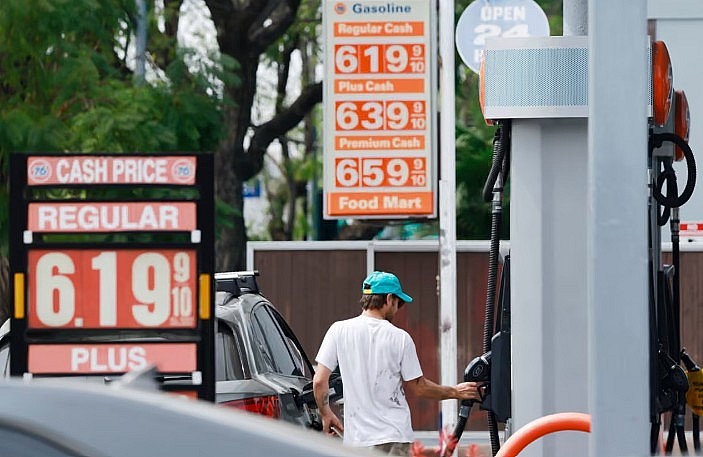 |
| A gallon of gas is never just a gallon of gas |
It starts with diesel, not gasoline
Gas gets the attention, but diesel is what keeps the system moving.
Right now, diesel hovering around $5.67 a gallon is where the real pressure sits. Trucks run on it. And in the US, trucks move most of what people buy—food, furniture, packages, all of it.
What’s interesting is that you don’t see a dramatic breakdown when diesel gets expensive. No sudden shortages. No empty shelves like before. Instead, things just get tighter.
A driver waits longer to make sure the truck is fully loaded before leaving. A delivery gets pushed back a few hours. A route gets combined with another to save fuel.
None of that makes headlines. But all of it adds cost.
And those costs don’t stay with the trucking companies.
The quiet spread of extra fees
If you order something online today, chances are you’re paying a little more than you did a year ago. Not always in obvious ways.
Sometimes it shows up as a delivery fee that didn’t exist before. Sometimes it’s a higher minimum for free shipping. Sometimes it’s just baked into the price and you don’t notice.
These are shipping surcharges, even if they’re not always labeled that way.
Companies learned something over the past few years: people react strongly to big price jumps, but they adjust to small, scattered ones.
So instead of raising the price of a product by $10, it becomes:
- $3 more for shipping
- $2 more in “handling”
- a slightly higher base price
Individually, it feels manageable. Together, it’s not.
Read more: Why Gas Prices Rise Fast but Fall Slow? "Rockets and Feathers" Phenomenone
When things don’t last as long anymore
There’s another change that’s harder to explain but easy to feel.
You buy something you’ve bought before, and it just… runs out faster.
That cereal box looks the same, but it doesn’t last the week. The snack pack has fewer pieces. Even household items seem to need replacing sooner.
That’s shrinkflation, and it’s closely tied to rising costs across the supply chain, including fuel.
Moving goods is expensive. When diesel prices stay high, every step—from factory to warehouse to store—costs more. Instead of raising prices outright, companies quietly reduce what you get.
It’s subtle enough that you question yourself before you question the product.
Groceries tell the story best
If you want to see how energy costs affect daily life, just watch your grocery bill over time.
Not one trip. A few weeks. A couple of months.
It doesn’t spike all at once. It creeps.
Fresh food gets a bit more expensive because it has to move quickly and stay refrigerated. Meat and dairy climb because they rely heavily on both feed and cold storage. Packaged goods inch up because everything involved—materials, transport, storage—costs more.
This is what people mean by supply chain inflation in 2026. It’s not dramatic. It’s persistent.
And persistence is what wears people down.
It’s not just food or fuel
Once you notice the pattern, you start seeing it in other places too.
Flights feel more expensive, even when prices don’t look wildly different at first glance. The cheapest options disappear faster. Flexibility costs more.
Online shopping isn’t as effortless as it used to be. Free shipping comes with conditions. Returns aren’t always free anymore, or at least not as easy.
That shift with returns says a lot.
Sending something back means moving it through the system again—more fuel, more handling, more cost. Companies are starting to push some of that burden back to customers, gently.
Not by making a big announcement. Just by changing the terms.
The cost of living, without a single big culprit
People often ask why everything feels more expensive lately, even when there isn’t one obvious reason.
This is why.
It’s not one category exploding. It’s many small increases happening at the same time:
- a slightly higher grocery bill
- a few extra dollars on delivery
- products that don’t stretch as far
On their own, they don’t seem serious. Together, they change how people spend.
You start thinking twice about things that used to feel automatic. Maybe you bundle orders instead of buying right away. Maybe you skip delivery and pick things up yourself. Maybe you just buy a little less.
Not because you have to. Because it makes sense.
Why this moment feels different
There’s something quieter about this kind of inflation.
In the past, price increases felt sharp and obvious. You noticed them immediately. Everyone talked about them.
Now, it’s more gradual. Less visible. Harder to point to a single cause.
That makes it easier to accept, but also harder to push back against.
It becomes part of the background, like that $4 gas price.
Where it goes from here
Over time, companies will adjust. They always do.
Some are already trying to reduce fuel use with better routing or more efficient fleets. Others are looking at alternative energy, though that shift is still slow.
But for now, fuel is still a core cost. And as long as diesel stays high, the pressure stays in the system.
It doesn’t disappear. It just keeps moving.
One last thought
It’s easy to think of fuel as just another expense—something you deal with and forget.
But it’s more like a starting point.
From there, it works its way into everything else, shaping prices, decisions, and habits in ways that are easy to miss day to day.
You don’t feel it all at once.
You feel it over time.