Japan Hit by Strong Quake as Tsunami Waves Reach Up to 10 Feet, Mass Coastal Evacuations

 |
| Wave as high as 3 metres could hit north-east of country after powerful tremor 50 miles off coast |
Tsunami alerts and rising water levels
Japan’s Meteorological Agency (JMA) issued tsunami warnings for Aomori, Iwate and Hokkaido soon after the quake struck off the Pacific coast. A tsunami advisory was later added for Fukushima Prefecture — a region still deeply scarred by the 2011 disaster.
JMA forecast that some coastal areas closest to the epicenter could face waves of up to 3 meters, nearly 10 feet, depending on underwater terrain and local bays. Early observations recorded tsunami waves up to 2.2 feet, with instruments along the northern coast detecting repeated surges between 40 and 70 centimeters.
Officials stressed that initial readings seldom reflect the strongest wave. In many past earthquakes, larger surges have followed minutes or even hours after the first rise in sea level.
Read more: Powerful 7.6 Earthquake Strikes Northern Japan, Triggers Tsunami Waves and Large-Scale Evacuations
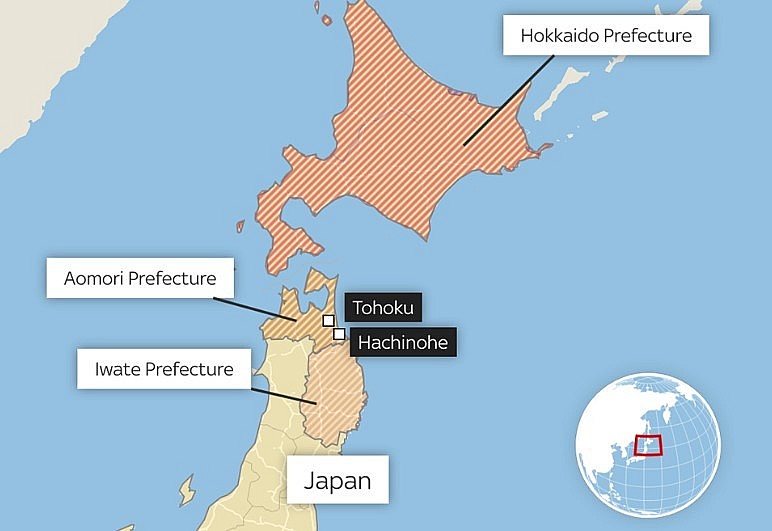 |
| Japan's Meteorological Agency (JMA) said it expected waves up to 9 feet in height for some prefectures closest to the epicenter. JMA has observed tsunami wave heights as high as 2.2 feet. |
Mass evacuations as coastal towns react
Local governments issued evacuation orders for tens of thousands of residents. Sirens and loudspeakers sounded across fishing towns and port districts, urging people to get to higher ground without waiting for further instructions.
In parts of Aomori and Iwate, residents were seen hurrying toward hillside shelters, some on foot and others in cars that quickly clogged narrow coastal roads. Families carried blankets, radios, flashlights and emergency food packs — a routine many northern communities have rehearsed since the 2011 tragedy.
Hokkaido authorities also mobilized evacuation teams, directing residents living near low-lying bays to move inland. Coastal schools and civic centers opened their doors through the night to serve as temporary shelters.
Transportation disruptions and infrastructure checks
One of Japan’s major high-speed rail lines suspended service as a precaution following strong ground motion. Regional rail operators halted several local lines to inspect tracks, tunnels and bridges for damage.
Small fires and scattered injuries were reported in northern Honshu. A hotel in Hachinohe saw minor ceiling damage with several guests injured, while another resident was hurt when his vehicle sank into a fissure caused by the shaking.
Power outages affected homes in Aomori and Iwate but were mostly restored by morning. Communications remained largely stable, though mobile networks in several evacuation zones experienced heavy congestion.
Concerns in Fukushima and other coastal areas
With a tsunami advisory issued for Fukushima, anxiety rose quickly among residents. Although no nuclear facility abnormalities were detected, plant operators launched immediate safety inspections, checking coolant systems, backup generators and structural integrity.
Authorities emphasized that even small tsunami waves can become dangerous near river mouths and narrow ports, where water surges can accelerate rapidly. Residents were told not to return home until official clearance was issued.
Aftershocks and continued risk
Multiple aftershocks followed the main quake, including one strong enough to be felt widely across Tohoku. Seismologists warned that the region may experience significant aftershocks for several days — any of which could generate additional sea-level disturbances.
Coastal defenses, seawalls and port structures are undergoing assessment. Emergency management teams said it may take several days to fully understand the impact of both the shaking and the tsunami waves.
What authorities are watching next
-
Updates to tsunami alerts and advisories as sensors monitor sea-level changes
-
Potential larger or delayed tsunami waves, especially during tidal shifts
-
Damage inspections in coastal towns and ports
-
Support for evacuees who may remain displaced until alerts end
-
Nuclear plant safety verification in Fukushima and northern regions
Officials reiterated that people in evacuation zones should stay away from the coast until all warnings are lifted, even if water levels appear calm.
FAQs
What was the height of the tsunami waves?
Forecasts predicted waves up to 10 feet (around 3 meters) near the epicenter. So far, confirmed early waves reached up to 2.2 feet, with several smaller surges recorded along the northern coastline.
Which areas received evacuation orders?
Evacuation orders covered coastal zones in Aomori, Iwate and Hokkaido, and advisories extended to Fukushima Prefecture.
Why were high-speed rail services suspended?
Operators temporarily shut down lines to inspect rail infrastructure for earthquake-related damage, a common safety precaution after strong seismic activity.
Is there any damage to nuclear facilities?
No. Initial inspections reported no abnormalities, but detailed safety checks are ongoing.
Are further tsunami waves possible?
Yes. Delayed waves can occur, especially after aftershocks or underwater landslides. Residents are urged to remain in safe areas until the government lifts all warnings.
When will the situation stabilize?
Authorities expect ongoing monitoring for at least several days. The timeline depends on aftershock activity and coastal water behavior.