How Internet Slang Turned Holiday Greetings Into Culture-War Weapons



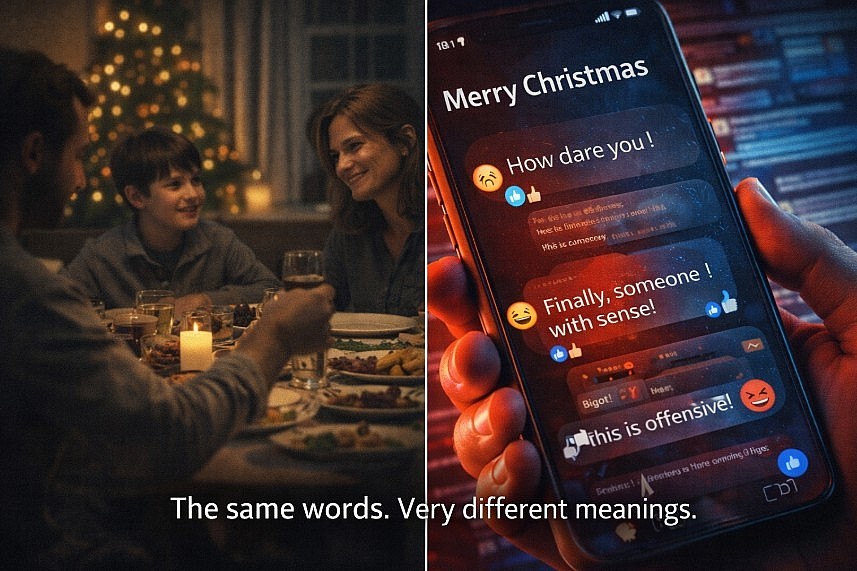 |
| Same Words, Different Worlds |
At first glance, it looks harmless: a meme, a joke, a slightly altered holiday greeting floating across social media feeds. But in today’s hyperconnected America, language that once felt neutral is increasingly charged—capable of signaling identity, ideology, or defiance in just a few words.
Phrases that were once simple expressions of goodwill are now read as statements. Some are embraced. Others ignite backlash. What changed isn’t just the words—it’s the digital environment that reshapes them.
Read more: When Online Memes Spill Into Real Life: How Digital Culture Wars Are Changing Everyday Interactions
When jokes stop being just jokes
Internet slang thrives on irony. It often relies on shared knowledge: the assumption that everyone “gets it.” Online, that assumption can feel safe inside echo chambers where users share similar views and humor styles.
But once slang escapes those spaces, context collapses.
A phrase meant as satire to one group can sound aggressive to another. A meme intended to mock power can feel like a personal attack when dropped into everyday conversation. Offline, people don’t come with comment sections or disclaimers.
The result: confusion, defensiveness, and sometimes outright conflict—sparked by words that once felt trivial.
The political compression of language
Social media rewards speed and brevity. Complex arguments are compressed into punchlines, emojis, and short phrases. Over time, those phrases become shorthand for entire belief systems.
This compression turns language into a kind of cultural signal. Saying—or refusing to say—certain words communicates affiliation. Silence can be interpreted as disagreement. Participation can be read as endorsement.
Holiday greetings, once among the least controversial forms of speech, have become part of this signaling economy. In some online spaces, how you greet others now suggests what you believe, not just what you celebrate.
Why holidays amplify the tension
Holidays are uniquely vulnerable to language wars because they sit at the intersection of tradition, identity, and public visibility. They’re moments when people interact across generations, cultures, and belief systems—often face to face.
When internet-born slang enters these moments, the contrast becomes sharp. What feels playful online can feel jarring around a dinner table or in a workplace hallway. The stakes rise because the audience is broader—and less forgiving.
As a result, many Americans report self-censoring during holidays: avoiding jokes, sticking to neutral phrases, or opting out of conversations entirely to keep the peace.
From expression to provocation
One reason slang escalates so quickly is that ambiguity invites interpretation. Without tone indicators or emojis, words land harder offline. Listeners fill in intent based on their own experiences and assumptions.
This dynamic has transformed language from a tool of connection into a potential provocation. People aren’t just hearing words; they’re scanning for hidden meanings, testing whether a phrase is a challenge or an invitation.
Over time, this erodes trust. Conversations become cautious. Humor narrows. People default to silence—not because they have nothing to say, but because saying the wrong thing feels risky.
The role of algorithms in cultural escalation
Behind the scenes, algorithms play a powerful role. Content that provokes strong reactions—anger, outrage, mockery—travels farther and faster. Slang and memes that divide audiences are amplified precisely because they generate engagement.
As users encounter the same charged phrases repeatedly, they take on symbolic weight. Repetition turns novelty into identity. What started as a fringe joke becomes a cultural marker, then a battleground.
Offline, however, people encounter these phrases without the buffering effect of distance. There’s no scroll-away option at a family gathering or staff meeting.
The quiet backlash: opting out
Interestingly, one of the most common responses isn’t confrontation—it’s withdrawal.
Many Americans say they’re stepping back from online spaces, muting keywords, or disengaging from conversations that feel performative or hostile. Others avoid repeating slang altogether, even if they understand it, to sidestep misunderstandings.
This quiet opt-out doesn’t show up in trending topics, but it shapes culture just as powerfully. It signals fatigue—a desire to reclaim everyday language as something lighter, safer, and less loaded.
Can language cool down again?
Language evolves constantly, and history suggests today’s flashpoints won’t last forever. Slang that feels explosive now may lose potency as it becomes overused—or replaced by the next wave of internet vernacular.
But cooling down requires intention. It means recognizing that not every phrase belongs everywhere, and that context matters as much as content. It also means resisting the urge to treat every word as a test of loyalty or belief.
Small choices help: asking what someone means before reacting, allowing room for misunderstanding, and remembering that most offline interactions aren’t performances—they’re attempts at connection.
What this says about modern American culture
The transformation of holiday greetings into culture-war weapons reveals a deeper truth: Americans are negotiating how identity, humor, and politics coexist in a digital age.
Words haven’t just changed meaning; they’ve changed function. They now sort, signal, and sometimes divide. Understanding that shift is the first step toward undoing its more corrosive effects.
As the country moves further into 2026, the challenge isn’t banning slang or memes—it’s learning when to let language bring people together, rather than pull them apart.
 The Longevity Economy: How Americans Over 50 Are Funding the Future of Anti-Aging Science The Longevity Economy: How Americans Over 50 Are Funding the Future of Anti-Aging Science Why the 50+ crowd is the most powerful force behind Silicon Valley’s race to defeat aging? |
 The Hidden Homeless: Why Millions of Americans Are One Paycheck Away From Losing Everything The Hidden Homeless: Why Millions of Americans Are One Paycheck Away From Losing Everything This article takes a deeper look at who the hidden homeless really are, why this group is growing so fast, how close the average American ... |
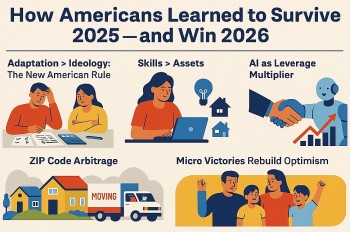 How Americans Learned to Survive 2025 — and Win 2026 How Americans Learned to Survive 2025 — and Win 2026 Learn the new rules of survival in America: mobility, AI adoption, geographic arbitrage, and micro-entrepreneurship. |
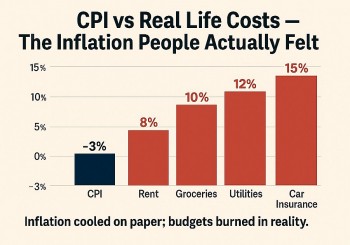 Why Americans Felt Poorer in 2025 — Even After Inflation Fell Why Americans Felt Poorer in 2025 — Even After Inflation Fell Inflation cooled in 2025, but Americans still struggled. Explore how sticky prices, rent, and utilities fueled a real-life economic crisis. |