Powerful 7.6 Earthquake Strikes Northern Japan, Triggers Tsunami Waves and Large-Scale Evacuations

A 7.6 quake that hit without warning
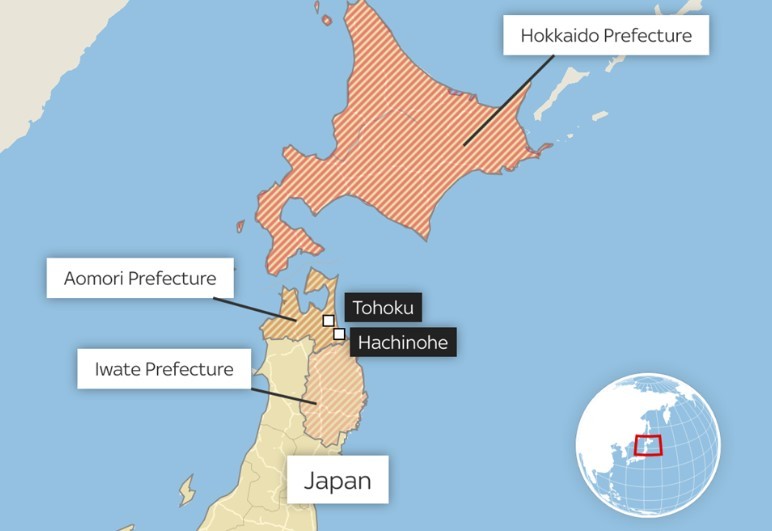
The quake struck at 11:15 p.m. local time, offshore in the Pacific Ocean east of Aomori Prefecture. According to Japan’s Meteorological Agency (JMA), the hypocenter was roughly 44–50 kilometers underwater. The shaking was felt widely across Tohoku and parts of Hokkaido, lasting around half a minute.
Japan immediately issued tsunami warnings for the northern coastline, estimating potential waves up to three meters in height depending on local geography.
Read more: Japan Hit by Strong Quake as Tsunami Waves Reach Up to 10 Feet, Mass Coastal Evacuations
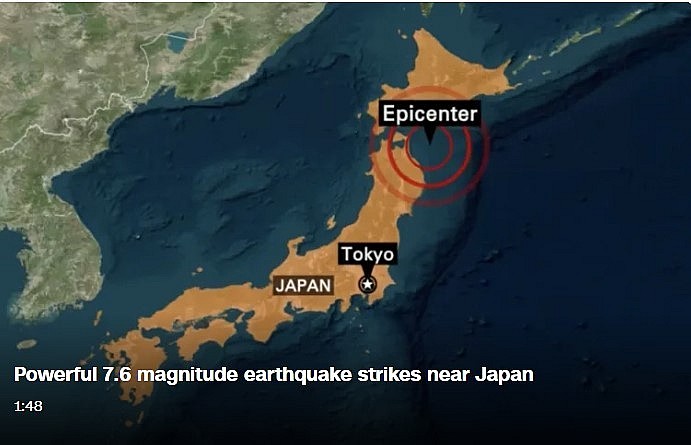 |
| Evacuation orders issued in Japan after powerful earthquake triggers tsunami warning |
Tsunami waves recorded at multiple ports
Within an hour of the earthquake, tide gauges detected tsunami waves between 40 and 70 centimeters at several coastal locations:
-
Kuji Port (Iwate): approx. 70 cm
-
Mutsu Ogawara (Aomori): roughly 40–50 cm
-
Urakawa (Hokkaido): around 50 cm
While these waves were smaller than the three-meter maximum alert, authorities stressed that initial readings can be misleading. Larger, delayed waves sometimes follow the first surge, which is why residents were instructed to remain away from the coastline until an official all-clear.
Evacuations and immediate response
More than 90,000 residents were advised or ordered to evacuate. Emergency centers opened throughout Aomori and Iwate, with welfare teams assisting elderly residents and families with small children.
Several injuries were reported, including a man whose vehicle fell into a ground fissure and multiple guests injured when part of a hotel ceiling collapsed in Hachinohe. Local firefighters also responded to several small fires linked to the shaking.
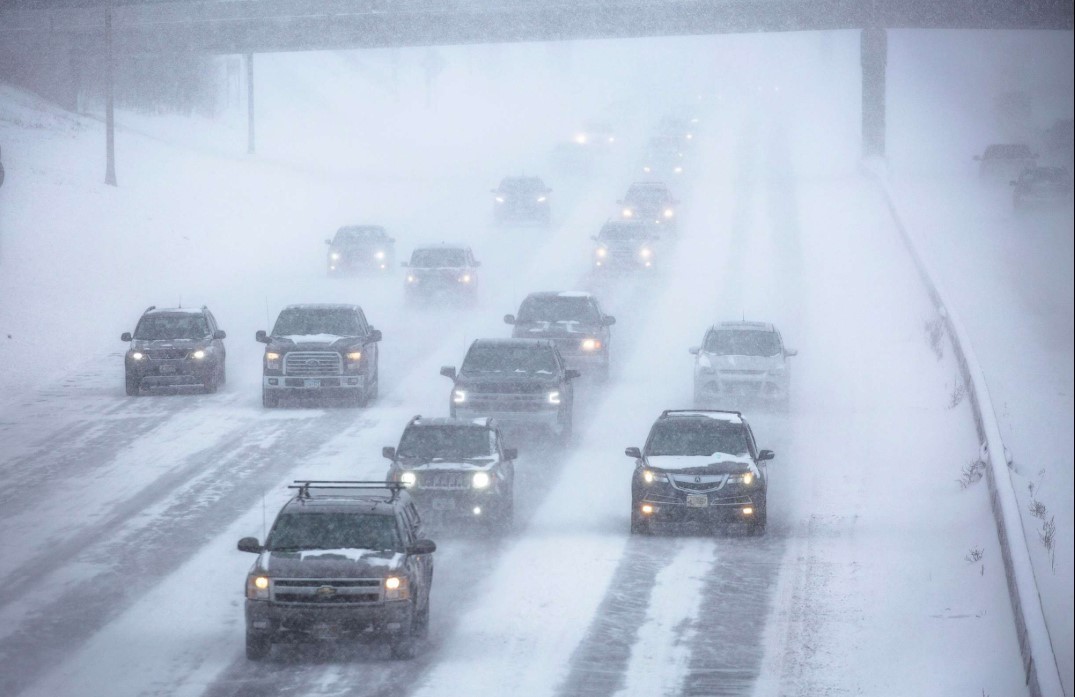
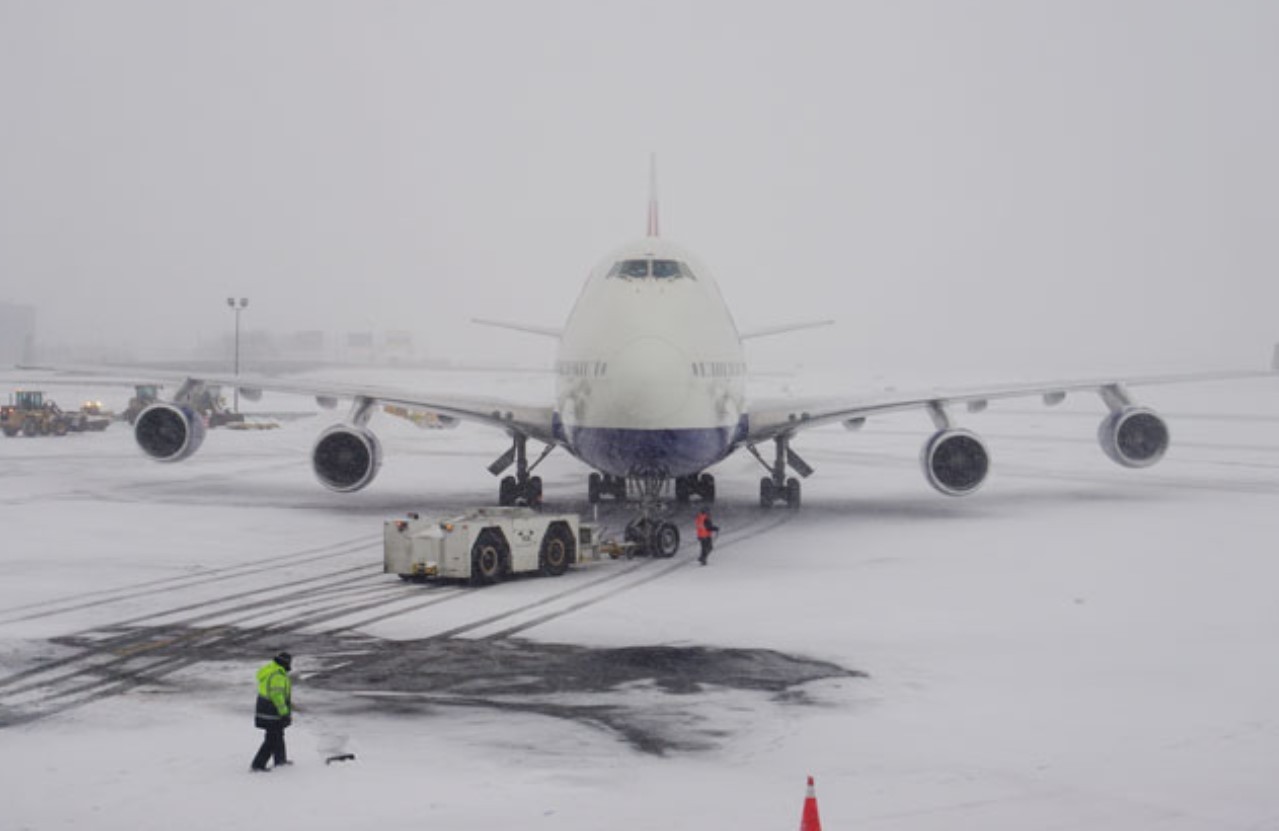
Public transportation saw temporary shutdowns, with some northern rail lines halting service for inspections.
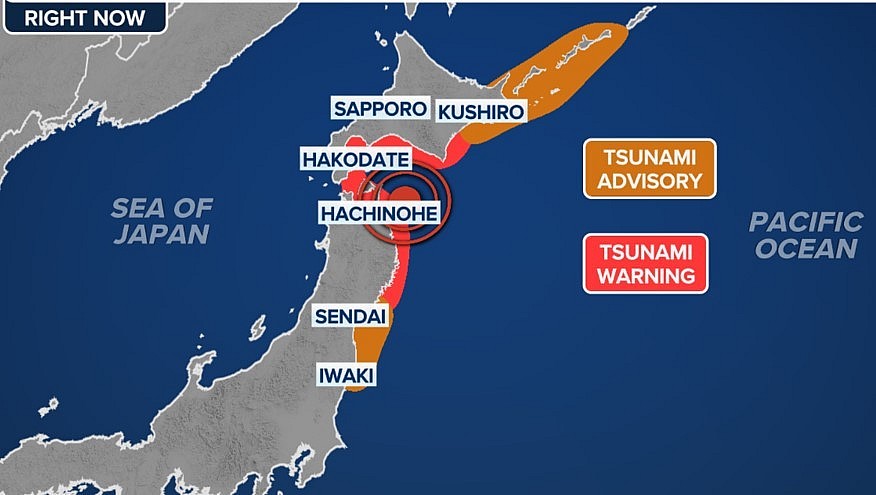 |
| Japan's government issued a tsunami warning covering parts of the eastern coast of Honshu and Hokkiado. |
Power, communications, and infrastructure checks
Electricity outages briefly affected thousands of households overnight, though most were restored by morning. Telecommunications remained mostly stable, though coastal towns experienced intermittent mobile-network congestion as residents attempted to contact relatives.
Engineers began early-morning inspections of roads, seawalls, and fishing port facilities. Initial reports show localized structural damage but no widespread destruction.
Nuclear safety: no abnormalities detected
Northern Japan’s power utilities, including Tohoku Electric Power and Hokkaido Electric Power, initiated automatic safety checks at nuclear installations. As of the latest update, no abnormalities have been detected, and reactors remain stable.
Japan’s nuclear regulators continue to monitor seismic activity closely, with deeper inspection of coolant systems and backup generators expected over the next several days.
Aftershocks and scientific context
Multiple aftershocks followed the main quake, including a magnitude-5.5 tremor early Monday. Seismologists say this level of seismic activity is expected in the region, which lies along the highly active Pacific Ring of Fire.
The earthquake occurred just north of the rupture zone of the 2011 Great East Japan Earthquake, increasing concern among coastal communities that remain highly sensitive to tsunami risk.
Scientists noted that the depth and offshore location of the quake helped limit the scale of the tsunami, though any undersea movement above magnitude 7 remains potentially dangerous for northern Japan’s narrow bays, where water surges can amplify rapidly.
Government response and ongoing risks
Japan’s government convened an emergency task force shortly after midnight to coordinate evacuation support, damage surveys, and infrastructure checks. Officials warned residents that dangerous aftershocks may continue for several days.
Authorities urged people in coastal areas to remain cautious even after the initial tsunami advisory was lifted, emphasizing that unexpected surges can still appear after strong offshore quakes.
What to expect in the coming days
-
Detailed inspections of coastal defenses and port structures
-
Continued aftershocks, some potentially strong
-
Updated safety assessments for nuclear facilities
-
Government support for displaced or evacuated residents
-
Data analysis from JMA to update hazard models for northern Japan
While the situation has stabilized compared to the initial overnight emergency, coastal residents remain wary as seismic activity continues.
FAQs
What was the magnitude of the earthquake?
It was a magnitude-7.6 offshore earthquake located near Aomori Prefecture at approximately 44–50 km depth.
How large were the tsunami waves?
Recorded waves reached 40–70 cm, but authorities warned that higher waves were possible depending on coastal shape and timing.
Which prefectures were under tsunami warnings?
Aomori, Iwate, and Hokkaido received the highest alerts.
Were there casualties or major damage?
Several injuries and small fires were reported. Structural damage appears localized, with no large-scale destruction confirmed.
Were nuclear facilities affected?
No abnormalities have been detected so far. Safety inspections are ongoing.
Will there be more earthquakes?
Aftershocks are expected for several days. Some may be strong enough to cause additional shaking in northern Japan.