Spain Calendar 2026: Holidays, Festivals, and the Rhythm of Spanish Life

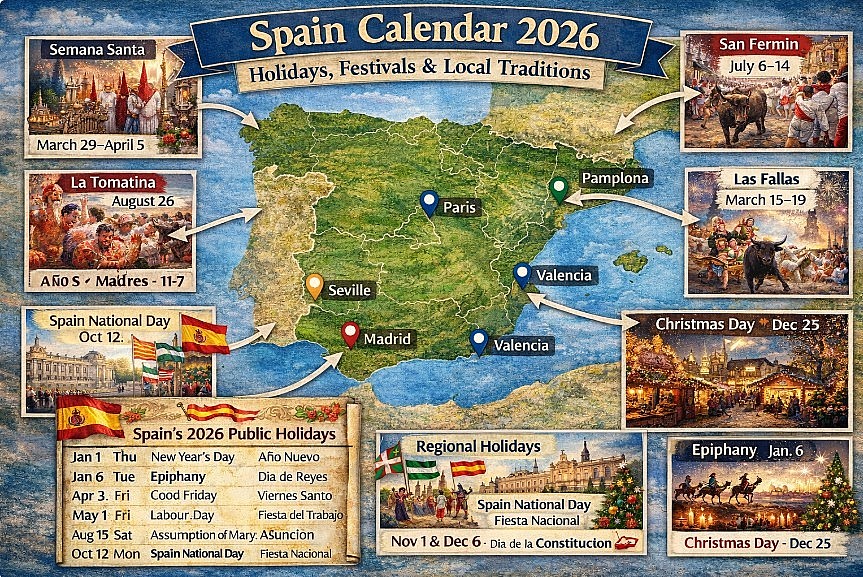 |
| Spain Calendar 2026 |
Understanding Spain Through Its Calendar
To understand Spain, it is not enough to know its geography or cuisine. Spain is best understood through its calendar, where religion, history, regional identity, and celebration are deeply intertwined. Time in Spain is lived collectively, publicly, and often loudly.
The Spanish calendar is shaped by:
-
National public holidays
-
Regional and local holidays unique to Spain’s autonomous communities
-
Iconic festivals that define Spain’s global image
In 2026, Spain’s calendar offers a vivid portrait of a country where tradition and celebration are central to public life, and where timing is essential for travelers, businesses, and residents alike.
How Public Holidays Work in Spain
Spain has one of Europe’s most decentralized holiday systems.
Key principles:
-
Public holidays are divided into national, regional, and local holidays
-
Each autonomous community observes up to 14 public holidays per year
-
Some national holidays can be moved to Mondays depending on regional decisions
-
There is no automatic substitute day off if a holiday falls on a weekend, unless decided regionally
In 2026, Spain observes 8 national public holidays, plus additional regional and local days.
National Public Holidays in Spain 2026
These holidays are recognized across Spain, though some regions may shift observance.
Spain National Public Holidays 2026
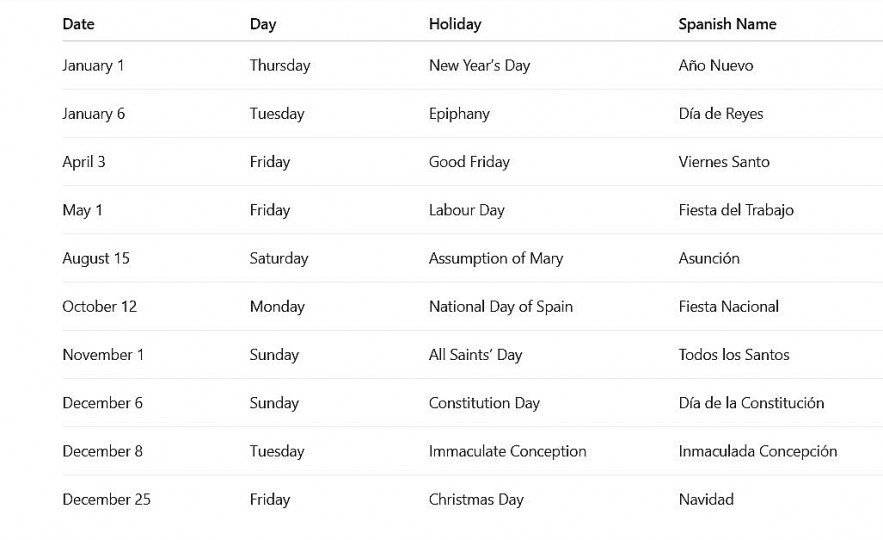 |
| National Public Holidays in Spain 2026 |
Note: Some regions shift Constitution Day (Dec 6) to Monday, December 7, 2026.
Regional and Local Holidays: Spain’s Defining Feature
What truly distinguishes Spain is the importance of regional identity. Autonomous communities add their own holidays, such as:
-
Andalusia Day
-
Catalonia’s National Day (La Diada)
-
Madrid Community Day
-
Basque Country Day
Major cities also observe local patron saint festivals, meaning the actual number of days off varies significantly by location.
For businesses and travelers, knowing the regional calendar is as important as knowing the national one.
Read more: Spain Calendar in 2025 - Public & Regional Holidays: Significance And Celebrations
Month-by-Month Rhythm of 2026
January: Kings and New Beginnings
-
January 6 – Epiphany (Día de Reyes)
This is one of Spain’s most beloved holidays. Parades fill the streets, gifts are exchanged, and children, not Santa Claus, take center stage.
March–April: Semana Santa (Holy Week)
Semana Santa is Spain’s most emotionally powerful religious period, especially in cities like Seville.
Processions feature:
-
Hooded penitents
-
Massive religious floats
-
Music, silence, and spectacle
Even for non-religious visitors, Semana Santa is a defining cultural experience. Travel demand peaks, and many businesses close during Holy Week.
May: Spring Festivals and Public Life
-
May 1 – Labour Day
-
Local spring fairs across southern Spain
May is one of the most pleasant months to experience Spain’s outdoor culture, with fewer closures than August and lower summer temperatures.
Summer: Celebration Without Pause
San Fermín – Pamplona (July)
Held in Pamplona, San Fermín is famous worldwide for the Running of the Bulls.
Despite controversy, it remains one of Spain’s most recognizable festivals, drawing global media attention.
La Tomatina – Buñol (August)
In Buñol, thousands gather for the world’s largest food fight.
La Tomatina reflects Spain’s playful side—chaotic, communal, and unapologetically festive.
Las Fallas – Valencia (March)
Held in Valencia, Las Fallas combines art, satire, fireworks, and fire.
Giant sculptures are burned in public ceremonies, symbolizing renewal and social commentary.
October 12: National Day of Spain
Spain’s national day marks the country’s historical identity and global connections.
Celebrations include:
-
Military parade in Madrid
-
Official state ceremonies
-
Cultural events across regions
Autumn: Memory and Tradition
-
November 1 – All Saints’ Day
Families visit cemeteries and honor the dead. It is a solemn but deeply rooted tradition.
December: Constitution and Christmas
-
December 6 – Constitution Day
-
December 8 – Immaculate Conception
-
December 25 – Christmas Day
Early December often creates long weekends, making it a popular period for domestic travel.
Practical Planning Insights for 2026
-
Travelers: Avoid Semana Santa and August festivals if you prefer quiet travel
-
Businesses: Regional holidays can disrupt operations unexpectedly
-
Expats: Learn local calendars early to avoid surprises
-
Event planners: Book well in advance for summer festivals
Final Perspective
The Spain Calendar 2026 is vibrant, decentralized, and emotionally rich. With national holidays, powerful religious traditions, and globally famous festivals, it offers one of Europe’s most dynamic annual rhythms.
Understanding Spain’s calendar is essential for anyone seeking to work, travel, or truly connect with the country in 2026.