The Best Christmas Messages for Customers Who Had a Bad Year

For many businesses, December is a time of celebration. But for many customers, it isn’t.
Some have faced financial stress. Others have dealt with health issues, job loss, burnout, or personal hardship. In moments like these, cheerful holiday marketing can feel out of touch, or even hurtful.
That’s why empathetic Christmas messages matter.
 |
| The Thoughtful Wording for Customers Going Through a Difficult Yearsensitive holiday message for customers |
Why “Cheerful” Holiday Messages Can Backfire
Traditional holiday messaging often relies on:
-
Excitement
-
Celebration
-
Optimism at full volume
For customers who are struggling, this tone can feel disconnected from reality.
Phrases like “This year has been amazing!” or “We hope your year was full of joy!” assume an experience many people simply didn’t have.
An empathetic Christmas message during hard times does the opposite. It acknowledges difficulty without dramatizing it.
What Makes a Christmas Message Empathetic?
Empathy in messaging isn’t about saying the perfect thing. It’s about choosing what not to say.
An effective empathetic message usually:
-
Avoids exaggerated joy
-
Does not assume how the customer feels
-
Acknowledges challenges in a gentle way
-
Offers warmth without pressure
Most importantly, it sounds human.
Language That Works During Difficult Times
When customers have had a rough year, these themes tend to resonate:
-
Understanding
-
Appreciation
-
Patience
-
Quiet support
-
Hope without promises
Instead of focusing on celebration, focus on presence.
Helpful phrases include:
-
“We know this year has been challenging for many.”
-
“If this season feels heavy, you’re not alone.”
-
“We appreciate you being here, especially during difficult times.”
Empathetic Messages for Business Emails
Email is often the main channel for customer communication. That makes tone especially important.
A good structure for an empathetic holiday email:
-
Acknowledge the year honestly
-
Express appreciation
-
Offer a gentle, non-demanding wish
Example:
“As the year draws to a close, we know it’s been a difficult time for many. We want to thank you for being with us and wish you moments of rest and peace during the holiday season.”
No promotions. No urgency. Just care.
Examples of Empathetic Christmas Messages for Customers
When customers have had a hard year, the goal of a Christmas message is not to cheer them up. It’s to acknowledge reality, show care, and avoid emotional pressure.
Empathy in writing means leaving space. It means choosing words that support without demanding optimism, gratitude, or engagement.
Below are expanded examples of empathetic Christmas messages, grouped by tone and use case. Each group includes guidance on why the message works, not just what it says.
1. Messages That Acknowledge a Difficult Year (Without Naming Specific Problems)
These messages gently recognize that the past year may have been challenging, without assuming what the customer went through.
Examples:
-
“As the year comes to a close, we know it has been a challenging time for many. We wanted to reach out and wish you calm and care during this holiday season.”
-
“This season can bring mixed emotions. We hope the days ahead offer moments of rest and steadiness.”
-
“As we approach the end of the year, we’re thinking of everyone who has had to navigate difficult moments.”
Why this works:
-
Uses “many” instead of “you”, avoiding assumptions
-
Acknowledges hardship without dramatizing it
-
Keeps the tone respectful and non-intrusive
This style is especially effective for large customer bases where experiences vary widely.
2. Gentle, Supportive Messages That Lead With Presence
Sometimes the most empathetic thing a brand can say is simply: we’re here, and we see you.
Examples:
-
“If this season feels heavy, we want you to know you’re not forgotten. Wishing you warmth and care at year’s end.”
-
“We know not everyone feels celebratory during the holidays. We’re sending steady, thoughtful wishes your way.”
-
“This message comes without expectations. Just a quiet note to wish you well during the holiday season.”
Why this works:
-
Removes pressure to feel joyful
-
Explicitly avoids celebration language
-
Feels human rather than corporate
These messages are ideal for brands in healthcare, education, finance, or essential services, where customers may be under stress.
3. Empathetic Christmas Messages That Express Gratitude (Without Obligation)
Gratitude can feel comforting when it’s expressed carefully. The key is to avoid language that makes customers feel they owe something.
Examples:
-
“We’re grateful for your trust during a year that hasn’t been easy. Thank you for being here, and we wish you peace as the year ends.”
-
“Your presence in our community has mattered to us this year. Wishing you a gentle holiday season.”
-
“Thank you for staying connected with us. We hope the coming weeks bring moments of rest and renewal.”
Why this works:
-
Gratitude is directed inward, not demanding a response
-
No call to action
-
Appreciation is calm, not enthusiastic
This tone works well for long-term customer relationships and subscription-based businesses.
4. Short Empathetic Messages for Cards, Footers, or Website Banners
Sometimes empathy needs to be brief. Short messages can still carry emotional weight when written carefully.
Examples:
-
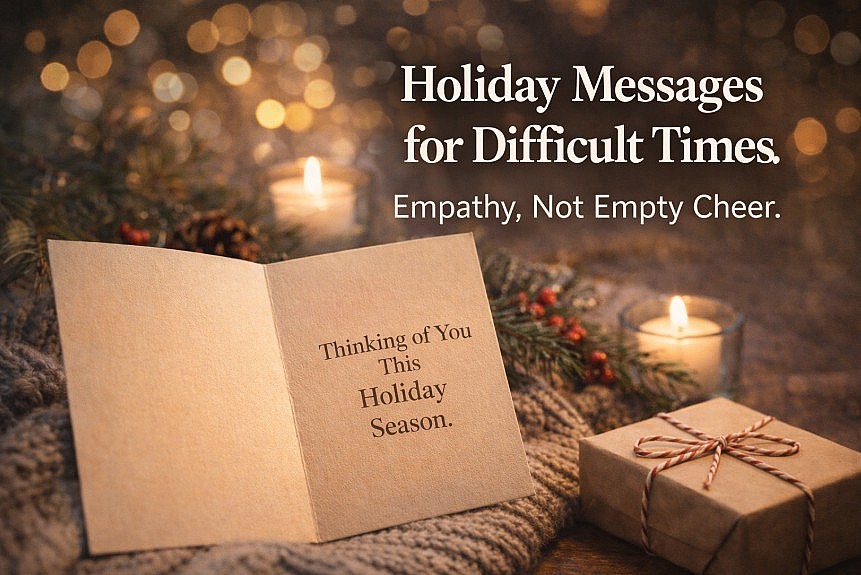
“Thinking of you during the holiday season.”
-
“Wishing you kindness and calm at year’s end.”
-
“With care, as the year comes to a close.”
-
“Warm wishes during a difficult season.”
Why this works:
-
Minimal language avoids emotional overload
-
Easy to place in visual layouts
-
Leaves interpretation open to the reader
These are ideal for email footers, confirmation pages, or printed inserts.
5. Empathetic Holiday Messages That Look Ahead — Carefully
Looking forward can be risky during hard times. The key is to avoid promises or forced optimism.
Examples:
-
“As the new year approaches, we hope it brings steadier days, at your own pace.”
-
“Wishing you strength and support as the year turns.”
-
“May the months ahead feel a little lighter, one step at a time.”
Why this works:
-
Uses hope, not certainty
-
Avoids phrases like “better year” or “fresh start”
-
Respects uncertainty
This approach works well when customers are dealing with ongoing challenges, not temporary setbacks.
6. What These Messages Deliberately Avoid
Across all examples, notice what is not included:
-
No “Merry Christmas” by default
-
No “joyful,” “exciting,” or “celebratory” language
-
No sales offers or promotions
-
No motivational clichés
Empathy is often more about restraint than expression.
What to Avoid in Christmas Messages During Hard Times
Even well-intentioned messages can miss the mark. Here are common mistakes to avoid:
Forced positivity
Phrases like “Everything happens for a reason” or “The best is yet to come” can feel dismissive.
Empty clichés
Overused lines lose meaning when customers are struggling.
Sales-driven language
Hard times are not the moment for aggressive calls to action.
Assuming recovery or improvement
Hope should be gentle, not predictive.
Empathy is quiet. Let it stay that way.
When Empathy Builds Long-Term Trust
From a business perspective, empathetic messaging is not just kind. It’s strategic.
Customers remember brands that:
-
Show understanding
-
Respect emotional context
-
Don’t push when it’s inappropriate
A thoughtful Christmas message during hard times can strengthen loyalty more than any discount.
It signals that your brand sees customers as people, not transactions.
Why This Topic Is a Strong SEO Opportunity
Search behavior reflects real emotional needs. People actively search for:
-
how to write empathetic christmas message
-
christmas message during hard times
-
what to say to customers during difficult year
Most large websites focus on upbeat holiday marketing. Few address emotional nuance directly. That gap creates space for high-intent, low-competition content like this.
Final Thoughts
Not every Christmas message needs to sparkle. Sometimes, the most meaningful messages are quiet, grounded, and honest.
When customers have had a bad year, empathy matters more than celebration. A few carefully chosen words can say, “We see you. We respect what you’ve been through.”
And in moments like that, restraint is not a weakness. It’s a form of care.
 Christmas Messages for People Who Don’t Celebrate Christmas Christmas Messages for People Who Don’t Celebrate Christmas Not everyone celebrates Christmas. Yet every December, messages filled with trees, carols, and religious references flood inboxes and group chats. For people who don’t observe ... |
 Christmas Messages for Remote Teams Across Different Time Zones Christmas Messages for Remote Teams Across Different Time Zones How to Send Thoughtful Holiday Wishes Without Missing the Moment! |
 Christmas Messages That Avoid Religious Language Completely Christmas Messages That Avoid Religious Language Completely Non-Religious Christmas Wishes and Secular Holiday Messages That Feel Warm, Not Awkward |