Trump Announces Two-Week Ceasefire with Iran After Pakistan Mediation Push

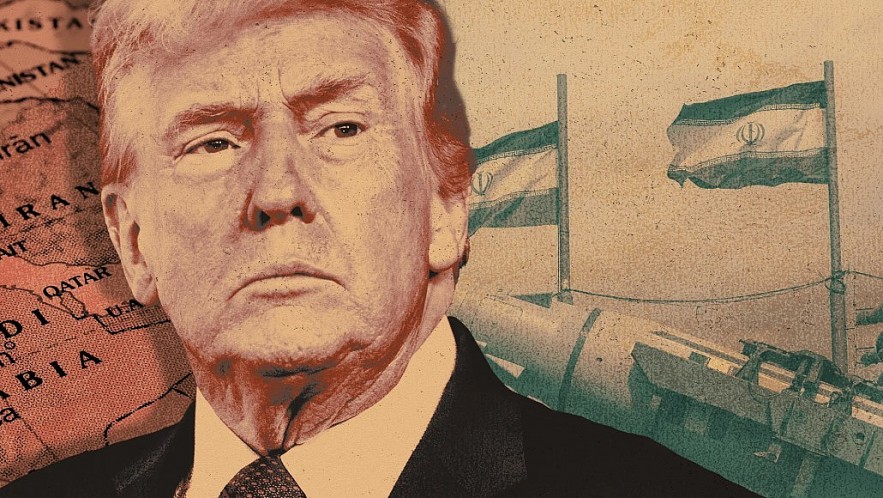 |
| Trump says Iran talks reach ‘heated’ stage as threat deadline looms |
There are now two parallel stories unfolding in the US-Iran crisis.
One is loud, violent and visible: airstrikes, threats, rising oil prices and mounting civilian casualties.
The other is quieter, harder to verify, but suddenly more important: a possible diplomatic pause.
That tension defines the latest turn in the conflict.
In a sudden shift from escalation to diplomacy, President Donald Trump announced a two-week suspension of US attacks on Iran, framing it as part of a “double-sided ceasefire” that could open the door to a broader peace deal.
The decision came after direct appeals from Pakistan’s Prime Minister Shehbaz Sharif and military chief Asim Munir, who urged Washington to delay further military action and allow diplomacy to proceed.
A ceasefire tied to the Strait of Hormuz
According to Trump’s statement on social media, the pause is conditional.
Iran must agree to the “complete, immediate, and safe opening” of the Strait of Hormuz, a critical global energy route that has been at the center of recent tensions. If that condition is met, the US will halt bombing operations for two weeks.
Trump described the move as a reciprocal step, signaling that both sides are expected to reduce hostilities during the window.
“This will be a double-sided ceasefire,” he wrote.
US denies nuclear plan as deadline on threat to Iran ‘civilisation’ looms
From brink of escalation to negotiation
The announcement marks a sharp turn in tone.
Just days ago, Trump had warned in stark terms about the potential consequences for Iran, fueling fears of a broader war. US and allied strikes, along with Iranian retaliation, had pushed the region toward what many analysts saw as a dangerous tipping point.
Now, the White House is signaling something different: that its military campaign may have achieved its immediate objectives.
Trump said the US had already “met and exceeded all military objectives,” suggesting Washington believes it has gained enough leverage to pivot toward negotiations rather than escalation.
A 10-point proposal on the table
Perhaps the most significant detail in Trump’s statement is the revelation that Iran has submitted a 10-point proposal.
According to the president, US officials consider the plan a “workable basis” for negotiations, with most of the major points of disagreement already resolved. The two-week pause is intended to finalize what he described as a potential long-term agreement on peace with Iran and stability in the Middle East.
While the contents of the proposal have not been made public, the language suggests talks may be further along than previously understood.
Pakistan’s quiet but pivotal role
Pakistan’s involvement has emerged as a key factor in this diplomatic opening.
By engaging both Washington and Tehran, Islamabad positioned itself as a bridge at a moment when direct communication between the US and Iran remains limited. The request for a delay, initially seen as a modest diplomatic gesture, now appears to have helped trigger a broader pause in hostilities.
What happens next
The next two weeks will be critical.
If Iran complies with the condition on the Strait of Hormuz and both sides maintain restraint, the pause could evolve into a formal agreement. If not, the ceasefire risks collapsing as quickly as it was announced.
For now, the shift is undeniable. After days of rising պատերազմի rhetoric and military action, the focus has moved—at least temporarily—from confrontation to negotiation.
Whether this marks the beginning of a durable peace, or simply a brief pause before the next phase of conflict, remains an open question.