UK Welfare Reforms: A Clear Guide for People With Health Conditions and Disabilities

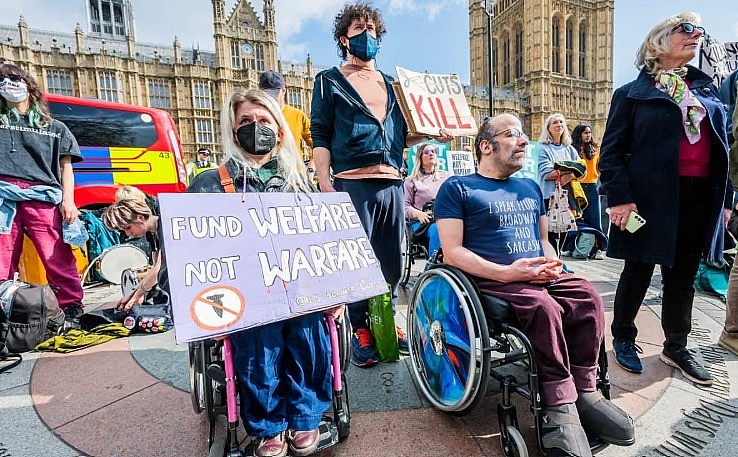 |
| Government reforms welfare system |
UK Welfare Reforms 2026: What They Really Mean and What You Should Do Next
If you have a health condition or disability and rely on Universal Credit, 2026 has brought some important changes. A lot of headlines have focused on the politics, but most people need something simpler: what changed, whether it affects them, and what steps they should take now.
This guide breaks it down in plain English.
The current reforms come out of the UK government’s Pathways to Work plans, first published in March 2025. That consultation drew more than 47,500 responses, and some of the changes are now in force.
What changed in April 2026?
The biggest date to know is 6 April 2026.
From that date, the basic Universal Credit standard allowance increased above inflation. Monthly rates rose to £338.58 for a single claimant under 25, £424.90 for a single claimant aged 25 or over, £528.34 for a couple both under 25, and £666.97 for a couple where one or both are 25 or over.
At the same time, the health element of Universal Credit was rebalanced. For many new claimants found to have limited capability for work and work-related activity, the lower rate is now £217.26 a month. The higher rate for those protected by the rules is £429.80 a month in 2026/27.
Who is affected by the lower health element?
This is the part many people are worried about, and understandably so.
The lower rate mainly affects new claimants from 6 April 2026 onward. Existing claimants on the higher health element are not automatically moved onto the lower amount. The government has also said the higher rate remains in place for people who meet the Severe Conditions Criteria or who qualify under the Special Rules for End of Life, no matter when they claim.
In other words, two people with similar health problems may now receive different amounts depending on when they claimed and whether they fall into a protected group. That is one reason the reforms have been controversial. The Work and Pensions Committee warned in 2025 about the risk that new Universal Credit health claimants could face poverty if the impact is not properly understood.
Why did the government make this change?
The government says the old structure created a system where health-related benefits could discourage some people from trying work, especially when support was limited and trust in Jobcentre services was low. In March 2025, DWP said 1,000 work coaches would be redeployed in 2025/26 to provide intensive voluntary help to around 65,000 sick and disabled people, and linked the wider reforms to its goal of tackling economic inactivity caused by long-term sickness.
By March 2026, the government said that target had been reached, with more than 65,000 people receiving tailored employment support, as part of a broader £3.5 billion employment support package. It also said the April 2026 package would support more people into work and save taxpayers about £950 million by 2030/31.
What this means in real life
If you already receive the higher UC health element, the April 2026 change does not automatically cut your payment to the new lower rate. But if you make a new claim after 6 April 2026, the amount you get could be much lower unless you qualify for a protected category.
That means timing, claim history, and the exact category you are placed in matter more than before.
It also means people should be very careful before assuming what they will receive. This is no longer a system where one label always leads to one payment level.
What should you do now if you think you may be affected?
Start with the basics. Check exactly when your claim started, what health-related element you receive now, and whether DWP has said you meet any protected criteria. If you are unsure, do not guess.
The UK government recommends using a free, independent and anonymous benefits calculator to estimate entitlement and to see how work or a change in hours could affect your payments. GOV.UK links directly to approved calculators, and Turn2us provides one of them.
Citizens Advice also has a current guide on how Universal Credit changed in 2026, including the April 2026 changes to the health element and other parts of the system.
If you want to work, what support is available?
This is where many articles stop too early.
The welfare reforms are not only about payment rates. They are also tied to a bigger push to help disabled people and people with health conditions move into work, stay in work, or test work more safely.
One important support scheme is Access to Work. This can help pay for practical support such as specialist equipment, help with communication at interviews, support workers, or mental health support related to work. It is available to people with a disability or health condition who are in paid work, about to start work, returning to work, or in some cases moving into self-employment.
The government has also said it wants a Right to Try Guarantee, designed so that trying work would not, by itself, trigger a reassessment of health and disability benefits. That idea was set out in 2025 as part of the reform package.
Are more changes still coming?
Yes.
Not every part of the wider disability benefits agenda is finished. For example, the government opened the Timms Review of Personal Independence Payment call for evidence on 19 March 2026, with submissions due by 28 May 2026. So while some Universal Credit changes are already live, parts of the wider disability benefits system are still being reviewed.
That matters because many people hear one headline and assume the whole system has already changed. It has not. Some rules are active now. Others are still being shaped.
A simple action plan
If this affects you, the most useful next steps are practical:
Check your latest Universal Credit statement and confirm whether you already receive a health element.
Use an independent benefits calculator to see what you may be entitled to now and how work could affect your income.
If you are thinking about work, look at Access to Work before you start, not after you struggle.
If your case is complicated, get advice early from Citizens Advice or another recognised welfare adviser rather than relying on social media summaries.
The bottom line
The 2026 welfare reforms do not mean the same thing for everyone.
For some existing claimants, the immediate impact may be limited. For many new claimants with health conditions, though, the system is now less generous than before unless they fall into a protected category. At the same time, the government is putting more emphasis on employment support, work coaching, and schemes such as Access to Work.
So the smartest approach is not panic, and not passivity either. Check your status, understand which rules apply to you, and use the support that already exists.
FAQs
Will my Universal Credit health payment be cut automatically in 2026?
Not necessarily. The lower health element mainly applies to new claimants from 6 April 2026. Existing claimants on the higher rate are generally protected, and some new claimants can still receive the higher rate if they meet specific criteria.
How much is the lower UC health element now?
For many new claimants from 6 April 2026, the lower health element is £217.26 a month. The higher protected rate in 2026/27 is £429.80 a month.
Can I try working without losing my benefits?
The government has said it wants a Right to Try Guarantee so that trying work would not, on its own, trigger reassessment. That policy direction has been announced, but people should still check the latest guidance for their individual case.
Where can I check what I am entitled to?
Use a free benefits calculator listed on GOV.UK or an approved tool such as Turn2us.