US Strikes Military Targets on Kharg Island, Iran


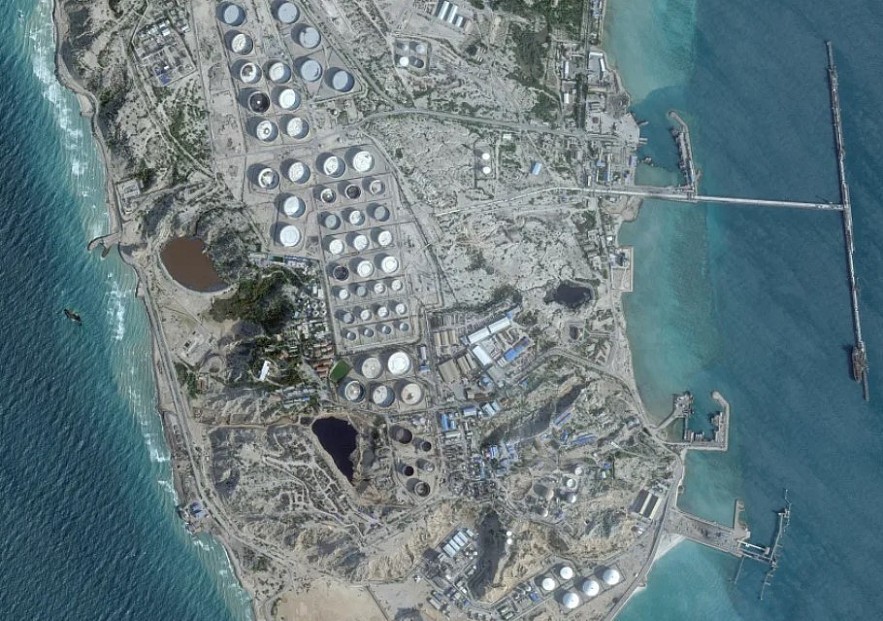 |
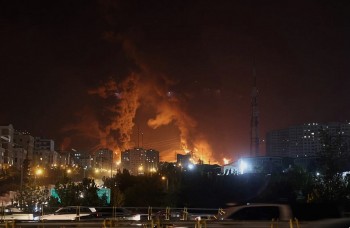
| Satellite image showing an oil terminal on Kharg Island, Iran on February 25 |
US strikes military targets on Iran's Kharg Island
According to U.S. officials, the strikes were carefully aimed at military facilities and avoided damaging the island’s critical oil infrastructure, which handles a large share of Iran’s crude exports.
The attack marks a further escalation in tensions between Washington and Tehran amid an ongoing regional conflict. Kharg Island is considered a vital hub for Iran’s economy, making it a highly sensitive target. Despite the strikes, there has been limited public information about the exact military objectives or the extent of the damage.
The situation has already impacted global markets, with oil prices rising sharply due to fears of supply disruptions in the region. Meanwhile, Iranian officials have issued strong warnings, suggesting that further U.S. actions could trigger retaliation and broader instability beyond the Middle East.
Overall, the incident highlights the growing risk of a wider conflict, with potential consequences not only for regional security but also for global energy supplies.
| The US had previously struck Kharg Island in March. US Central Command said at the time that 90 targets had been hit, including “naval mine storage facilities, missile storage bunkers, and multiple other military sites.” |
Here’s where it is, why it matters, and why Washington is considering targeting or seizing it in 2026.
What is Kharg Island? Location and Strategic Geography
Kharg Island lies in the northern Persian Gulf, about 55 kilometers northwest of Iran’s port city of Bushehr. At first glance, it appears unremarkable—roughly 8 square miles of rocky land surrounded by open water. But its location gives it an advantage few places in the Gulf possess: deep-water access close to Iran’s mainland.
That detail is decisive. Much of Iran’s coastline is too shallow for very large crude carriers, but Kharg allows supertankers to dock, load, and depart efficiently. This is why, over decades, Iran concentrated its oil export infrastructure here—turning a small island into a central node of global energy flows.
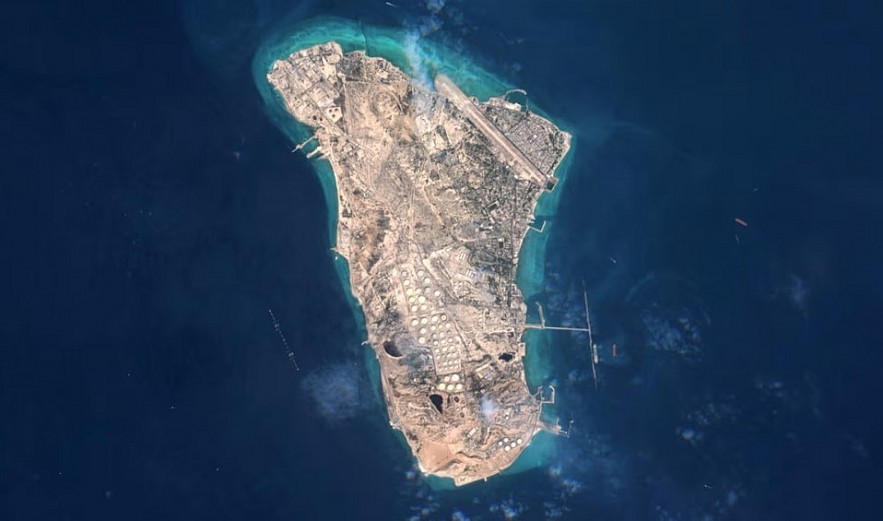 |
| The US struck military targets on Kharg Island overnight, according to a US and a White House official |
Why Kharg Island Matters to Iran’s Economy
Kharg is widely regarded as the backbone of Iran’s oil export system. Most estimates, including recent reporting, indicate that the island handles around 85% to 90% of Iran’s crude exports.
The infrastructure is massive:
- Storage tanks capable of holding tens of millions of barrels
- Loading terminals designed for the world’s largest tankers
- Pipelines linking mainland oil fields directly to the island
At peak capacity, Kharg can load millions of barrels per day and serve multiple supertankers at once. That makes it less an island and more a gateway—where Iran converts oil into revenue.
Because of this, any disruption to Kharg would immediately affect Iran’s ability to sell oil abroad, hitting government finances at the source rather than at the margins.
Why Kharg Has Entered U.S. Strategic Thinking
In recent weeks, Kharg Island has moved from being a technical energy term to a central strategic concept in Washington.
The logic behind U.S. interest is straightforward. Instead of attempting a costly and complex invasion of Iran, policymakers have explored whether targeting a single critical node could achieve meaningful pressure. Kharg fits that model almost perfectly.
Controlling or disabling Kharg would:
- Disrupt the majority of Iran’s oil exports
- Reduce state revenue quickly
- Increase economic pressure without full-scale occupation
This reflects a broader shift in military strategy—from large ground wars to targeted operations against critical infrastructure.
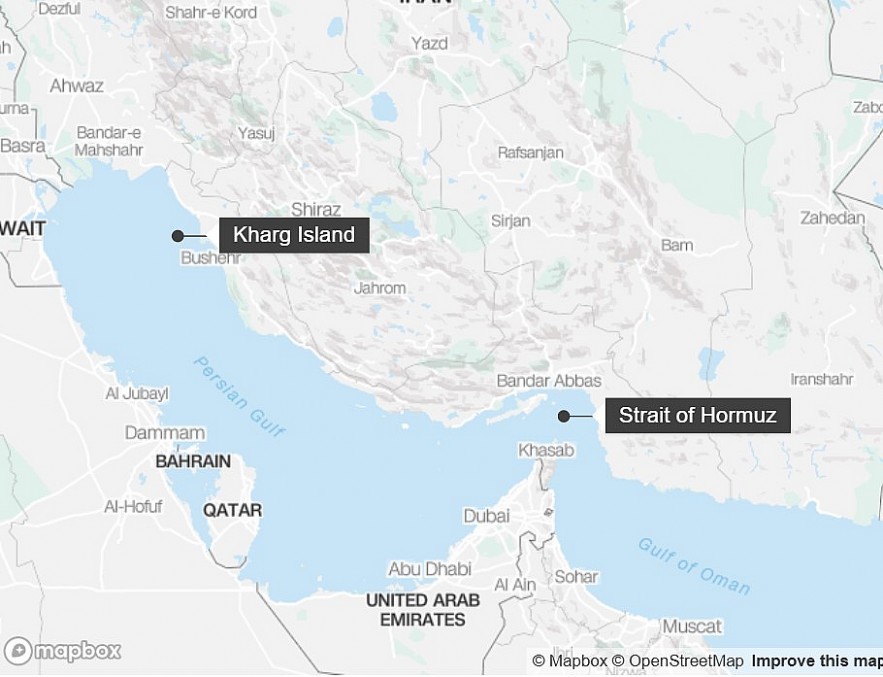 |
| Kharg Island is a five-mile stretch of land off the Iranian coast around a third of the size of Manhattan |
A “Limited War” Target With High Impact
Kharg is often discussed as a “limited objective” in military planning. Compared with mainland Iran, it is geographically isolated and relatively small. Some analysts have suggested that a force of roughly 800 to 1,000 troops could seize the island in an initial operation, supported by air and naval power.
This makes it appealing on paper. It offers high economic impact without the massive troop requirements of a full invasion.
But that same simplicity is misleading.
The Real Risks of Seizing Kharg Island
Taking Kharg would be only the first step. Holding it would be far more difficult.
The island sits within range of Iran’s military systems, including:
- Ballistic and cruise missiles
- Armed drones, including low-cost swarm systems
- Naval mines and fast attack boats in surrounding waters
Any U.S. force on Kharg would be exposed, operating in a confined space with limited natural protection. Resupply operations could also become vulnerable, especially if Iran targeted shipping lanes or nearby infrastructure.
Military analysts often describe this kind of operation as deceptively easy to start but extremely hard to sustain.
The Global Oil Market Impact
Kharg’s importance extends well beyond Iran. It sits within a region that handles a significant portion of global energy trade, including flows through the Strait of Hormuz.
If Kharg were attacked or occupied:
- Oil prices could spike sharply, potentially exceeding $130–150 per barrel
- Tanker traffic could slow or reroute
- Insurance costs for shipping would rise
- Energy-importing countries in Asia would feel immediate pressure
Recent market movements already show how sensitive prices are to disruptions in the Gulf. Any escalation involving Kharg would amplify that volatility.
Can Iran Bypass Kharg?
Iran has spent years developing alternatives to reduce dependence on Kharg. These include:
- The Jask oil terminal, located outside the Strait of Hormuz
- Ship-to-ship transfer operations
- A network of tankers designed to operate under sanctions
However, none of these options fully replace Kharg’s capacity or efficiency. The island remains the most reliable and scalable export hub Iran has.
In practical terms, Iran could continue exporting oil without Kharg—but at reduced volumes, higher costs, and greater logistical complexity.
What Is the Most Likely Scenario?
A full-scale U.S. occupation of Kharg appears unlikely. The risks—military, economic, and political—are substantial.
More plausible scenarios include:
- Targeted airstrikes on infrastructure
- Temporary disruption of loading operations
- Naval pressure to restrict tanker movement
- Short-term raids rather than long-term occupation
These options align with the current U.S. force posture in the region, which emphasizes air and naval power rather than large ground deployments.
Final Assessment
Kharg Island is a small piece of land with outsized influence. It is where geography, energy, and military strategy converge.
For the United States, it represents a potential pressure point—one that could weaken Iran economically without requiring a full invasion. But it is also a risky target, where any escalation could spread quickly beyond the island itself.
That is why Kharg continues to surface in strategic discussions. Not because it is easy to take, but because it sits at the center of a much larger equation—one that involves oil markets, regional stability, and the limits of modern military power.