Viral Video Captures a “Dinosaur‑Like” Bird Landing on Tour Boat — Here’s What It Really Was

 Facts About Bird’s Sleep - Sleeping While Flying and One Eye Open Facts About Bird’s Sleep - Sleeping While Flying and One Eye Open |
 Top 15 Most Beautiful Birds In North America Top 15 Most Beautiful Birds In North America |
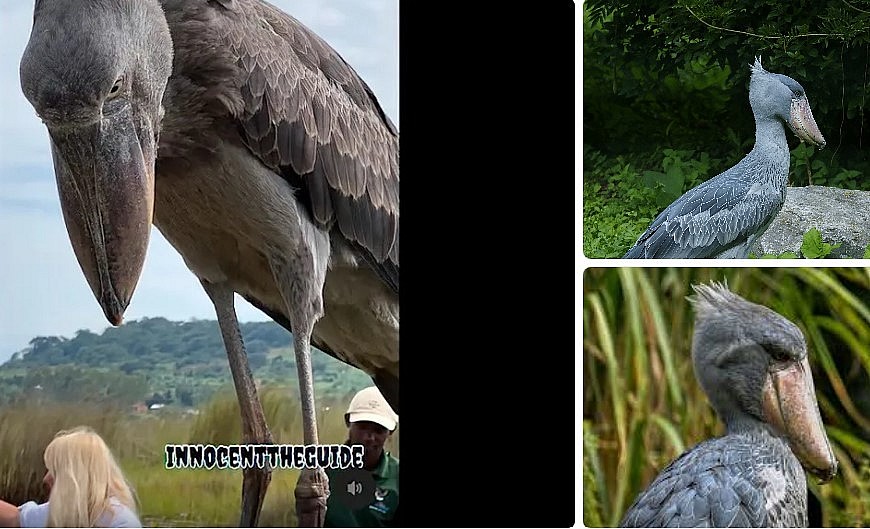 |
| Viral Footage Captures a “Dinosaur‑Like” Bird |
The Scene: Unexpected Visitor on the Water
The footage was captured in Uganda’s Mabamba Swamp, a sprawling marshland near Lake Victoria known for its rich biodiversity. As the boat glided through a dense patch of papyrus reeds, a towering bird emerged from the greenery and silently descended onto the bow. Passengers froze in awe as the creature settled into a still, upright pose — as if inspecting the humans.
The moment was eerie, cinematic, and oddly serene. Within hours, clips began circulating online, racking up millions of views and igniting speculation about what exactly had landed on the boat.
What Is This Creature?
The bird in the video is a shoebill stork (Balaeniceps rex), one of the most extraordinary and elusive birds in the world.
-
Height: Up to 1.2 meters (about 4 feet) tall
-
Wingspan: Over 2.4 meters (nearly 8 feet)
-
Distinctive features: A large, shoe-shaped bill; piercing yellow eyes; and a motionless hunting style that gives it a statuesque appearance
Despite its formidable look, the shoebill isn’t aggressive toward humans. It primarily feeds on lungfish and other swamp-dwelling prey, using its massive bill to strike with surgical precision after long, silent observation.
Why It Looks Like a Dinosaur
The shoebill’s prehistoric aura isn’t just imagination — it’s evolutionary history showing through.
-
Its reptilian head structure and slow, deliberate movements evoke images of ancient creatures
-
The stillness of its posture can be unnerving; shoebills can stand motionless for hours, giving the illusion of being frozen in time
-
Its presence in remote, misty wetlands adds to the surreal atmosphere
It’s no surprise that many who encounter the bird describe it as something out of the Jurassic era. But that’s perception — not scale.
A Reality Check
Though dramatic in appearance, the shoebill is not gigantic or dangerous:
-
It’s about the height of a large child, not a dinosaur
-
The video’s camera angle and close proximity exaggerate its size
-
Shoebills are shy and typically avoid humans, making this encounter rare but not unprecedented
What’s most unusual isn’t the bird’s behavior, but its tolerance of the boat — most wild shoebills would fly off at the first sign of disturbance.
Conservation and Cultural Significance
Shoebills are classified as vulnerable due to habitat loss, nest disturbance, and illegal wildlife trade. Wetlands like Mabamba are critical ecosystems — not only for birds like the shoebill, but also for fish, reptiles, and local communities that depend on sustainable ecotourism.
Encounters like this serve a dual purpose:
-
They highlight the wonder of wild spaces
-
They underscore the urgent need to protect the fragile habitats where such species still survive
Local tour operators emphasize that respectful wildlife viewing — slow approaches, no engine noise, and maintaining distance — is essential for keeping these experiences safe for both animals and people.
Final Thought
The shoebill may look like a relic from another era, but it’s very much part of our present. This viral moment reminds us that the natural world is still full of mystery — not because it’s mythical, but because it’s wild, rare, and real.
And that, perhaps, is more awe-inspiring than any dinosaur fantasy.
Frequently Asked Questions (FAQs)
Is the bird in the viral video actually a dinosaur?
No. The bird is a shoebill stork, a modern species of large wading bird native to Central and East Africa. Although it looks prehistoric, it is not a dinosaur — just a remarkable example of evolutionary traits that resemble ancient creatures.
What kind of bird is in the video?
The bird is called a shoebill stork (Balaeniceps rex). It's known for its massive shoe-shaped bill, large size, and still hunting behavior. Shoebills are rare and primarily found in wetlands like Uganda’s Mabamba Swamp.
How big is a shoebill stork?
A shoebill can grow up to 1.2 meters tall (about 4 feet) and have a wingspan of 2.4 meters (nearly 8 feet). Despite its imposing appearance, it’s not as big as many assume from viral footage.
Are shoebills dangerous to humans?
No. Shoebills are not aggressive toward humans. They are shy, solitary birds that usually avoid contact. In rare cases, a calm individual may approach or tolerate nearby boats, as seen in the video.
Where can I see a shoebill stork in the wild?
One of the best places to see a shoebill in its natural habitat is Mabamba Swamp in Uganda, near Lake Victoria. Guided boat tours offer opportunities for respectful wildlife observation.
Why does the shoebill look like a dinosaur?
The shoebill’s appearance — with its large beak, fixed gaze, tall body, and deliberate movements — resembles traits we associate with prehistoric birds or reptiles. These features contribute to its "dinosaur-like" reputation, even though it's a bird.
Is the shoebill stork endangered?
The shoebill is classified as Vulnerable by the IUCN. Its population is threatened by habitat loss, nest disturbance, and illegal wildlife trade. Conservation efforts are critical to protect its wetland habitat.
Was the video staged or fake?
There is no indication that the video was staged. While rare, shoebills have occasionally landed on boats, especially when undisturbed. The event appears to be a genuine moment caught on camera.
 Top 10 Wingless Animals That Can Fly Like Birds Top 10 Wingless Animals That Can Fly Like Birds Many animals on Earth do not have wings but can fly like birds. What do they use to be able to fly? |
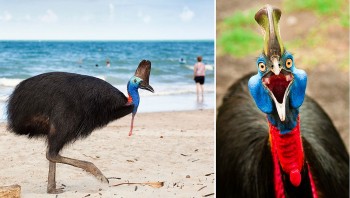 Top 13 Lovely Birds That Can’t Fly and Full List of The Flightless Birds Top 13 Lovely Birds That Can’t Fly and Full List of The Flightless Birds The first thing we think about birds is flying but in fact not all of birds can fly. Check out Top 13 and full list ... |
 Top 10 Most Intelligent Talking Birds in The World Top 10 Most Intelligent Talking Birds in The World Some parrot species such as the African Gray Parrot, Yellow-naped Amazon are known for their ability to understand human language better. Here is a list ... |
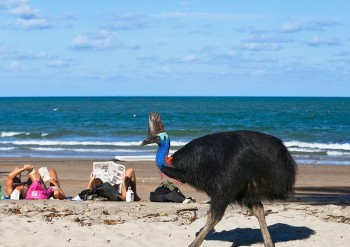 Top 7 Most Aggressive Birds on the Planet Top 7 Most Aggressive Birds on the Planet Not only are there beautiful and kind birds in the world of wild animals, but there are also birds that pose a serious threat to ... |