What Is the Greenland Framework? The Four Core Elements

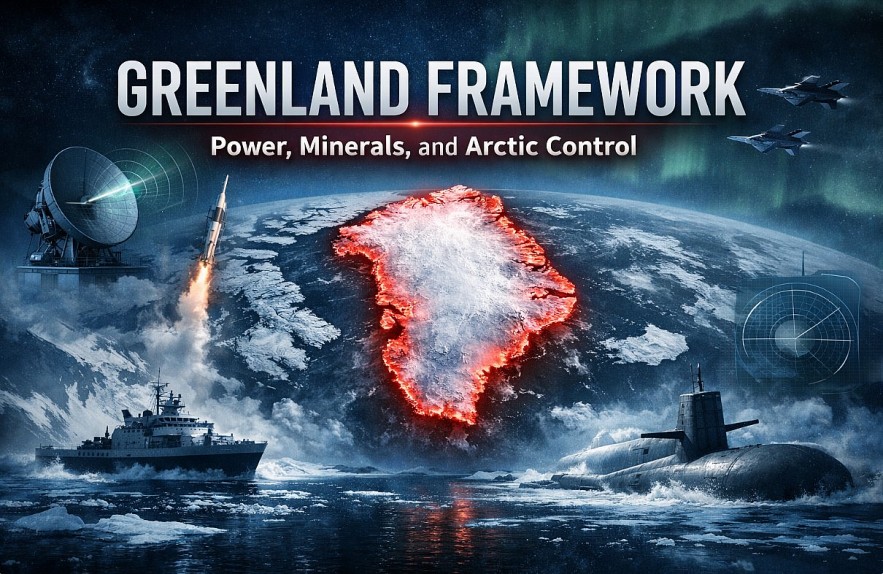 |
| Power, Minerals, and Arctic Control |
President Donald Trump said Wednesday (Jan.21,2026) announced what he called a “Greenland Framework”, claiming it marked a breakthrough in talks with NATO over Greenland and Arctic security. The statement immediately drew global attention. Greenland sits at the crossroads of geopolitics, climate change, and resource competition, and any U.S. initiative involving the territory carries strategic weight.
Yet despite the strong rhetoric, confusion remains. Is the Greenland Framework a formal agreement? Does it involve mineral rights? Is sovereignty on the table? And how have Denmark, Greenland, and NATO actually responded?
This article explains, clearly and factually, what the Greenland Framework is, what it includes, what it does not include, and why it matters.
Read more:
- Why Google Maps Fails in Greenland and How Locals Navigate Without Roads
- Where Is Greenland? How to Get Greenland from The USA
What Is the Greenland Framework?
The Greenland Framework is not a signed treaty or legally binding agreement. There is no published document, no official NATO communiqué outlining clauses, and no ratified deal between governments.
Instead, the framework is best understood as a political and strategic outline described by President Trump following meetings with NATO leaders at the World Economic Forum in Davos on January 21, 2026. Trump characterized it as a “framework for a future deal,” suggesting that it sets guiding principles for continued negotiations rather than final commitments.
This distinction matters. Frameworks in diplomacy often signal intent and direction, but they leave the hardest decisions for later.
The Four Core Elements of the Greenland Framework
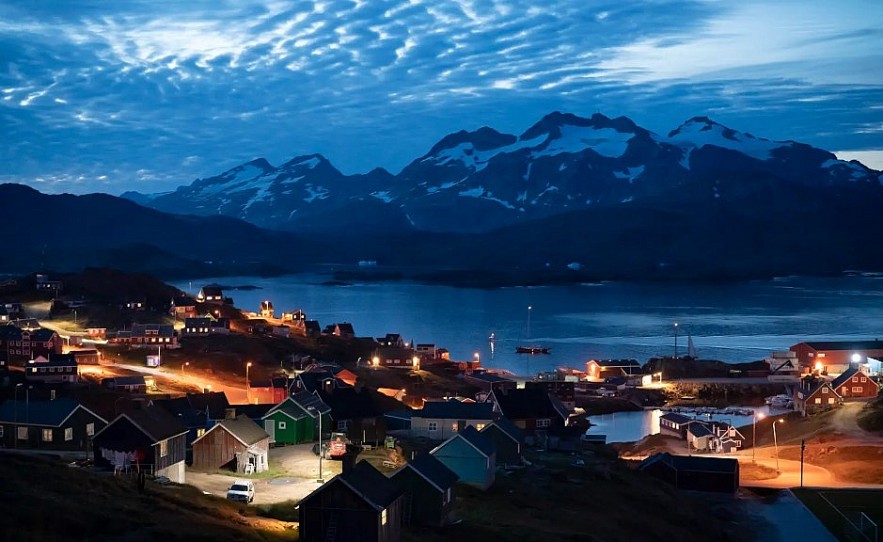 |
| Greenland has about 56,000 residents. |
Based on Trump’s public statements and reporting by major outlets, four elements form the backbone of the Greenland Framework.
1. U.S. Access to Mineral Rights in Greenland
The most concrete and controversial element is mineral rights.
According to Trump, the framework involves U.S. rights to participate in mineral exploration and extraction in Greenland, particularly in areas linked to rare earth elements and strategic minerals. These materials are critical for advanced electronics, renewable energy technologies, and military systems.
Importantly, this does not mean U.S. ownership of Greenland or automatic control over its resources. Greenland already allows foreign investment in mining under its legal framework. What Trump appears to be signaling is:
-
Preferential access for U.S. companies
-
Stronger alignment between Greenlandic resource policy and U.S. strategic supply chains
-
Reduced reliance on China for rare earth minerals
From Washington’s perspective, this aligns with broader efforts to secure non-Chinese sources of critical minerals. From Nuuk’s perspective, the issue is more delicate, as resource policy is tied directly to Greenland’s autonomy and economic future.
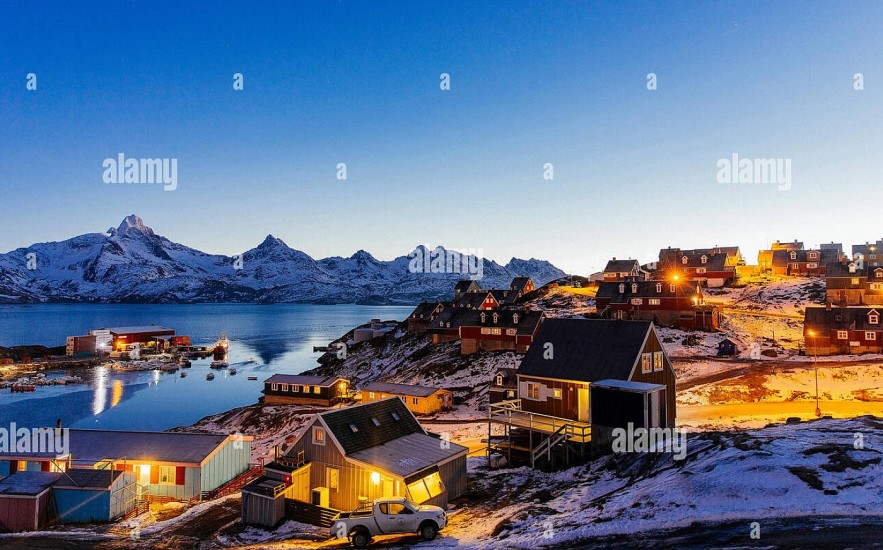 |
| Morning time in Tasiilaq, which is a town in the Sermersooq municipality in southeastern Greenland |
2. Arctic Security Cooperation Through NATO
The second pillar is Arctic security, framed explicitly within NATO.
Trump described the framework as part of a broader effort to strengthen NATO’s posture in the Arctic, where melting ice is opening new shipping routes and increasing military interest from Russia and China. This includes:
-
Enhanced intelligence sharing
-
Closer coordination on maritime security
-
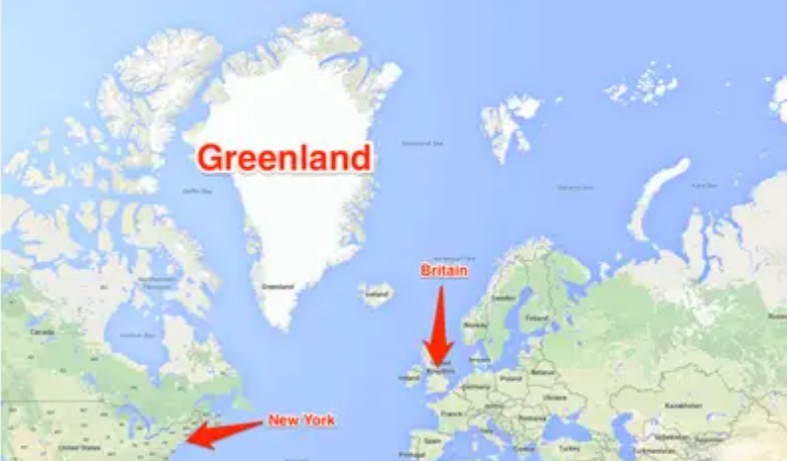
Greater emphasis on Greenland’s strategic location between North America and Europe
NATO officials, including Secretary General Mark Rutte, have publicly emphasized the importance of Arctic security but have not confirmed specific commitments related to Greenland. Their statements stress alliance-wide concerns rather than country-specific arrangements.
In short, Arctic security is real and growing, but the Greenland Framework has not yet translated into published NATO policy.
3. Missile Defense and the “Golden Dome” Concept
Trump also linked the framework to a proposed missile defense initiative he calls “Golden Dome.”
While details remain vague, Trump suggested that Greenland could play a role in future missile detection or interception systems due to its geographic position. Greenland already hosts U.S. military infrastructure, including the Thule Air Base (now Pituffik Space Base), which supports missile warning and space surveillance.
However:
-
No NATO documents confirm a new missile defense deployment
-
No funding plans have been announced
-
Denmark has not acknowledged any agreement on expanded systems
At this stage, Golden Dome remains a conceptual ambition, not an operational program tied to Greenland.
4. De-escalation on Trade and Tariffs
A less discussed but politically important element is trade de-escalation.
Trump explicitly linked the Greenland Framework to his decision to withdraw or suspend threatened tariffs on European allies, which had been floated as leverage during earlier disputes. In effect, the framework serves as a diplomatic off-ramp, allowing Trump to claim progress without escalating a trade conflict with NATO partners.
This aspect is widely viewed as one of the few immediate, tangible outcomes of the announcement.
Read more:
- From Greenland to ‘Red, White, and Blueland’ – America’s Wildest Land Grab Yet?
- Where is Greenland: Why Trump’s renewed interest
What the Greenland Framework Does Not Include
To understand the framework clearly, it is just as important to note what is not included.
-
No transfer of sovereignty: Greenland remains part of the Kingdom of Denmark with extensive self-rule. There is no proposal, formal or informal, for U.S. ownership.
-
No signed agreement: There is no treaty text, memorandum of understanding, or joint declaration.
-
No confirmed timelines: Negotiations may continue, but no deadlines or milestones have been announced.
Despite Trump’s language around “ownership” in earlier remarks, his Davos statements explicitly ruled out the use of force.
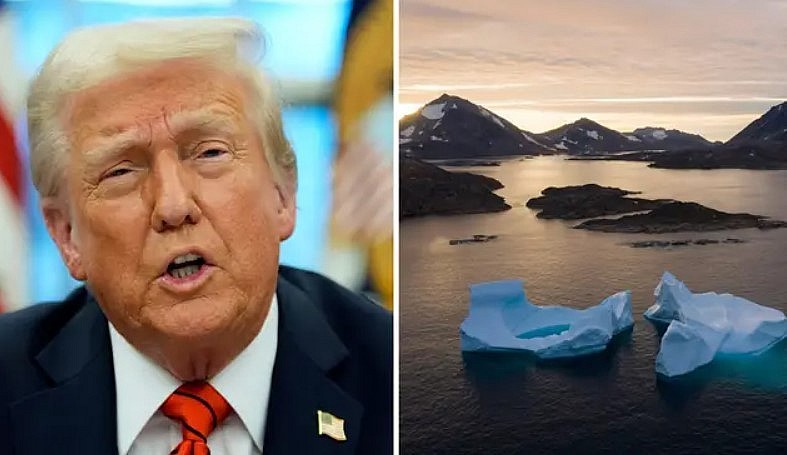 |
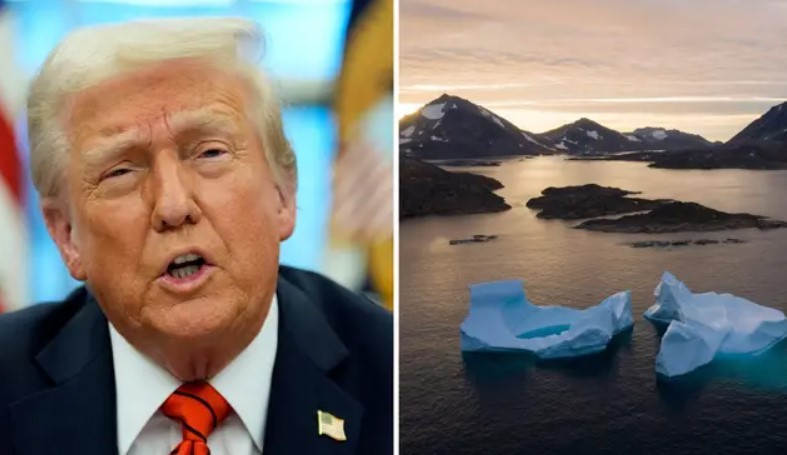
| Trump says Greenland framework with NATO involves mineral rights for U.S. |
Reactions From Key Stakeholders
Denmark
Danish officials have welcomed the lowering of tensions, particularly the withdrawal of tariff threats. At the same time, Copenhagen has reiterated that Greenland is not for sale and that any decisions on resources must respect Greenland’s self-governing institutions.
Greenland
Greenlandic leaders have been cautious. Economic development, including mining, is a priority, but so is political autonomy. Any perception that decisions are being made over Greenland’s head risks domestic backlash. So far, Nuuk has emphasized that resource rights belong to Greenland, not foreign powers.
NATO
NATO has taken a deliberately restrained tone. Secretary General Mark Rutte declined to comment on Greenland specifically, instead highlighting broader Arctic security challenges. This silence reinforces the idea that the Greenland Framework is Trump’s political construct, not an alliance-endorsed deal.
United States
Within the U.S., reactions are mixed. Supporters see strategic clarity: securing minerals and strengthening Arctic defense. Critics argue the framework lacks transparency and risks alienating allies by overselling informal talks as major breakthroughs.
Why the Greenland Framework Matters
Even without formal status, the Greenland Framework matters for three reasons:
-
It signals U.S. strategic priorities in the Arctic
-
It elevates mineral security to the same level as military defense
-
It tests alliance diplomacy, especially how far rhetoric can go without written agreements
The framework may fade quietly or evolve into concrete deals. Either outcome will shape Arctic geopolitics for years to come.
Conclusion
The Greenland Framework is not a treaty, not a sale, and not a finalized agreement. It is a strategic outline promoted by President Trump, centered on mineral access, Arctic security, missile defense ideas, and trade de-escalation. Its significance lies less in what has been signed and more in what it reveals about future negotiations and power dynamics in the Arctic.
For now, the framework remains exactly what its name suggests: a framework, waiting to be filled in.
FAQs
Is the Greenland Framework an official NATO agreement?
No. NATO has not published or confirmed any formal agreement under this name.
Does the U.S. now control Greenland’s mineral resources?
No. Greenland retains control over its resources. The framework suggests potential U.S. access, not ownership.
Is Greenland being sold to the United States?
No. Both Denmark and Greenland reject the idea of a sale.
What is the Golden Dome?
It is Trump’s proposed missile defense concept. No confirmed deployment in Greenland exists.
Why is Greenland strategically important?
Its location is critical for Arctic security, missile warning systems, and access to emerging shipping routes and mineral resources.