Where Minnesota Is and Why It’s the Epicenter of the ICE Protests

Key Facts About Minnesota• Statehood: 1858 • Population: ~5.7 million • Largest City: Minneapolis • Political Leaning: Strongly Democratic • Key Industries: Healthcare, retail, agriculture, technology • Current Issue: Protests against federal ICE enforcement |
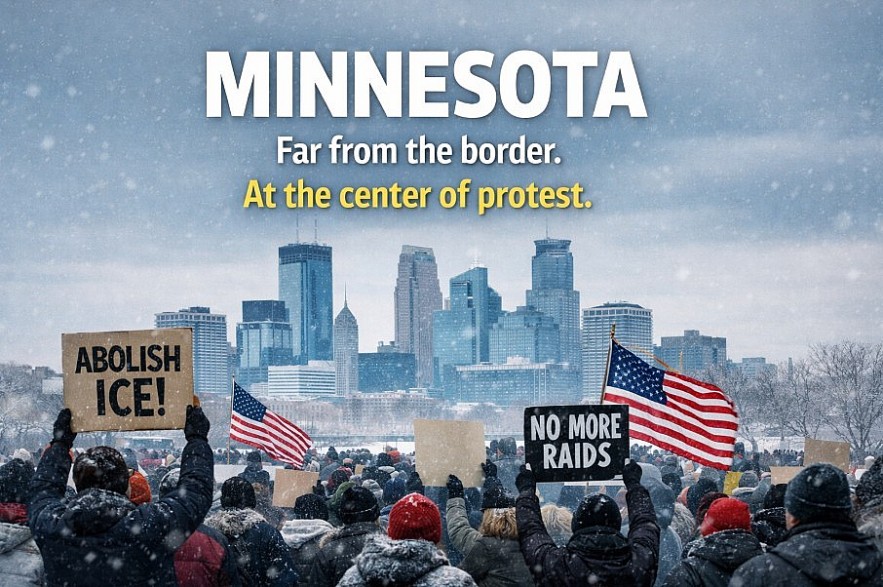 |
| Far from the border. At the center of protest |
Where Is Minnesota and Why Does It Matter?
Minnesota is a U.S. state in the Upper Midwest, bordering Canada to the north.
It is home to Minneapolis and Saint Paul, known as the Twin Cities, and is famous for its lakes, cold winters, and progressive political culture.
At first glance, Minnesota seems an unlikely place to become the epicenter of protests against federal immigration enforcement. It is not a border state. It is not traditionally associated with large-scale immigration raids. Yet in early 2026, Minnesota found itself at the heart of the most sustained backlash against Immigration and Customs Enforcement in years.
Understanding why requires looking beyond a single event and into Minnesota’s history, politics, and civic identity.
Read more:
- Trump May Pull ICE and Border Patrol From Minneapolis as Pretti Shooting Review Fuels Protests
- Minnesota Calendar in 2026- List of Holidays, Festivals and Big Events
Minnesota at a Glance: History, Geography, and Population
A Brief History of Minnesota
Minnesota became the 32nd U.S. state in 1858, shaped by Indigenous Dakota and Ojibwe nations, followed by waves of European settlers from Germany and Scandinavia. Over time, the state developed strong farming, labor, and cooperative traditions that still influence its politics today.
Geography and Climate
Nicknamed the Land of 10,000 Lakes, Minnesota is defined by forests, lakes, and the Mississippi River. Long, harsh winters have shaped a culture known for resilience, community reliance, and public cooperation.
Demographics and Immigration
Minnesota has a population of about 5.7 million, with rapidly growing immigrant communities, including Somali, Hmong, Latino, and East African populations—especially concentrated in the Twin Cities.
Minnesota’s Political Identity and Party Landscape
The Democratic–Farmer–Labor Party (DFL)
Unlike most states, Minnesota’s Democratic Party operates under the Democratic–Farmer–Labor Party (DFL), a product of 20th-century labor and agrarian movements. The DFL has dominated statewide politics for decades.
Minnesota has not voted Republican in a presidential election since 1972.
A Culture of Civic Participation
Minnesota consistently ranks among the highest U.S. states for:
-
Voter turnout
-
Union membership
-
Participation in civic organizations
This culture makes political disengagement rare—and organized resistance more likely when residents perceive injustice.
Why Federal ICE Actions Sparked Unusual Resistance
 |
| Minneapolis |
Operation Metro Surge Explained
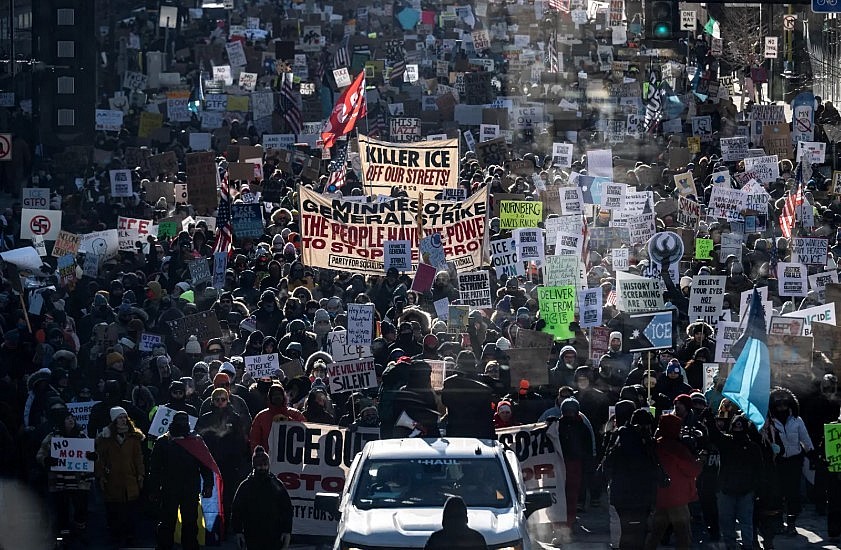
In early 2026, federal authorities launched Operation Metro Surge, dramatically expanding ICE activity in Minnesota. Thousands of agents were deployed, with raids conducted in workplaces, neighborhoods, and transit hubs.
Civilian Deaths and Public Outrage
Public anger escalated after two civilians were killed during encounters involving federal agents in Minneapolis. Both cases quickly became rallying points, with critics arguing that enforcement tactics were excessive and poorly coordinated with local authorities.
Response from State and Local Leaders
Minnesota Governor Tim Walz and Minneapolis Mayor Jacob Frey openly criticized federal actions, calling for investigations and limits on ICE operations within the state.
The Role of Minneapolis and the Twin Cities
Minneapolis is not just Minnesota’s largest city. It is also a national symbol of modern protest politics.
After the killing of George Floyd in 2020, Minneapolis became a global reference point for debates over policing, race, and accountability. That legacy still shapes public trust and protest culture.
When ICE activity intensified, many residents viewed it through the same lens: federal power, local harm, and demands for accountability.
Immigration, Economy, and the Human Impact
Immigrants in Minnesota’s Workforce
Immigrants play a critical role in Minnesota’s economy, particularly in:
-
Healthcare
-
Food processing
-
Agriculture
-
Logistics and retail
Business groups warned that large-scale raids disrupted supply chains and worsened labor shortages.
Economic and Social Fallout
Community organizations reported increased fear, school absences, and workers avoiding hospitals or public services—outcomes that fueled broader opposition beyond immigrant communities.
From Peaceful Protests to a Statewide General Strike
As tensions grew, Minnesota witnessed something rare in modern America: a statewide general strike.
Labor unions, faith leaders, healthcare workers, and educators coordinated walkouts and shutdowns, framing the issue as one of civil rights, not just immigration. The protests were largely non-violent but persistent, even during subzero winter temperatures.
Why Minnesota’s Protests Resonate Nationwide
Minnesota’s role in the 2026 anti-ICE movement reflects a convergence of factors:
-
A strong progressive political identity
-
Diverse immigrant communities with deep local roots
-
Leaders willing to challenge federal authority
-
A recent history of nationally visible protest
What happened in Minnesota resonated far beyond its borders because it illustrated a broader American tension: who controls public safety, and at what cost to civil liberties.
Conclusion
Minnesota did not become a protest epicenter by accident. Its geography, history, politics, and civic culture all helped turn federal immigration enforcement into a defining conflict.
Far from the southern border, Minnesota has shown how local identity and collective memory can transform a regional dispute into a national reckoning—one that continues to shape America’s debate over immigration, authority, and justice.