Which U.S. Cities Will Be Hit Hardest by the Winter Storm? Here’s What to Know

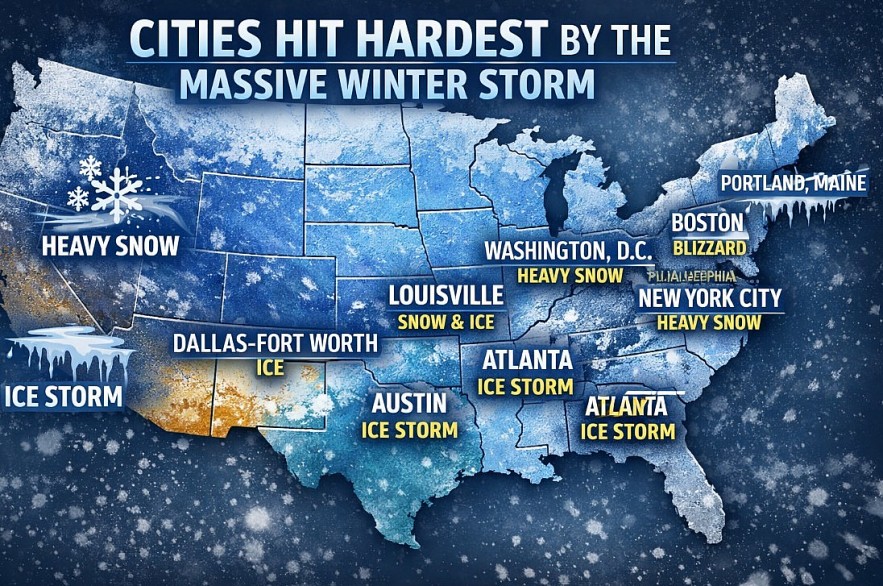 |
| US cities hardest hit by winter storm |
Forecasters say the ongoing winter storm will not affect all cities the same way. The most severe impacts depend on where heavy snow, damaging ice, and prolonged cold overlap with population density and infrastructure. Below is an updated, deeper look at the U.S. cities expected to be hit hardest, based on the latest guidance from the National Weather Service and regional forecast offices.
Dallas–Fort Worth
Main threat: Ice, road shutdowns, localized power outages
DFW sits in the core of the storm’s ice zone. Even light ice accumulation on elevated roadways is expected to cause dangerous travel conditions. Officials warn that untreated roads may remain icy into early next week due to persistent cold, slowing recovery even after precipitation ends.
Austin
Main threat: Freezing rain and overnight refreezing
Austin is forecast to see mixed winter precipitation, with temperatures near freezing. The greatest risk comes overnight, when melting during the day can refreeze, creating black ice. Travel disruptions may extend beyond the storm’s peak.
Atlanta
Main threat: Ice accumulation and power outages
Atlanta is highly vulnerable to ice storms. Forecasts indicate freezing rain as the dominant precipitation, which increases the risk of downed trees and power lines. Even minor ice amounts could lead to widespread outages and road closures.
Nashville
Main threat: Ice transitioning to snow
Nashville lies near the transition zone, where freezing rain may switch to snow. This setup raises the risk of both power outages and prolonged travel disruptions, as ice damage may occur before snow complicates cleanup.
Louisville
Main threat: Heavy snow and lingering cold
Louisville is expected to see plowable snow, followed by below-normal temperatures. Roads may remain snow-covered or icy for several days, especially on secondary streets.
Washington
Main threat: Heavy snow with periods of reduced visibility
The D.C. metro area is forecast to receive 6 to 12 inches of snow, enough to significantly disrupt commuting and air travel. Impacts may linger into Monday as cold temperatures slow melting.
Baltimore
Main threat: Heavy snowfall
Baltimore is expected to be near the higher end of Mid-Atlantic snow totals. Snowfall rates may exceed 1 inch per hour at times, overwhelming plowing operations during peak periods.
Philadelphia
Main threat: Widespread heavy snow
Forecasts call for roughly 9 to 13 inches of snow, with the heaviest impacts late Saturday night into Sunday. Travel disruptions are likely to extend into Monday morning.
New York City
Main threat: Heavy, sustained snowfall and transportation disruption
NYC is forecast to receive 10 to 16 inches of snow, mainly over a 12–18 hour window. Snowfall rates of 1 to 2 inches per hour could significantly slow road clearing and disrupt subways, buses, and flights. Lingering cold may keep conditions hazardous into early next week.
Boston
Main threat: Heavy snow, wind, and reduced visibility
Boston is expected to see 12 to 18 inches of snow, with gusty winds producing blowing and drifting snow. Travel disruptions could last several days, especially in coastal and exposed areas.
Portland
Main threat: Heavy snow and extreme cold
Northern New England cities like Portland are forecast to receive significant snowfall, followed by bitter cold that may keep roads icy well after snow ends. Wind chills could become a secondary hazard.
Why These Cities Face the Greatest Impacts
Meteorologists identify three high-risk zones:
-
Ice-dominated cities (South, Southeast): highest risk for power outages
-
Heavy snow corridors (Mid-Atlantic, Northeast): greatest travel disruption
-
Cold-following regions: slow recovery due to refreezing and persistent ice
Cities where population density and infrastructure strain overlap are most likely to experience extended disruptions.
What Residents in Hard-Hit Cities Should Do
-
Avoid nonessential travel during peak storm conditions
-
Prepare for power outages, especially in ice-prone areas
-
Monitor local National Weather Service offices for updated warnings
-
Allow extra time for cleanup and recovery after snowfall ends
Ranking: U.S. Cities by Winter Storm Impact Severity
Extreme Impact (Level 5 – Highest Risk)
Widespread disruption, dangerous travel, multi-day recovery likely
-
Atlanta
Why: Ice storms are Atlanta’s worst-case scenario. Even light freezing rain can cause major power outages, road shutdowns, and tree damage. Recovery often takes days. -
Dallas–Fort Worth
Why: Significant icing on elevated roadways, high traffic volume, and prolonged cold increase the risk of widespread accidents and outages. -
New York City
Why: 10–16 inches of snow falling in a short window across the nation’s largest city creates major strain on transit, airports, and road clearing, with impacts lasting into the workweek.
High Impact (Level 4)
Severe travel disruption, possible power issues, slow recovery
-
Boston
Why: Heavy snow combined with wind leads to blowing and drifting, reduced visibility, and prolonged cleanup. -
Philadelphia
Why: Nearly a foot of snow in a dense metro area will significantly disrupt roads, rail, and air travel. -
Washington
Why: Snow totals high enough to affect federal operations, commuting, and flights, with lingering cold slowing recovery.
Moderate to High Impact (Level 3)
Serious but more localized or shorter-lived disruptions
-
Nashville
Why: Transition zone storm. Ice first, then snow, raising the risk of outages followed by difficult cleanup. -
Louisville
Why: Plowable snow plus cold may keep secondary roads icy for several days. -
Baltimore
Why: Heavy snow likely, but slightly less infrastructure strain than nearby larger metros.
Moderate Impact (Level 2)
Disruptive but more manageable with preparation
-
Austin
Why: Ice risk exists, especially overnight, but impacts are likely more localized than farther north in Texas. -
Portland
Why: Heavy snow expected, but infrastructure and residents are better adapted to winter conditions, reducing overall severity.
How Severity Was Ranked
Cities were ranked using four main factors:
-
Type of precipitation (ice > snow in damage risk)
-
Expected accumulation and duration
-
Population density and transportation reliance
-
Historical vulnerability and recovery time
Ice-dominated cities in the South rank highest due to outage risk, while dense Northeast metros rank high due to transportation and economic disruption.
Bottom Line
This winter storm is expected to create serious, multi-day disruptions in several major U.S. cities. From ice-related outages in the South to heavy snow and transportation slowdowns in the Northeast, impacts will extend well beyond the storm’s peak, making preparation and reliable information critical.