Why the U.S. Is Tightening Vetting for H-1B Visa Applicants (and What It Means for Workers and Employers)



 |
| Why H-1B visa processing takes longer |
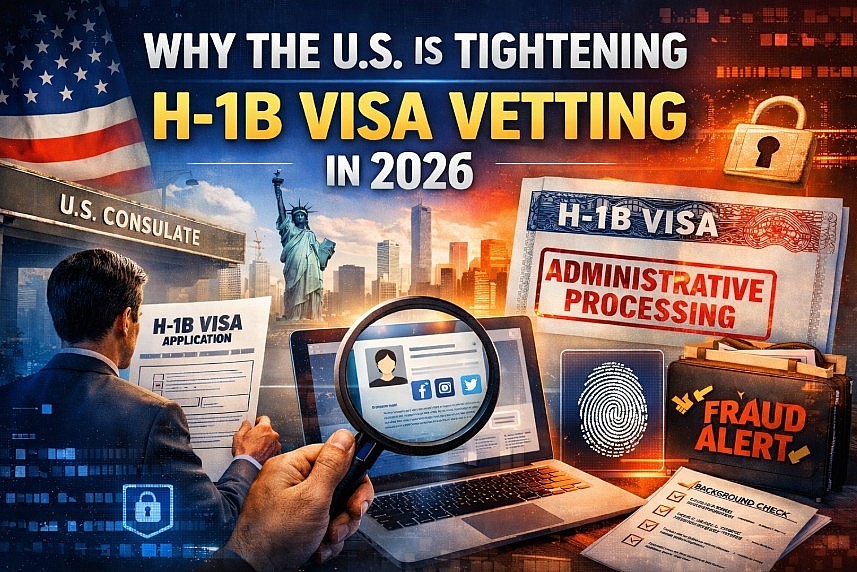
Why the U.S. Is Tightening Vetting for H-1B Visa Applicants
The U.S. government significantly tightened screening for H-1B visa applicants. Many foreign professionals now face longer interviews, additional questions, higher rates of administrative processing, and slower visa stamping—even with an approved petition.
This is not a temporary backlog or a consulate-specific issue. It reflects a coordinated policy shift across multiple agencies, including U.S. Citizenship and Immigration Services and the U.S. Department of State, aimed at strengthening oversight of employment-based immigration.
Below is a comprehensive, updated explanation of why the U.S. is tightening H-1B vetting, what has changed in practice, and how applicants and employers should respond.
1. Restoring “program integrity” after years of abuse concerns
One of the core reasons behind stricter vetting is the U.S. government’s long-standing concern that the H-1B program has been misused.
Common issues identified by regulators include:
-
Multiple registrations filed for the same worker to game the lottery
-
Job offers that exist only on paper
-
Third-party placements with unclear supervision
-
Job duties that do not match the specialty occupation claimed
-
Wage levels inconsistent with the actual role or location
To address these issues, USCIS has shifted from a paperwork-driven model to a verification-driven model. Officers now look more closely at whether:
-
The job actually exists
-
The employer controls the worker’s day-to-day activities
-
The work location and reporting structure are real and stable
-
The salary aligns with the role and geographic area
This integrity-first mindset affects every stage of the process—from lottery registration to petition adjudication to visa issuance abroad.
2. Expanded screening at U.S. consulates: beyond the approved petition
A major change in 2025 is the expansion of enhanced screening at U.S. consulates, especially during visa interviews.
Even if USCIS has approved an H-1B petition, consular officers conduct an independent review. Their job is not to re-adjudicate the petition, but to determine whether the applicant qualifies for a visa under U.S. law and policy.
What’s new:
-
More detailed questioning about job duties and employer structure
-
Increased verification of past U.S. work history
-
Greater scrutiny of gaps, job changes, or short-term projects
-
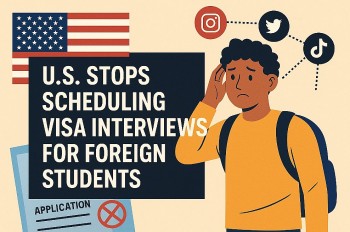
Mandatory review of applicants’ online presence, including professional and public-facing digital profiles
This additional layer has significantly increased the number of cases placed into administrative processing, where officers pause issuance while conducting further checks.
3. Mandatory online-presence review for H-1B and H-4 applicants
One of the most visible policy updates is the formal expansion of online-presence review requirements to H-1B principals and H-4 dependents.
Applicants are now expected to:
-
Disclose social media identifiers used in recent years
-
Temporarily set relevant profiles to “public” when instructed
-
Expect officers to review publicly available professional content
The purpose is not to police personal opinions, but to:
-
Confirm professional background consistency
-
Identify discrepancies between resumes, petitions, and public profiles
-
Detect indicators of fraud, misrepresentation, or undisclosed employment
For applicants who maintain LinkedIn profiles, portfolios, GitHub accounts, or personal websites, consistency matters more than ever.
4. National security and geopolitical considerations
Stricter H-1B vetting also reflects a broader U.S. approach to border and national security.
In recent years, U.S. immigration policy has increasingly emphasized:
-
Information sharing with foreign governments
-
Risk-based screening models
-
Country-level assessments of document reliability and data access
Even applicants from traditionally low-risk countries may experience delays as consular officers apply uniform global standards. This environment naturally leads to:
-
More cautious decision-making
-
More cases routed for additional checks
-
Slower overall visa issuance timelines
5. Political accountability and enforcement optics
Employment-based immigration has become more politically sensitive, especially around the perception that U.S. jobs must be protected and immigration rules enforced strictly.
As a result:
-
Agencies face pressure to demonstrate enforcement
-
Officers are incentivized to document due diligence
-
Borderline cases are more likely to be delayed than waved through
This does not mean the U.S. is “closing” the H-1B program. It means the tolerance for ambiguity has dropped sharply.
 |
| Trump imposes a $100K annual fee on H-1B visas |
What this means for H-1B applicants (practical guidance)
Expect longer timelines
Visa stamping and renewals may take weeks or months longer than before. Travel planning should include buffers.
Consistency is critical
Your job title, duties, salary, work location, and manager should align across:
-
Petition documents
-
Visa interview answers
-
Public professional profiles
Be ready to explain your role clearly
Officers are testing whether you understand your job and whether it matches a specialty occupation. Vague answers increase risk.
Administrative processing is not a denial
Many cases are eventually approved. However, there is usually no way to expedite or predict timelines once processing begins.
What employers should do to reduce risk
-
Maintain clear, up-to-date role descriptions
-
Ensure managers understand the H-1B worker’s duties and reporting structure
-
Keep documentation ready for potential verification requests
-
Avoid last-minute changes in location or responsibilities without legal review
-
Set realistic start dates that account for visa uncertainty
Employers who treat H-1B as a compliance obligation—not just a hiring tool—are better positioned under stricter scrutiny.
FAQs
Is the H-1B program being restricted or eliminated?
No. The program remains active, but enforcement and verification standards are higher.
Does this affect extensions and renewals?
Yes. Renewals that require visa stamping abroad are subject to the same enhanced screening.
Are dependents impacted?
Yes. H-4 spouses and children are included in expanded vetting procedures.
Can online content cause a denial?
Inconsistencies or misrepresentation can raise red flags. Honest, consistent profiles generally do not cause issues.
Will vetting ease in the future?
Possibly, but current trends suggest stricter screening is becoming the long-term norm rather than a temporary phase.