Americans Are Spending Less in 2026: 7 Costs Families Can’t Ignore
 Why Millions of Americans Are Cutting Back in 2026 — And What It Means for the Economy Why Millions of Americans Are Cutting Back in 2026 — And What It Means for the Economy From groceries to rent and healthcare, Americans are pulling back on spending. New data shows why confidence is falling—and what households should prepare for in ... |
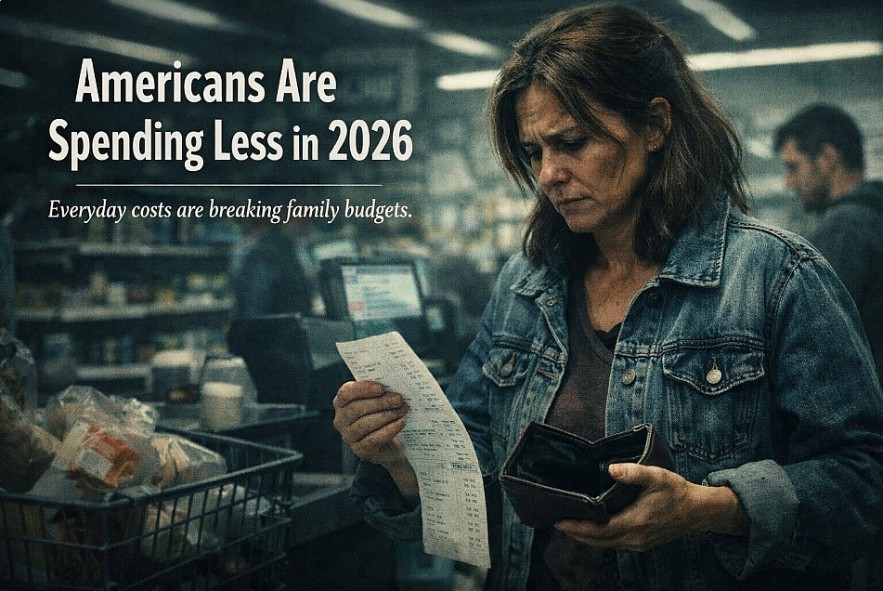
By the end of 2025, the mood among U.S. shoppers turned noticeably cautious. The Conference Board’s Consumer Confidence Index fell again in December (89.1), marking a multi-month slide as people worried about prices, jobs and the months ahead. The University of Michigan’s consumer sentiment reading stayed deeply pessimistic, too (52.9 in December 2025).
Inflation has cooled from its peak years—but “cooler” doesn’t mean “cheap.” In the latest CPI data (November 2025), several essential categories were still rising enough to force trade-offs in real life.
Below are the seven everyday costs families say they can’t ignore anymore—and what to do about them.
Read more: Big Social Security Changes Coming in 2026: What Retirees, Workers, and High Earners Must Know
 |
| The Checkout Reality |
1) Groceries: still the weekly budget stress-test
Food prices remain a top complaint because groceries hit your wallet every single week. In November 2025, the CPI food index was up 2.6% year over year, while food at home was up 1.9% (with some subcategories like meats/eggs running hotter).
What families are doing
-
Switching from name brands to store brands (especially for pantry staples)
-
Planning meals around weekly deals
-
Cutting food waste (freezer strategy, “use-it-up” nights)
2) Rent and shelter: the biggest check most months
Housing is still the largest expense for many households. The CPI shelter index rose 3.0% over the last year (Nov. 2025). Even when rent growth slows, it’s often slow at a high price level—meaning the payment still hurts.
What families are doing
-
Renewing early and negotiating (especially if vacancy is up locally)
-
Adding roommates or downsizing
-
Moving “one ring out” from downtown cores to cut rent
3) Electricity and natural gas: “hidden inflation” in the utility bill
Utility bills can jump without warning—especially in winter. CPI data showed electricity up 6.9% and natural gas up 9.1% over the last 12 months (Nov. 2025). The U.S. Energy Information Administration has also flagged continued upward pressure on retail electricity prices through 2026.
What families are doing
-
Using budget billing/level pay plans (reduces seasonal spikes)
-
Weatherizing cheaply (door sweeps, window film, insulation strips)
-
Timing major appliance use (laundry/dishwasher) for off-peak if their utility offers it
Read more: Student Homelessness in America Is Exploding: The Education Crisis Hiding in Plain Sight
4) Health insurance and out-of-pocket care: premiums may rise again
Health costs are one of the easiest ways for a “stable” budget to suddenly become unstable. For 2026, Peterson–KFF Health System Tracker analyses found ACA Marketplace insurers were seeking double-digit premium increases—with a typical request around the high teens and an average around ~20% in their analysis.
What families are doing
-
Re-shopping during open enrollment instead of auto-renewing
-
Checking if a lower premium plan is worth a higher deductible (only if they have emergency savings)
-
Using in-network, urgent care/telehealth when appropriate
 Health Insurance Costs Could Surge in 2026: Hard Numbers and What Americans Should Know Health Insurance Costs Could Surge in 2026: Hard Numbers and What Americans Should Know |
5) Childcare: a second rent payment for many parents
Childcare is one of the most punishing costs because it’s non-optional for working families—and prices can rise faster than pay. Many parents respond by changing jobs, shifting schedules, or relying more on family networks.
What families are doing
-
Staggered work schedules (one parent early shift, one late)
-
Sharing nanny care with another family
-
Seeking employer childcare benefits or dependent care FSAs (when available)
6) Transportation: gas is down, but the car still costs plenty
One bright spot: gasoline prices were unusually low for December. AAA reported the national average falling below $3/gallon early in the month, with prices around the mid-$2 range in late December.
But cheaper gas doesn’t erase other costs: insurance, maintenance, tires, and the price of used vehicles and repairs.
What families are doing
-
Holding onto cars longer (and prioritizing preventive maintenance)
-
Comparing insurance rates at renewal (loyalty doesn’t always pay)
-
Combining errands and cutting “extra trips”
7) Debt and interest: the cost that compounds while you sleep
When budgets tighten, more families lean on cards—and interest becomes a second bill. The Fed’s series on credit card interest rates has been in the low-20% range recently (with readings above 22% in 2025). Retail store cards are even worse: Bankrate found the average retail card APR stayed above 30% in 2025.
What families are doing
-
Paying down the highest APR first (avalanche method)
-
Moving balances only if the math works (0% intro offers + realistic payoff plan)
-
Cutting discretionary “drip spending” (subscriptions, delivery fees, impulse buys)
Quick snapshot: where pressure is showing up in the data
| Everyday Cost | What the latest data signals |
|---|---|
| Food | Food +2.6% YoY; food at home +1.9% (Nov 2025 CPI) |
| Shelter | Shelter +3.0% YoY (Nov 2025 CPI) |
| Utilities | Electricity +6.9% YoY; natural gas +9.1% YoY (Nov 2025 CPI) |
| Gas | Late-Dec national average in the mid-$2 range (AAA) |
| Consumer mood | Confidence 89.1 (Dec 2025), sentiment 52.9 (Dec 2025) |
| Insurance | Marketplace premium requests often in the high-teens/around ~20% for 2026 |
| Credit cards | Card interest rates in low-20% range; retail cards avg APR >30% |
FAQs
1) If inflation is lower now, why does everything still feel expensive?
Because prices rarely go back down—slower inflation usually means prices rise more slowly, not that they drop. Essentials like shelter and utilities can still climb enough to squeeze budgets.
2) What’s the single biggest budget pressure for most families?
Housing (rent/shelter) tends to be the largest fixed monthly expense, and it has continued to rise year over year in CPI.
3) Are gas prices actually helping families right now?
They help at the margin. AAA data showed December gas prices among the cheapest in years, but insurance and maintenance still keep transportation expensive.
4) Will health insurance get more expensive in 2026?
Many ACA Marketplace filings pointed to double-digit increases for 2026, driven by higher medical costs and utilization, among other factors. Actual changes vary by state and plan.
5) What’s the fastest way to stop “budget leakage”?
Track “drip spending” for 30 days: subscriptions, delivery fees, small impulse buys. Cutting a few recurring charges often produces a guaranteed monthly win.
6) When should someone worry about credit-card debt most?
If you’re paying interest (carrying a balance) at today’s high rates, it’s worth prioritizing a payoff plan—especially on store cards that can charge APRs above 30%.