MLS vs International Soccer Streaming in the U.S.: Key Differences, Costs, and Free Options

 |
| MLS vs International Soccer Streaming in the U.S |
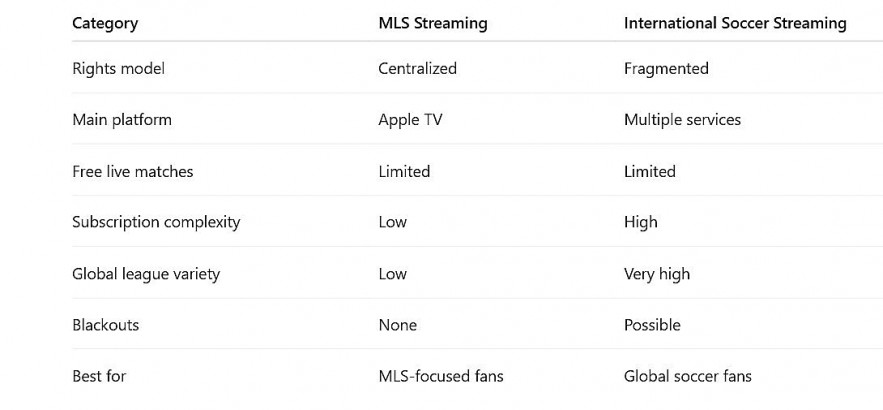
Soccer fans in the United States face a unique streaming landscape. Watching Major League Soccer (MLS) is very different from streaming international soccer leagues and tournaments such as the Premier League, La Liga, or international competitions.
This article explains the real differences between MLS and international soccer streaming in the U.S. — including availability, cost, free access, and legal limitations — so fans know exactly what to expect.
 |
| MLS vs International Soccer Streaming |
Streaming Rights: Centralized vs Fragmented
MLS: Fully Centralized Model
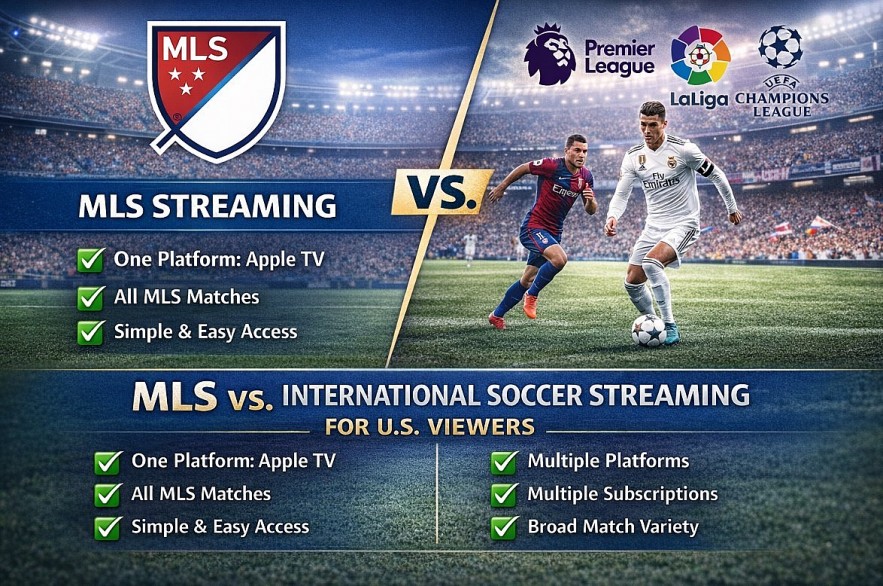
MLS operates under a single global streaming agreement.
-
Rights holder: Apple TV
-
Product: MLS Season Pass
-
Coverage: Every MLS match worldwide
What this means for fans
-
One platform
-
One subscription
-
No blackouts
-
No regional restrictions
This model is unique in U.S. sports and simplifies access.
International Soccer: Highly Fragmented Model
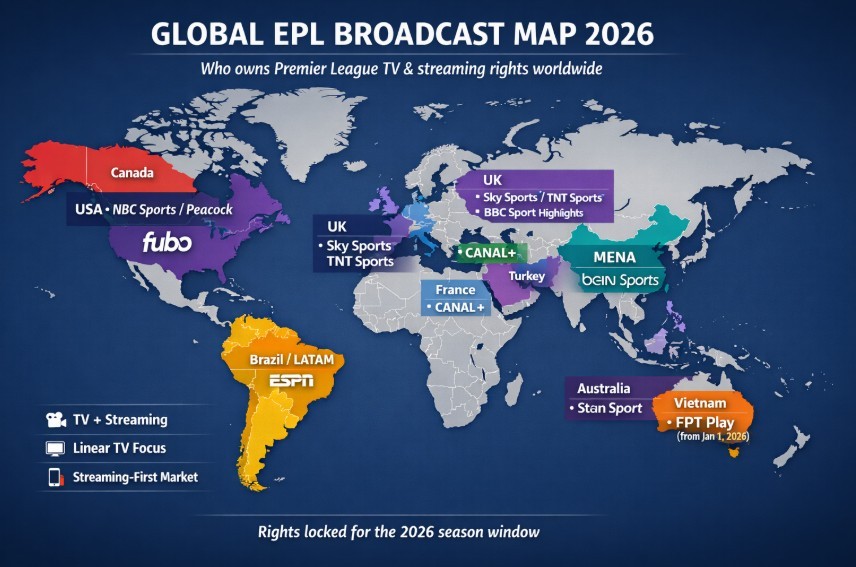
International soccer rights in the U.S. are split across multiple broadcasters and platforms.
Examples include:
Each league is licensed separately, often to different companies.
Result
-
Multiple subscriptions required
-
No single “all-in-one” service
-
Rights change frequently
2. Cost Structure: Predictable vs Variable
MLS Streaming Costs
-
MLS Season Pass: flat seasonal price
-
Often bundled discounts with Apple services
-
Select matches offered free weekly
For MLS fans, costs are predictable and transparent.
International Soccer Streaming Costs
International soccer fans often need:
-
One service for European leagues
-
Another for international tournaments
-
Possibly a Spanish-language platform
Costs vary by league and season and can add up quickly.
Free and Legal Viewing Options Compared
Free MLS Options (Limited but Official)
MLS offers controlled free access, including:
-
Weekly free matches on Apple TV
-
MLS Cup Final free streams
-
Occasional national broadcasts
There is no full-season free MLS option in the U.S.
Free International Soccer Options (More Variety, Less Top-Tier)
International soccer offers:
-
FIFA+ for free matches
-
National team games on OTA networks
-
Highlights and occasional live matches
However:
-
Top European leagues are rarely free
-
Most free matches are lower-profile competitions
Accessibility and Ease of Use
MLS: Simple and User-Friendly
MLS streaming advantages:
-
Single app
-
Clear schedule
-
Consistent kickoff times
-
No blackout confusion
This is ideal for casual and new fans.
International Soccer: Complex but Broad
International soccer streaming:
-
Requires schedule tracking
-
Different platforms per competition
-
Early kickoff times due to time zones
Better suited for hardcore fans willing to manage multiple services.
Match Volume and Variety
MLS
-
Regular season
-
Playoffs
-
Leagues Cup
-
U.S.-based clubs only
Focused but limited in global variety.
International Soccer
-
Domestic leagues
-
Continental tournaments
-
International competitions
-
Clubs and national teams worldwide
Much broader scope, but harder to follow consistently.
Language and Broadcast Style
MLS:
-
English-first coverage
-
Growing Spanish-language options
-
U.S.-focused production
International soccer:
-
English and Spanish widely available
-
Some competitions only in Spanish
-
European-style commentary common
Which Is Better for U.S. Viewers?
There is no universal winner.
Choose MLS streaming if you:
-
Want simplicity
-
Follow U.S.-based clubs
-
Prefer predictable access
Choose international soccer streaming if you:
-
Follow European or global teams
-
Want variety
-
Are comfortable managing multiple platforms
Many U.S. fans use both models together.
Conclusion
MLS and international soccer streaming in the U.S. represent two fundamentally different distribution philosophies. MLS prioritizes simplicity and accessibility through Apple TV, while international soccer reflects a fragmented global rights market.
Understanding these differences helps fans avoid frustration, unnecessary subscriptions, and illegal streams — while getting the most value from legal options.