San Francisco Power Outage Explained: Substation Fire Triggers Citywide Blackout Before Christmas

A massive power outage disrupted San Francisco during the busy holiday weekend, leaving large sections of the city without electricity and throwing daily life into disarray. The blackout, which began shortly after 1 p.m. on Saturday, affected roughly 130,000 homes and businesses across a city of more than 800,000 residents, according to Pacific Gas and Electric Company.
The incident came at a particularly damaging time. With Christmas only days away, the outage shut down shops, restaurants, transportation systems, and essential city services, amplifying its economic and social impact.
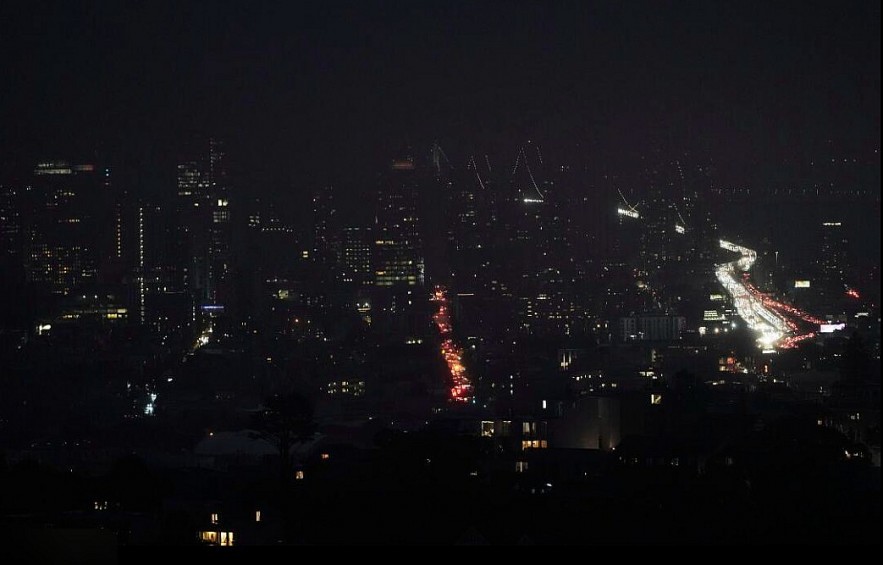 |
| The San Francisco outage, which began shortly after 1 pm, affected around 130,000 homes and businesses across the city of more than 800,000 people. |
What triggered the San Francisco power outage?
City officials confirmed that the outage was caused by a fire at a PG&E electrical substation near 8th and Mission streets, a critical hub in San Francisco’s power distribution network. Substations regulate voltage and route electricity to multiple neighborhoods. When one suffers severe damage, failures can quickly cascade across the grid.
PG&E described the damage as “significant and extensive,” noting that key components were heavily affected. This made repairs complex and prevented a rapid, citywide restoration of power. The fire forced operators to shut down sections of the grid to prevent further damage, triggering widespread outages across downtown and surrounding neighborhoods.
Restoration efforts and timeline
By early Sunday morning, PG&E had restored electricity to approximately 110,000 customers. However, around 21,000 homes and businesses remained without power. Crews worked around the clock, supported by additional engineers and electricians brought in from outside the city.
While PG&E said the grid had been stabilized by Saturday evening and no additional outages were expected, the utility could not provide an exact timeline for full restoration. Officials cited the scale of the damage and the need to safely test repaired equipment before bringing all customers back online.
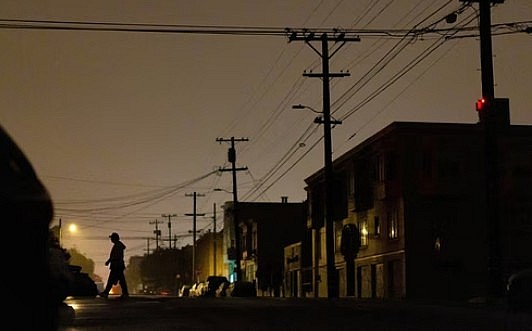 |
| San Francisco was brought to a near standstill on Saturday after a major power outage plunged large parts of the city |
Traffic, transit, and safety disruptions
The blackout had immediate consequences for public safety. Traffic lights across large parts of San Francisco went dark, creating hazardous conditions at busy intersections. Police officers were deployed to manually direct traffic, particularly in downtown corridors.
The city’s Department of Emergency Management urged residents to avoid non-essential travel and reminded drivers to treat non-functioning signals as four-way stops. Officials warned that congestion and accident risks were significantly higher, especially as evening fog reduced visibility.
Public transportation systems also felt the strain. Trains on parts of the rapid transit network bypassed certain downtown stations, while buses faced major delays due to gridlocked streets. Adding another layer of disruption, autonomous ride-hailing services operated by Waymo were temporarily suspended as a safety precaution while traffic signals were offline.
Economic impact during peak shopping season
The timing of the San Francisco blackout sharply intensified its economic consequences. The holiday weekend is traditionally one of the most profitable periods for retailers and restaurants. Instead, many businesses were forced to close early or shut down entirely due to the lack of power.
Commercial districts that would normally be crowded with shoppers appeared unusually quiet. According to the San Francisco Chronicle, several business owners described the sudden loss of foot traffic as “devastating.” Foggy weather compounded the problem, further discouraging people from venturing out even in areas where electricity had already been restored.
For small businesses still recovering from inflation, staffing shortages, and reduced consumer spending, losing a key holiday weekend represented a significant financial blow.
City leadership responds
Mayor Daniel Lurie acknowledged the hardship faced by residents and business owners, calling the outage a “rough day” for the city. Speaking from the emergency operations center, he said city agencies were coordinating closely with PG&E, first responders, and transportation officials to manage the crisis and restore normal operations as quickly as possible.
Officials confirmed that there were no reported injuries linked to the substation fire or the blackout. Emergency services continued operating throughout the outage, relying on backup power where necessary.
Investigation and broader concerns
An investigation into the cause of the substation fire is ongoing. PG&E and city officials are working with fire authorities to determine whether equipment failure, environmental factors, or other issues sparked the blaze.
The outage has renewed public debate over the resilience of San Francisco’s aging electrical infrastructure. As climate-related risks, rising energy demand, and urban density increase, experts warn that the city may face more frequent disruptions unless significant investments are made in grid modernization, redundancy, and fire prevention.
FAQs: San Francisco Power Outage
What caused the San Francisco power outage?
The outage was caused by a fire at a PG&E electrical substation near 8th and Mission streets, which led to cascading failures across the power grid.
How many customers were affected?
Approximately 130,000 homes and businesses lost power when the outage began.
How long did the blackout last?
Most customers had power restored within hours, but about 21,000 were still without electricity by early Sunday morning. Full restoration depended on complex repairs.
Did the outage affect public transportation?
Yes. Trains bypassed some downtown stations, buses were delayed, and autonomous ride-hailing services were temporarily suspended.
Were there any injuries reported?
No injuries related to the substation fire or the blackout were reported by city officials.