Trump Signals That He Has “Made Up His Mind” on Venezuela

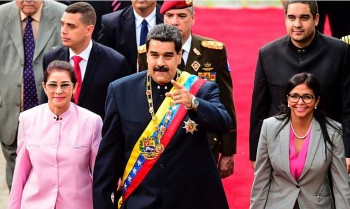 Who is Nicolás Maduro, President of Venezuela: Early Life, Family, Career, And Net Worth Who is Nicolás Maduro, President of Venezuela: Early Life, Family, Career, And Net Worth The U.S. has imposed sanctions on 21 more allies of Venezuelan President Nicolás Maduro for repressing Venezuelans following the country's disputed presidential election. Let's find ... |
This admission came amid heightened U.S. military activity around Venezuela and a broadening of covert operations and interdictions tied to drug trafficking and “narcoterrorism.”
It is a pivotal moment because it suggests the United States is moving from a posture of planning to one of near-decision execution. While no formal order for a full-scale invasion has been announced, the combination of public comments, military deployments, and covert operations all point to an increased risk of U.S. action in or against Venezuela.
The question now is: What does “made up his mind” actually mean? What options are on the table? What are the legal, diplomatic, regional and strategic implications? And how might Venezuela respond? In what follows we walk through what we know — the background, the options, the hurdles, the signals — and the possible outcomes.
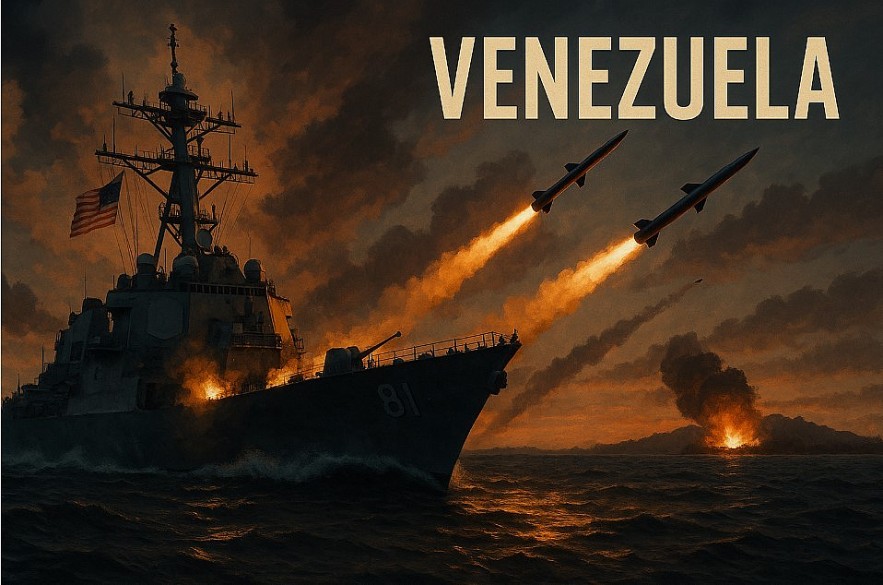 |
| In recent weeks, the US has amassed its naval forces in the Caribbean as the Trump administration has launched at least 20 strikes on alleged drug-trafficking boats, an effort officials say is meant to disrupt the flow of drugs into the US. |
What We Know — and What We Don’tWhat we knowPresident Trump has publicly signalled he has “somewhat decided” how to proceed toward Venezuela. Senior U.S. military and intelligence officials have presented a range of options to him, including land strikes inside Venezuela. The U.S. has already escalated military action around Venezuela: maritime strikes, covert CIA operations, military deployment. Venezuela and its allies are aware of the shift, are mobilising accordingly, and are preparing to respond. The legal, diplomatic and strategic risks of deeper military engagement are substantial. What we don’t know (yet)The exact nature of the decision: domestic vs. foreign, limited vs. major, short-term vs. long-term. The specific targets, timing and scope of any operation inside Venezuela. The end-state or objective of the U.S. beyond disruption of trafficking—e.g., whether regime change is the plan. How Congress and U.S. allies will respond when/if the operation becomes overt. The reaction of Venezuela’s security forces, regional actors and great-power competitors once operations begin. |
Why Is Venezuela Back on the U.S. Military Radar?
Narcotics, “narcoterrorism,” and U.S. discourse
A key part of the impetus for the new U.S. posture is the argument by the Trump administration that Venezuela (and its leadership) plays a role in illicit drug trafficking and associated violence, which the administration casts as a national security threat to the United States. For example, in October 2025, Trump confirmed that he authorised covert operations by the Central Intelligence Agency (CIA) inside Venezuela.
Also, the U.S. has undertaken a series of military strikes since September against vessels it alleges were transporting drugs from or through Venezuela.
By proclaiming certain Latin American criminal groups as “foreign terrorist organizations” and treating the drug-trafficking challenge as an armed conflict, the administration is shifting away from a strictly law-enforcement model to a military/war-like model.
Military build-up and regional posture
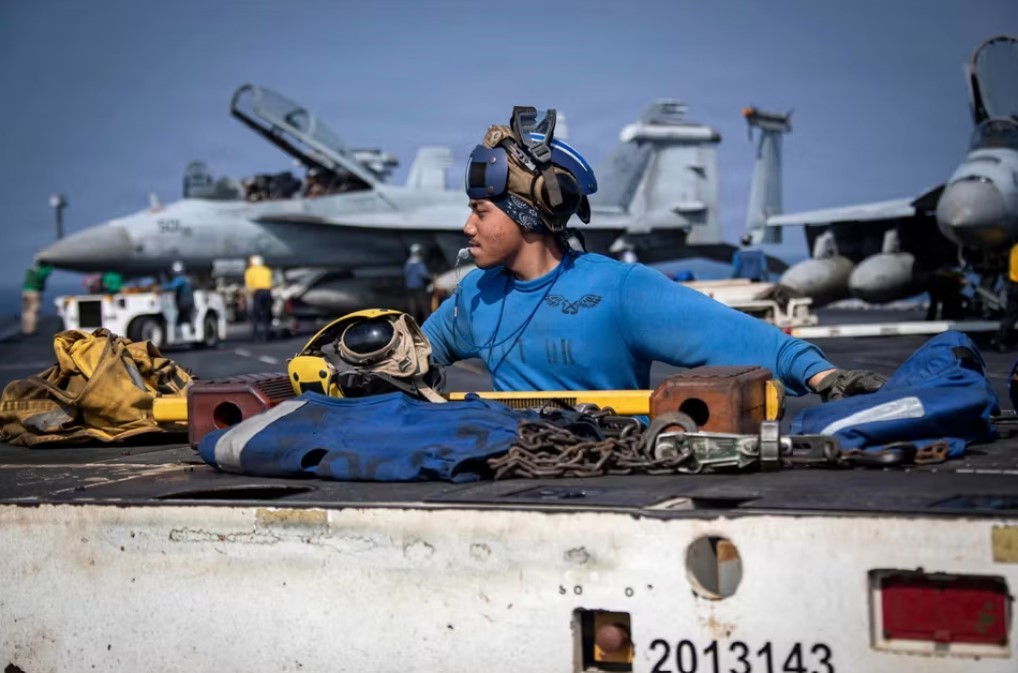
Since at least mid-2025, the U.S. has bolstered its military presence in the southern Caribbean region, deploying warships, fighter aircraft, and positioning assets near Venezuela. According to multiple reports, this is the largest U.S. military deployment in the region in decades.
These deployments serve multiple signalling and practical purposes: monitoring maritime traffic, intercepting suspected narcotics shipments, positioning for potential strikes, and raising the cost for Venezuela should it attempt to resist or intervene.
Venezuela’s reaction and regional context
From the Venezuelan side, President Nicolás Maduro’s government has pushed back hard. Caracas accuses Washington of seeking regime change through military threat. For example, Venezuelan authorities say the U.S. is fabricating a war narrative and accuse it of infringing on sovereignty.
Regionally, other actors—such as Colombia, Caribbean states, and even extra-regional powers like Russia and Iran—are watching closely. The risk of spill-over into a broader regional crisis is real.
What Has Trump Actually Said and Signalled?
“I sort of have made up my mind”
In a statement aboard Air Force One, President Trump said:
“I sort of have made up my mind about how we’re going to proceed with Venezuela … I can’t tell you what it would be.”
This communicates that a decision is near or has been tentatively made, but the president is still withholding the exact form it will take. Analysts interpret this as signalling that whatever comes next will be decisive and likely imminent.
Briefings and operational options presented
Multiple senior military officials—including Pete Hegseth (Secretary of Defense) and Dan Caine (Chairman of the Joint Chiefs of Staff) — have briefed the president on updated military options for Venezuela. These options reportedly include strikes on land (inside Venezuela), maritime interdictions, and other covert/unconventional operations.
No final decision yet, but the forces are being readied
While the administration emphasises that a final decision has not yet been formally taken, U.S. forces are reportedly on standby for possible attack orders. Additionally, the U.S. is already conducting strikes on vessels and covert actions inside or around the region, raising questions about the threshold for escalation.
What Trump may be signalling
Through his remarks, military deployments and covert operations, several signals are being sent simultaneously:
-
To Maduro’s government: pressure is increasing and the U.S. capability to strike is real.
-
To U.S. domestic audiences: the president is taking a tough line on drug trafficking and national security.
-
To allies and adversaries: the U.S. is willing to project force in the Western Hemisphere, and the traditional constraints may be changing.
-
To potential targets: although there is ambiguity, there is little doubt the U.S. is prepared to act.
What Are the Likely Options on the Table?
Given the reporting and context, the likely options for U.S. action toward Venezuela fall into a spectrum from lower-intensity to higher-intensity. We summarise them below:
1. Escalated maritime and aerial interdictions off the coast of Venezuela
The status quo has already seen increased operations. Since September 2025, U.S. forces have carried out at least 20 strikes on vessels (many alleged narcotics smugglers) in the Caribbean and off the Pacific. These actions may continue with greater intensity, more assets, perhaps closer to Venezuelan territorial waters or ports—but still short of ground operations.
2. Covert operations inside Venezuela
Public reporting confirms that covert CIA operations are authorised inside Venezuela. These might include special-forces missions, targeted raids, intelligence operations or proxy actions aimed at destabilising trafficking networks or regime assets.
3. Targeted strikes on land inside Venezuela
This is a step up. Reports indicate that Pentagon/Military officials have identified possible land targets inside Venezuela — ports, airstrips, transit hubs, military installations tied to trafficking. Such strikes might be designed to degrade the infrastructure of trafficking or apply leverage against the Maduro regime.
4. Deployed forces / limited incursions
Although less likely (due to risk, cost and geopolitics), one option is deployment of U.S. ground forces or amphibious assets for a limited operation—perhaps to seize key infrastructure, rescue hostages, or apply direct leverage. While there is no official announcement of this, the positioning of warships and Marines near Venezuelan coasts suggests the capability is being considered.
5. Full-scale military invasion / regime-change operation
This remains the most extreme and least likely in the immediate term. Such an operation would carry major legal, diplomatic, regional and human-cost consequences. While the rhetoric (including threats of “regime change”) exists, analysts currently treat full invasion as unlikely unless conditions dramatically shift.
What Has Trump (and the U.S.) Decided So Far?
While the president’s comment (“sort of made up my mind”) suggests a decision is imminent, it is important to clarify what has actually been decided at this stage:
-
The U.S. has already decided to escalate maritime, covert and aerial operations targeting vessels and suspected trafficking from Venezuela.
-
The U.S. has decided to treat certain Latin American criminal organisations (and by extension their state-linkages) as “narcoterrorists” or “unlawful combatants,” inviting a war-type posture.
-
The U.S. has decided to deploy additional military assets—ships, aircraft, forward bases/tracking—in the Caribbean region and near Venezuela.
-
The U.S. has not publicly confirmed an order for large-scale ground invasion or full regime-change operation inside Venezuela. The final decision on how and when to strike land targets remains under review.
In short, the decision appears to be: “We will act, we will do more, the choice is made that action is needed,” but the scope, timing, and type of action are still being finalised.
Legal, Diplomatic and Strategic Constraints
Legal considerations
The U.S. faces significant legal constraints and questions:
-
Congressional authorisation: Under the U.S. Constitution, only Congress has the power to declare war. The administration is relying on “standing authorities” and the characterization of a “non-international armed conflict” to justify military action.
-
International law: Strikes outside a country’s territory—or on vessels in international waters—require justification under the law of armed conflict or self-defence. Critics say some of the U.S. actions may violate international maritime law or human rights law.
-
Sovereignty and intervention: Any military action inside Venezuela—even against non-state actors—raises the issue of violating Venezuelan sovereignty unless there’s consent or some exceptional legal basis.
-
Avoiding escalation: Once military strikes or ground operations begin, the risk of a larger war increases, with attendant legal and political risks.
Diplomatic and regional constraints
-
Latin American reaction: Many states in the region oppose unilateral military action by the U.S. in Latin America. There is risk of regional backlash or alienation of allies.
-
Caribbean and maritime neighbours: States like Trinidad & Tobago, Aruba/Curaçao, and others are concerned about spill-over. The U.S. must manage diplomatic fallout in the Caribbean.
-
Great-power dimension: Russia and Iran have signalled strong support for Venezuela, and a conflict could draw in external actors or at least complicate U.S. strategic calculations.
-
Humanitarian and economic consequences: A military operation inside Venezuela risks significant civilian casualties, refugee flows, economic collapse, and humanitarian crisis, all of which would complicate U.S. objectives and domestic support.
Strategic and operational constraints
-
Terrain and adversary posture: Venezuela has rugged interior terrain, jungle and complex landscapes which complicate any operation. The regime has amassed patrols, militias and an anti-U.S. discourse environment.
-
Asymmetry of mission: If the stated objective is to cut narco flows or degrade trafficking networks, removing entire regime elements may not be necessary — but the lines are blurry.
-
Exit strategy and mission creep: The U.S. must consider how long it would stay, what the endstate is, and how it avoids long-term occupation or open-ended conflict.
-
Public and congressional support: Any military operation will face scrutiny at home. The more ambitious the operation, the greater the risk of public or congressional opposition.
What Are the Risks and What Could Go Wrong?
A U.S. move toward military operations in Venezuela carries a number of risk vectors:
-
Escalation into war: What starts as a targeted strike could lead to broader conflict with Venezuela directly (or via its regional allies).
-
Unintended casualties: If civilian casualties mount, the political, legal and moral blowback will be severe.
-
Regional destabilisation: A rupture of stability in Venezuela may send waves of refugees, trigger conflict in border zones (e.g., Colombia), and impose costs on neighbours.
-
Mission creep / long-term occupation: The U.S. could find itself bogged down in a protracted mission with unclear objectives or exit criteria.
-
Legal and reputational damage: If actions are judged unlawful, the U.S. may face censure, loss of moral authority, and difficulty cooperating internationally.
-
Domestic political backlash: Congress or the public may turn against the mission if it does not proceed cleanly, or if costs mount.
-
Misreading the adversary: The U.S. may underestimate the resolve or capabilities of the Venezuelan regime, or miscalculate its regional support.
What Might the Likely Scenario Be?
Given all the above, a plausible near-term scenario is as follows:
-
The U.S. will continue and intensify maritime and aerial interdictions of vessels linked to Venezuela and trans-regional trafficking.
-
Covert operations by the CIA and special forces inside Venezuela will increase, likely targeting trafficking networks, transit hubs and key facilitators.
-
The U.S. may carry out one or a small number of precision strikes on land inside Venezuela — for example a port facility or airstrip used by regime-linked actors or traffickers. These would be designed to maximise shock, minimise footprint, and limit U.S. exposure.
-
The Trump administration will present these actions publicly as part of a “war on narcotics” and “defending U.S. homeland security,” even while avoiding formal regime-change language or a full-scale invasion.
-
Venezuela will react forcefully — increased militia mobilisation, public denunciations, potential naval/air harassment in the Caribbean, appeals to Russia/Iran/China, and regional alliances seeking to condemn or mitigate U.S. action.
-
Diplomatically, the U.S. will seek support or at least tacit acquiescence from key partners (e.g., Caribbean states, Colombia) but will act even if consensus is incomplete.
-
The mission’s success will be judged not only by immediate military results but by whether it leads to a degradation of Venezuelan-based trafficking infrastructure, a political shift in Caracas, or leverage that the U.S. can exploit.
What Would an Escalation Look Like?
If the decision has moved into higher gear, we might see one or more of the following:
-
Amphibious deployment or special-forces insertion: U.S. Marines or Rangers landing on a Venezuelan island or coast to seize a facility.
-
Expanded air campaign: B-1 bombers, F-35s, or other strike aircraft operating over Venezuelan territory to destroy key infrastructure. (Satellite imagery already shows U.S. ships near Venezuelan naval bases.)
-
Direct action against regime leadership: While no official target has been named, if the mission broadens, it may include leadership or regime assets.
-
Blockade or deniable operations: The U.S. could impose a maritime blockade of Venezuelan ports or deny access to airstrips, tightening pressure further.
-
Allied involvement: Regional partners might join in, or the U.S. may leverage regional forces to offset costs and political risk.
If such escalation happens, it would likely trigger strong responses: from Venezuela (including potential use of its military, mobilisation of militias, irregular warfare), from neighbouring countries (border tension, refugee flows), and from global actors (Russia, China, Iran) possibly increasing their military/diplomatic involvement.
Why Has This Decision Point Arrived Now?
Several factors have converged to bring the U.S. to this decision point:
-
Drug crisis in the U.S.: The Trump administration has emphasised overdose deaths and linked them to foreign supply chains. This gives the president a domestic rationale for tougher action.
-
Trafficking flows via Venezuela: Venezuela’s geography and porous borders (particularly with Colombia and the Caribbean) make it a natural transit point for illicit flows; the U.S. believes it can strike critical nodes.
-
Weakened Venezuelan economy and regime: Venezuela’s economy is battered, its oil revenues low, and internal dissent high. The U.S. may believe this is a moment of leverage.
-
Strategic willingness to project force: The U.S. appears more willing to use military means in the Western Hemisphere, shifting away from purely diplomatic or sanctions-based tools.
-
Military readiness and asset positioning: The U.S. had already redeployed ships, aircraft and special forces for other missions and thus had available options at hand.
-
Regional perception of risk: The U.S. may feel that waiting carries higher risk — that trafficking networks will expand, or the Venezuelan regime will recover strength or alliances that make future action harder.
In short, the costs of inaction or delay may have appeared higher than the costs of action — at least from the U.S. perspective.
What Does Venezuela Stand to Lose or Gain?
Risks for Venezuela
-
Loss of infrastructure: Ports, airstrips, landing zones and other facilities linked to state or regime networks may be degraded or eliminated.
-
Destabilisation: Pressure may increase internal dissent, economic collapse, refugee outflows, military and militia defections.
-
Sovereignty damage: Military action inside Venezuela undermines the regime’s claim to control.
-
International isolation: If international opinion turns further against the regime, or if key allies abandon them, Caracas may find itself more isolated.
-
Economic losses: Infrastructure damage plus increased interdiction may further harm Venezuela’s economy, already under strain.
Potential Gains (if they manage to resist)
-
Nationalistic rallying: Venezuelan nationalism might increase, bolstering Maduro’s domestic legitimacy if he frames the U.S. as imperial aggressor.
-
Regional solidarity: Venezuela may deepen ties with allies (Russia, China, Iran, Cuba) which could provide support or diplomatic protection.
-
Diversification of trafficking routes: If U.S. pressure increases maritime interdictions, Venezuela may shift more heavily to land or air trafficking routes.
-
Forced negotiation: If the regime can survive initial pressure, it may extract concessions from the U.S. UN or multilateral community regarding sanctions or recognition.
How Are Regional Players Reacting?
-
Caribbean states: Countries like Trinidad & Tobago, Curacao/Aruba, and others are concerned about spill-over from maritime operations, refugee flows, and destabilisation of the southern Caribbean.
-
Colombia: Given its border with Venezuela and history of trafficking, Colombia is a key stakeholder. It may provide intelligence and logistical support to the U.S. or seek to limit destabilisation.
-
Russia/Iran/China: These actors have strategic ties with Venezuela and may provide diplomatic, military or intelligence support to Maduro, while condemning U.S. actions. Russia for example has already called U.S. force in the Caribbean “excessive.”
-
Latin American governments: Many governments will likely call for diplomacy and caution escalation. They may side with sovereignty norms even if they dislike Maduro.
-
United Nations and human-rights bodies: These organisations are signalling concern about legality, civilian casualties and the precedent of intervention.
What Are the Key Unanswered Questions?
-
What exactly has Trump decided? The public phrase “sort of made up his mind” leaves open the exact contours of the decision. Is it a limited strike, a series of strikes, an invasion?
-
Which targets and where? Are land strikes going to be inside Venezuela, and if so on which facilities? Are they military, trafficking infrastructure, regime leadership?
-
What is the end-state? Is the objective purely to degrade trafficking networks? Is it to apply pressure for regime change? What counts as success?
-
What is the timeline? Will action occur immediately, within days, weeks, or months?
-
What are the legal and congressional frameworks? Will Congress be consulted or authorise the action? What legal basis is the U.S. invoking?
-
How will Venezuela respond? Will Maduro retaliate militarily, engage in asymmetric warfare, escalate to neighbours?
-
What are the ripple-effects regionally? How will Caribbean states respond, how will NGOs and international bodies react, and what will be the humanitarian fallout?
Why This Matters—and Why It Matters Now
The potential escalation of U.S. military operations toward Venezuela is significant for several reasons:
-
It marks a turning point in U.S.–Venezuela relations. After years of mainly diplomatic and sanctions pressure, the U.S. appears ready to apply overt military force or near-military force inside the region.
-
It sets precedent for U.S. action in the Western Hemisphere. The use of military force in Latin America, especially against a sovereign state, carries historical weight (e.g., Panama, Grenada) and implications for future U.S. foreign policy.
-
It reveals the shifting nature of the “War on Drugs.” By labelling certain criminal organisations as terrorist organisations and engaging in military operations aimed at trafficking infrastructure, the U.S. is reframing the problem from law-enforcement to war-type operations.
-
It has major human and regional security implications. Venezuela’s collapse or destabilisation would produce large refugee flows, border instability, humanitarian crises, and regional political disruption.
-
It intersects with great-power competition. Venezuela is a locus for U.S. confrontation with Russia, China and Iran, and any U.S. military operation will involve those dynamics.
-
It tests U.S. domestic political will and legal norms. Any mission will have to navigate congressional authorisation, public support, casualty limits, exit strategy—elements that have bedevilled U.S. operations overseas.
It matters now because the signals, assets and options are converging. The U.S. is clearly poised to act, and its window of opportunity may be brief. The Venezuelan regime is under pressure, the Caribbean staging area is in place, and the U.S. shows willingness to use force. Delaying may reduce leverage or increase risk of the adversary improving defences or forming alliances.
What Should Observers Watch In the Coming Days?
To assess whether the U.S. moves into action—and along which path—watch for the following indicators:
-
Official annunciation of new operations: White House or Pentagon statements announcing land strikes, amphibious deployments, targeting of Venezuelan infrastructure or leadership.
-
Movement of assets: Observable deployment of warships, carrier groups, Marines, special-forces units near Venezuela, or repositioning of fighter aircraft.
-
Covert operations becoming overt: If the CIA or special ops begin missions inside Venezuela that become visible, that signals escalation.
-
Refugee flows / border crises: Any large movement of Venezuelan civilians to Colombia, Caribbean islands or other states could indicate destabilisation triggered by U.S. action.
-
Diplomatic fallout: Resolutions at the United Nations, Latin American government statements, declarations of “illegitimate” U.S. activity, alliances forming around Venezuela.
-
Legal/political debate in the U.S.: Congressional hearings, debates about war powers, oversight of covert actions, pushback by opposition parties or civil-rights groups.
-
Retaliatory actions by Venezuela: Potential naval harassment, air intercepts, militia mobilisations, alliances with external powers becoming more overt.
Implications and Final Thoughts
The potential U.S. military operation toward Venezuela marks a high-stakes moment in Western Hemispheric affairs. For Trump’s administration, the calculus appears to be: apply decisive pressure, exploit a narrow window, degrade a threat (trafficking and associated criminal networks) and possibly weaken a regime that the U.S. deems hostile or complicit.
Yet the risks are large. A miscalculation could lead to a wider war, a humanitarian disaster, a regional crisis and a blowback for U.S. credibility. The United States must balance ambition with caution. As one analyst put it, the goal might not be to occupy Venezuela but to strike hard enough to change behaviour. Timing, restraint, clear objectives and an exit strategy will matter.
For Venezuela, the moment is fraught. The regime may play for time, rally the population through nationalist rhetoric, lean on regional allies, or escalate the confrontation. The cost of mis-calculation on its side is also high—loss of infrastructure, effective sovereignty, internal cohesion.
For observers — policymakers, analysts, regional governments, NGOs — the coming days will be critical. If the U.S. moves, how it moves will matter as much as the fact of the move. Will it act with precision, legal clarity, limited footprint and a clear objective? Or will it drift toward mission creep, wider conflict, and unintended consequences?
As things stand now, the U.S. is on the verge of stepping beyond the threshold of “we’re prepared” into “we have acted” in Venezuela. President Trump’s comment that he has “made up his mind” is less a headline than a prelude. The real story will unfold in the field, in diplomatic channels, in the region, and in Congress.
We will continue to monitor developments closely — the assets deployed, the decisions made, the targets selected, and the reactions triggered. If you like, I can pull together a timeline of key events so far along with potential scenarios for the next 30-90 days. Would you like that?
 Why Is US Military The Strongest In The World? Why Is US Military The Strongest In The World? Out of the 140 nations taken into consideration for the yearly GFP review, the United States is ranked first. How to Retain 'American Military Dominance' ... |
 Where are US Military Deployments in the World and How Many Bases Are There Where are US Military Deployments in the World and How Many Bases Are There As of June 2023, there were over 30,000 American troops stationed in the Middle East alone, out of approximately 170,000 total troops stationed outside of ... |
 Top 10 Most Esteemed Military Colleges and Academies in the U.S Top 10 Most Esteemed Military Colleges and Academies in the U.S Top military schools are difficult for many US youth to get into. the difficult training course load and low acceptance rate. Let's look at the ... |
 Two US Navy Planes Were Shot Down: Houthi Missile or "Friendly Fire"? Two US Navy Planes Were Shot Down: Houthi Missile or "Friendly Fire"? The recent accidental downing of two US Navy pilots by their own forces during an operation over the Red Sea has brought renewed attention to ... |
 Inside Task Force 51: Maj. Gen. Scott M. Sherman Leads 700 Marines & 2,100 Guard Troops into LA Protest Zone Inside Task Force 51: Maj. Gen. Scott M. Sherman Leads 700 Marines & 2,100 Guard Troops into LA Protest Zone Maj. Gen. Scott M. Sherman oversees Task Force 51’s deployment of 700 Marines and 2,100 National Guard troops in Los Angeles, safeguarding federal assets amid immigration‑raids protests and breaching new ... |