Who Is Rodney Chatman? The Brown University Police Chief at the Center of a Campus Safety Reckoning

 Brown University Shooting: Latest Updates on Suspect, Victims, and Ongoing Investigation Brown University Shooting: Latest Updates on Suspect, Victims, and Ongoing Investigation |
 Bondi Beach Mass Shooting: At Least 10 Dead, The Suspects and Possible Motive Bondi Beach Mass Shooting: At Least 10 Dead, The Suspects and Possible Motive |
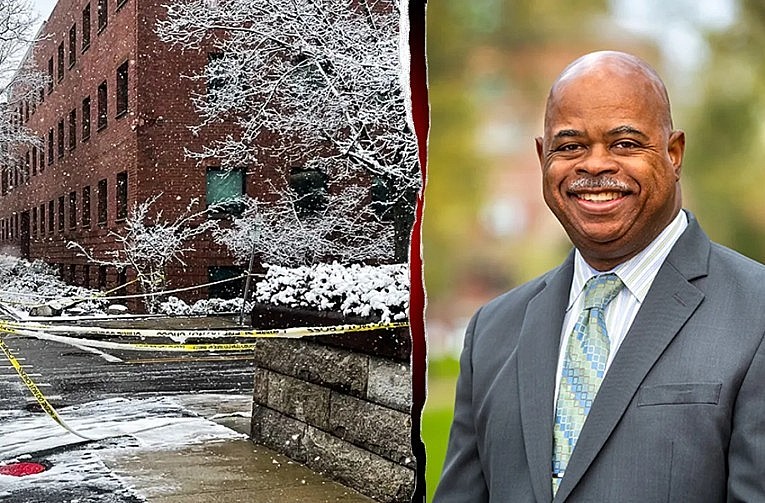 |
| Brown University chief of police Rodney Chatman has been placed on leave, effective immediately, university president Christina Paxson has announced |
Chatman, Brown University’s vice president for public safety and chief of police, was placed on administrative leave just days after a mass shooting on campus left two students dead and nine others injured. The decision has intensified scrutiny of his leadership, his policing philosophy, and the institutional choices made under his watch.
As investigations continue and emotions remain raw, many are asking a fundamental question: Who is Rodney Chatman, and how did Brown University arrive at this moment?
A Veteran of Campus Policing
Brown University appointed Rodney Chatman to its top public safety role in 2021, elevating him to a position that combined executive authority with operational control over campus policing. The move reflected a broader trend among elite universities to integrate law enforcement into senior leadership, emphasizing prevention, engagement, and institutional values.
Chatman brought with him more than 20 years of experience in higher-education policing. His career included leadership roles at the University of Cincinnati, the University of Dayton, and later the University of Utah, where he served as police chief before joining Brown. Throughout his career, he positioned himself as an advocate for community-oriented policing, a model that prioritizes trust, dialogue, and collaboration over aggressive enforcement.
At Brown, Chatman oversaw the Department of Public Safety, responsible not only for sworn police officers but also emergency management, campus access control, and security operations across the Ivy League campus.
Leadership Style and Philosophy
From the outset, Chatman emphasized relationship-based policing and diversity initiatives. Under his leadership, Brown’s public safety department increased outreach to student groups, expanded training on bias awareness, and highlighted equity and inclusion as core components of campus safety.
Supporters viewed this approach as aligned with Brown’s institutional values and reflective of evolving expectations around policing in academic environments. Critics, however, argued that the department’s focus drifted away from traditional security fundamentals such as access control, surveillance coverage, and rapid threat response.
These tensions became more visible in the months leading up to the December shooting. Two campus police unions issued votes of no confidence in Chatman’s leadership, citing morale issues, operational concerns, and disagreements over departmental priorities. While such votes do not carry binding authority, they signaled deep internal friction within the force tasked with protecting the campus.
The December 13 Shooting
The crisis reached a breaking point on December 13, when a gunman opened fire inside an academic building on Brown’s College Hill campus during finals period. The attack unfolded quickly, killing two students and injuring nine others before the suspect was apprehended.
The shooting shocked the Brown community and reverberated nationwide, shattering assumptions that elite university campuses are insulated from mass violence. In the days that followed, attention turned to how the attacker gained access to the building, how quickly law enforcement responded, and whether warning signs had been missed.
Federal authorities launched an inquiry into Brown’s compliance with campus safety regulations, including reporting requirements and emergency preparedness standards. Separately, the university commissioned an external review of its security policies and infrastructure.
Administrative Leave and Institutional Response
On December 22, Brown President Christina H. Paxson announced that Chatman had been placed on administrative leave, effective immediately. The decision was framed as part of a broader effort to evaluate campus safety leadership and restore confidence following the tragedy.
To stabilize operations, Brown appointed Hugh T. Clements Jr., a retired Providence police chief, as interim vice president for public safety. The move signaled a shift toward more traditional law-enforcement leadership during a period of crisis.
The university also announced immediate measures, including increased patrols, expanded camera coverage, enhanced building access controls, and a comprehensive reassessment of emergency response protocols.
Criticism, Politics, and Public Debate
Chatman’s removal has fueled sharp debate far beyond Providence. Conservative commentators have portrayed the situation as evidence that progressive policing models weaken institutional security. Others counter that the tragedy reflects systemic failures common across American campuses, from underfunded infrastructure to fragmented responsibility for safety.
Within the Brown community, reactions have been mixed. Some students and faculty emphasize the importance of preserving a campus environment that does not feel militarized. Others argue that the priority must be preventing future violence, even if that requires a more assertive security posture.
What is clear is that the scrutiny extends beyond one individual. Chatman’s leadership has become a lens through which broader questions about campus policing, administrative accountability, and risk management are being examined.
What Comes Next for Brown — and for Chatman
As investigations continue, Brown University faces pressure to deliver transparency, concrete reforms, and measurable improvements in campus safety. The findings of the external security assessment are expected to shape long-term changes to how the university approaches policing and emergency preparedness.
For Rodney Chatman, administrative leave represents an uncertain pause in a long career dedicated to campus safety. Whether he returns to his role, departs permanently, or becomes a case study in leadership under crisis remains to be seen.
What cannot be undone is the impact of December 13. For Brown, the tragedy has become a defining moment — one that forces the institution to confront hard questions about how safety, values, and leadership intersect in an era of increasing campus violence.
 Who They Were: Victims Identified in York County’s Deadly Police Shooting Who They Were: Victims Identified in York County’s Deadly Police Shooting A domestic call turned deadly in York County, South Carolina, when a suspected gunman opened fire on law enforcement during a nighttime manhunt—killing one officer ... |
 Alfredo Olivas: Mexican Singer Not Shot in Recent Attack — False Reports Debunked Alfredo Olivas: Mexican Singer Not Shot in Recent Attack — False Reports Debunked False Claims of Armed Attack Spark Confusion! |
 Who is John Beam (Laney College Shooting) and What is His Current Condition? Who is John Beam (Laney College Shooting) and What is His Current Condition? John Beam, a revered Oakland football coach and longtime athletic director at Laney College, was reportedly shot on campus on November 13, 2025. His condition ... |
 Who is Luqmaan Khan — and How authorities stopped an alleged mass-shooting plot at University of Delaware Who is Luqmaan Khan — and How authorities stopped an alleged mass-shooting plot at University of Delaware University of Delaware Student Arrested With Car Full of Weapons, Alleged Mass-Shooting Plans, and a Chilling Note on “Martyrdom”. |
 List of 30 Nations Under Review as Trump Administration Weighs Expanded Travel Ban After National Guard Shooting List of 30 Nations Under Review as Trump Administration Weighs Expanded Travel Ban After National Guard Shooting The Trump administration is reportedly considering an expansion of its travel ban to more than 30 nations following the National Guard shooting. |