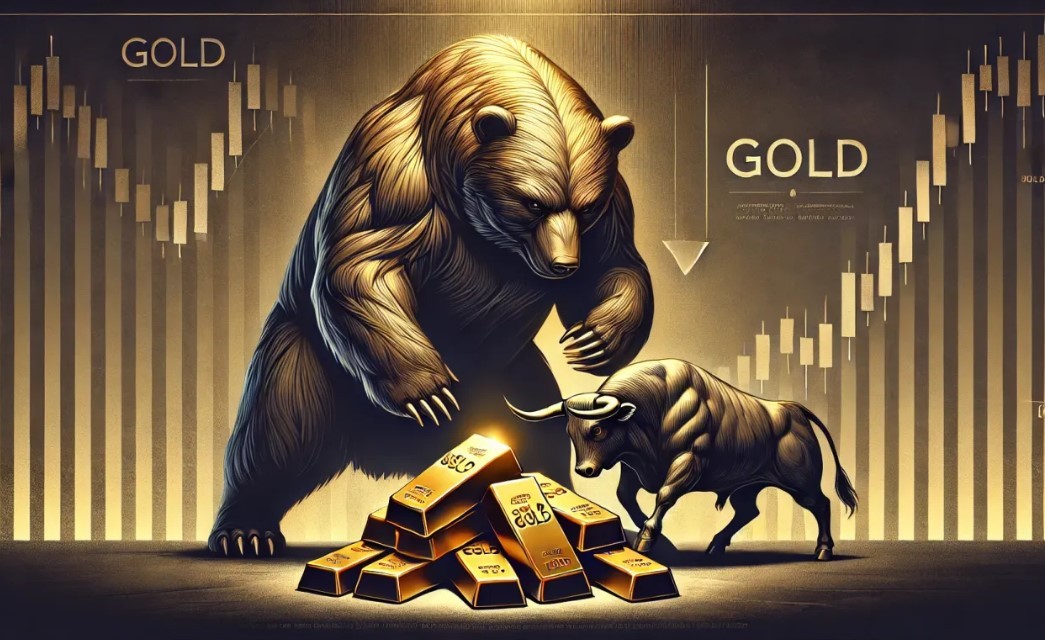
Gold Is Crashing - When Everyone Expected a Surge

 |
| Why Is Gold Falling When Everything Says It Should Rise |
The Shock: Gold Falls When It “Should” Rise
The gold prices dropped sharply to $4,000 level. The move was fast, aggressive, and unsettling.
At first glance, it made no sense.
-
Geopolitical tensions remain elevated
-
Oil prices have surged past $100
-
Inflation risks are rising again
-
Global growth looks uneven and fragile
By the usual logic, this is the kind of environment where gold should rally hard.
Instead, it fell.
This is the moment where many investors feel the market is “wrong.” In reality, this is the moment the market is revealing something deeper.
The Core Misunderstanding: Gold Is Not Just a “Fear Asset”
There is a common belief that gold rises whenever uncertainty increases.
That belief is incomplete.
Gold does not respond to fear alone. It responds to how that fear reshapes monetary policy, interest rates, and capital flows.
Right now, the market is not asking:
“Is the world dangerous?”
It is asking:
“What will central banks do because the world is dangerous?”
That difference changes everything.
The Real Driver: Interest Rates and the Price of Money
The turning point came with the latest Federal Reserve signals.
-
The Fed held rates steady
-
It warned inflation remains persistent
-
It offered no strong signal of imminent rate cuts
This shifted expectations in a critical way.
Instead of:
→ “Rates will fall soon”
Markets moved to:
→ “Rates may stay higher for longer”
And that is bad for gold.
Gold does not yield interest. When rates stay high:
-
Bonds become more attractive
-
Cash becomes more valuable
-
The opportunity cost of holding gold increases
Gold falls not because risk disappears, but because money itself becomes more expensive.
The Dollar Effect: The Strongest Safe Haven Wins
In times of stress, investors do not buy everything. They choose.
Right now, they are choosing the U.S. dollar.
A stronger dollar creates two pressures on gold:
-
Gold becomes more expensive globally
-
Capital flows into dollar assets instead of metals
This is a crucial point:
Sometimes gold loses not because it is weak, but because another safe haven is stronger.
The Oil Paradox: Inflation That Hurts Gold
Rising oil prices are typically seen as bullish for gold.
But not always.
Higher oil → higher inflation
Higher inflation → central banks stay cautious
Central banks stay cautious → rates stay high
And high rates hurt gold.
So instead of supporting gold, the oil surge is reinforcing the exact conditions that push gold lower.
This is not a contradiction. It is a chain reaction.
Liquidity Stress: Why Gold Gets Sold in a Panic
There is another, less obvious force at work: liquidity.
In fast market declines:
-
Investors face margin calls
-
Funds need cash quickly
-
Positions are liquidated
And what gets sold first?
Often, the most liquid assets.
Including gold.
This has happened before:
-
2008 financial crisis: gold fell during peak panic before recovering
-
March 2020 (COVID crash): gold dropped as investors rushed to cash
Gold can fall in the short term not because it fails,
but because it is one of the easiest assets to sell.
Positioning: The Market Was Already Too Bullish
Before this drop, gold had rallied to extreme highs above $5,500.
That matters.
When a market becomes crowded:
-
Too many investors are already long
-
Expectations are stretched
-
Even small shifts trigger large sell-offs
The current drop is not just about new information.
It is also about unwinding an overextended trade.
So Is This a Paradox or a Rational Move?
It feels like a paradox:
The world looks riskier, yet gold falls.
But it is actually consistent.
Gold performs best when:
-
Risk rises
-
AND rates fall
-
AND the dollar weakens
Right now:
-
Risk is rising
-
Rates are staying high
-
The dollar is strengthening
Two out of three key drivers are working against gold.
So gold falls.
What the Market Is Really Saying
The drop toward $4,000 is not a denial of global instability.
It is a statement about priorities.
Markets are saying:
The cost of money matters more than fear — at least for now.
This is a shift from a “fear-driven market”
to a “rate-driven market.”
The Bigger Picture: This May Not Be the End of Gold’s Story
History suggests something important:
Gold often moves in phases:
-
Fear rises → gold rallies
-
Inflation persists → rates stay high → gold falls
-
Growth slows → central banks cut → gold rises again
We may be transitioning between phases two and three.
If rates eventually fall, gold could recover strongly.
But that is not today’s story.
Final Take
Gold falling toward $4,000 is not market irrationality.
It is a reminder that:
-
Gold is not just a hedge against chaos
-
It is a hedge against monetary conditions
And right now, those conditions are not favorable.
Investors expected gold to rise because the world looks unstable.
The market pushed gold lower because the price of money has not come down.
That is the difference.
And that difference explains everything.