Why U.S. And Venezuela Tensions Are Reaching a Breaking Point

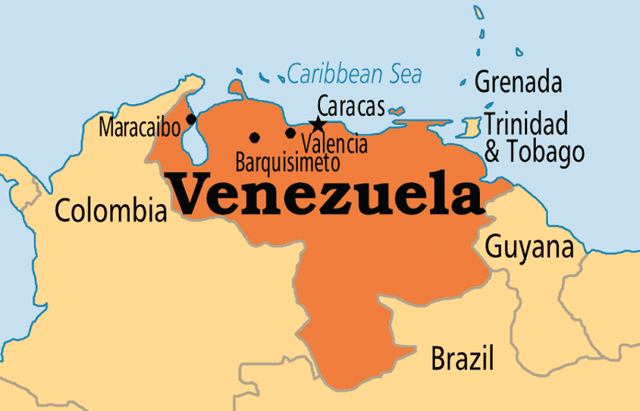 Top 7 Weirdest and Craziest Things In Venezuela Top 7 Weirdest and Craziest Things In Venezuela |
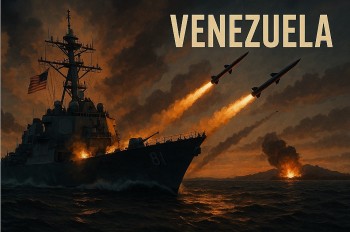 Trump Signals That He Has “Made Up His Mind” on Venezuela—What’s the Story? Trump Signals That He Has “Made Up His Mind” on Venezuela—What’s the Story? |
What the World Should Watch
-
Shifts in U.S. military posture, particularly aircraft carrier movements.
-
Venezuelan troop and militia mobilization levels.
-
Commercial shipping adjustments or rerouted maritime traffic.
-
Reactions from regional bodies including CARICOM, the OAS, and UN agencies.
-
Signs of coordination or pressure from external powers with interests in Venezuela.
The crisis is dynamic and highly unpredictable. The region has quietly entered one of its most precarious moments in recent memory.
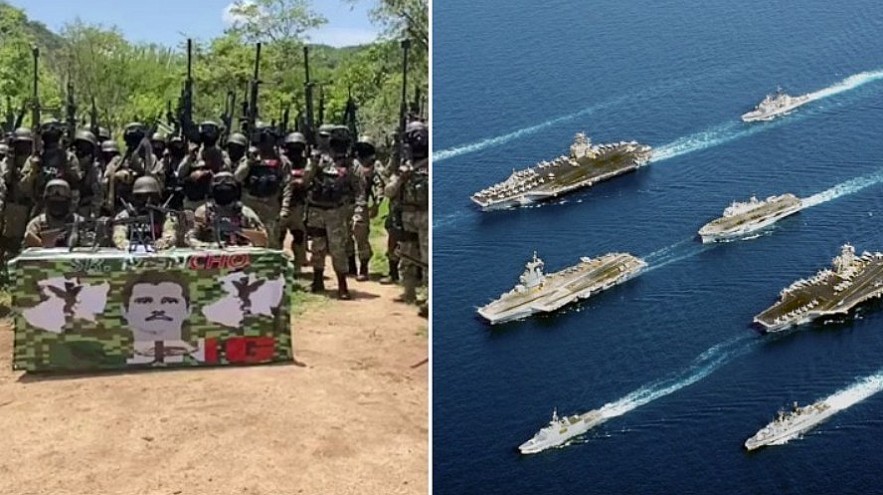 |
| US-Venezuela tensions rise as US warships arrive in Southern Caribbean |
A Region on Alert
The Caribbean is not a stranger to geopolitical tension, but what is happening today feels different. The sudden increase of U.S. military power near Venezuela has transformed the region into a potential flashpoint. Governments across Latin America are tracking the situation hour by hour, shipping companies are reviewing routes, and analysts warn that the fragile balance of the hemisphere may be shifting in real time.
The United States claims the deployment targets drug trafficking and transnational criminal groups. Venezuela insists the true objective is political destabilization. Both narratives are shaping public opinion and diplomatic reactions, but behind the scenes the stakes appear even higher.
With hundreds of billions in maritime trade flowing through the Caribbean each year, any escalation involving a major regional power could ripple outward to the Americas, Europe, and global energy markets. The crisis is not simply a bilateral standoff. It is a test of influence, legitimacy, and the limits of force in the Western Hemisphere.
The U.S. Military Build-Up: Scale and Strategy
Eleven warships and fifteen thousand troops
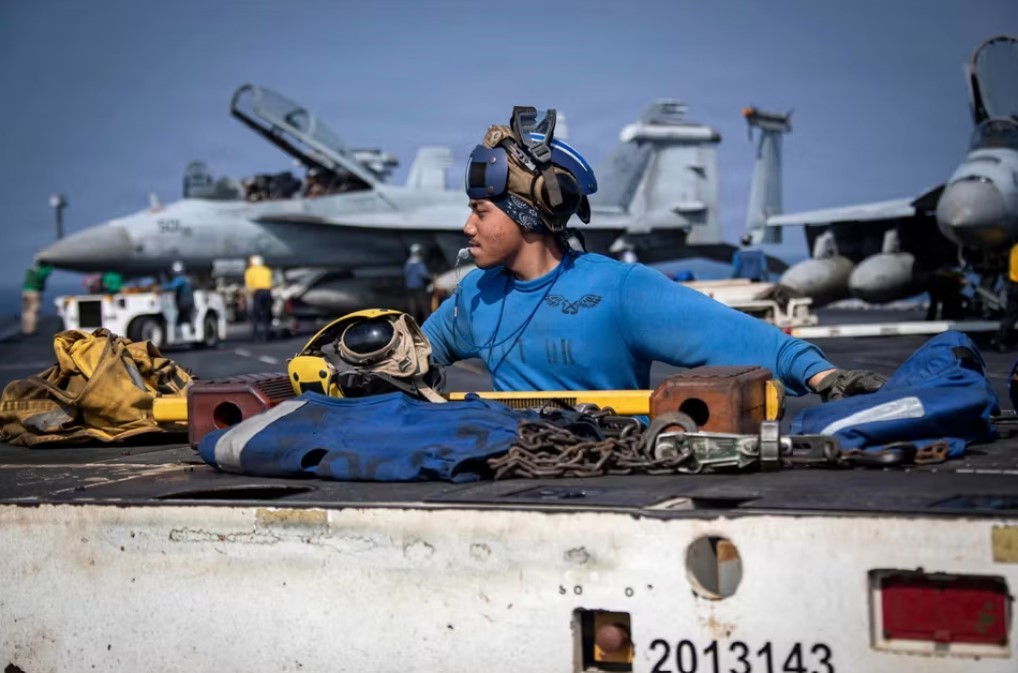
The scale of the current deployment is unprecedented in recent Caribbean history. The United States now has 11 naval vessels, including an aircraft carrier, cruisers, destroyers, and support ships, operating in or near the Caribbean Basin. Approximately 15,000 troops are assigned to the mission, ranging from marines and naval personnel to intelligence and logistics units.
Although military officials describe the operation as part of a long-running effort to suppress maritime narcotics trafficking, the expanded presence has raised questions even among regional allies. Caribbean governments privately acknowledge that such military mass is far beyond what is typically used for counter-drug patrols.
A revived foothold in Puerto Rico
A key component of the buildup is the reactivation of an old naval station in Puerto Rico. The facility now serves as a forward operating hub for surveillance flights, rotary-wing refueling, maritime coordination, and movement of personnel. Its reopening signals long-term planning rather than a short-term mission.
A mission framed as anti-narcotics
Washington’s official justification remains consistent. U.S. commanders say the purpose is to dismantle narco-terror networks and secure maritime corridors. They point to what they describe as sophisticated drug trafficking routes that rely on high-speed boats, modified freighters, and corrupt networks linked to individuals inside Venezuela.
Air and naval strikes have already targeted vessels suspected of trafficking cocaine toward North America. U.S. officials argue that such interdictions disrupt criminal financing and enhance national security. They assert that the Caribbean must not become a safe corridor for transnational crime.
Critics raise concerns
Human rights groups and independent analysts argue the military footprint does not match the stated mission. Deploying aircraft carrier groups is not standard practice for anti-drug operations. The intensity and pattern of the strikes, which have caused significant casualties on the high seas, have deepened concerns about transparency and legality.
For critics, the stated justification does not fully explain the operational tempo or the choice of equipment. They believe the United States is positioning itself to apply political pressure, prepare for contingencies, or possibly seize key opportunities if the Venezuelan government weakens.
Venezuela’s View: Threats, Resistance, and Reactive Strategy
Maduro rejects Washington’s narrative
President Nicolás Maduro has responded sharply. He accuses Washington of hiding interventionist motives behind anti-drug language. His speeches emphasize sovereignty, national dignity, and resistance to foreign forces. Maduro portrays the crisis as a defensive struggle, framing the U.S. deployment as part of a broader regime-change strategy.
According to Caracas, the accusations about drug trafficking networks tied to Venezuelan leadership are politically driven and designed to justify aggressive action. Venezuelan officials point to the history of foreign interference in Latin America and argue that the current situation fits a familiar pattern.
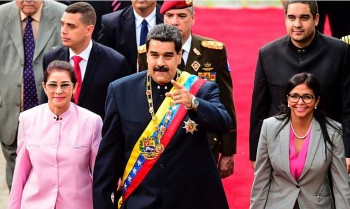 Who is Nicolás Maduro, President of Venezuela: Early Life, Family, Career, And Net Worth Who is Nicolás Maduro, President of Venezuela: Early Life, Family, Career, And Net Worth |
Military mobilization and public preparedness
In response, Venezuela has elevated its defense posture. The government has deployed troops along the coastline, activated naval patrols, and conducted high-profile military exercises including amphibious drills, air-defense simulations, and coastal defense operations.
Venezuelan air force squadrons have flown frequent readiness missions, while the navy has moved vessels closer to strategic harbors. The exercises are not only meant to improve readiness, but also to send a message: any incursion will be met with resistance.
A leadership under pressure
Maduro and his circle now face intense domestic and international scrutiny. Venezuelan elites worry about the implications of extended conflict. Government insiders fear that the increased U.S. pressure could trigger economic collapse, internal unrest, or defections from key institutions. Such pressure complicates decision-making and raises the risk of miscalculation on both sides.
Is the Crisis Really About Drugs or Power?
A complex mix of motives
Most independent experts believe the crisis has multiple layers. There is evidence that drug trafficking networks operate in Venezuela and that corruption at various levels has interfered with enforcement. But analysts argue this alone cannot explain the scale of the U.S. deployment.
Several political dynamics are likely involved:
-
Containment of an authoritarian regime seen as unfriendly to U.S. interests.
-
Pressure on Venezuela’s economy, potentially to weaken political cohesion.
-
Securing maritime routes that are vital for trade and energy flows.
-
Influencing regional alignments, especially as outside powers like China and Russia grow more active in Latin America.
The crisis appears to be less about narcotics alone and more about shaping the future of Venezuela and the hemisphere.
A legal pretext with broad implications
Labeling certain networks as terrorist organizations gives Washington wide latitude for military action. It creates a legal basis for targeting assets tied to those networks even if they are inside another country. This approach has alarmed international legal scholars who warn that the precedent could erode global norms regarding sovereignty and the use of force.
Humanitarian and Economic Risks for the Region
Civilian vulnerability in northern Venezuela
The majority of Venezuela’s population is concentrated along the northern coast, including Caracas, Valencia, and Maracay. Any confrontation near these areas could endanger millions. A strike on a port, a radar site, or an air-defense battery could trigger cascading civilian effects, including displacement, infrastructure damage, and shortages of essential goods.
Migration pressures
Venezuela already faces one of the largest migration waves in the world. A new conflict would push even more people to flee by land and sea. Colombia, Brazil, and island nations such as Trinidad and Tobago would face immediate pressure. The wider Caribbean could quickly encounter a humanitarian crisis.
Threats to oil and shipping
Venezuela’s oil industry is fragile. Even a limited disruption to refineries or export terminals could send shockwaves through global markets. The Caribbean is also a busy maritime corridor for container shipments, energy tankers, and regional trade. Escalation could force rerouting, raise insurance costs, and strain economies that depend heavily on sea logistics.
Possible Scenarios for the Coming Weeks
Scenario 1: Controlled tension with diplomacy
In this scenario, both sides avoid direct conflict. The United States continues maritime interdictions and maintains its military presence, but refrains from striking targets inside Venezuelan territory. Venezuela keeps its forces mobilized but does not engage directly. Diplomatic mediation by regional blocs could stabilize the situation, at least temporarily.
Scenario 2: A misstep triggers escalation
A misinterpreted radar lock, a stray missile, an accidental collision, or a miscommunication between patrol vessels could ignite unintended violence. With such heavy military presence packed into tight spaces, the risk of an accidental exchange is high. This is the scenario analysts fear most.
Scenario 3: Deliberate intervention
The most severe outcome would involve a targeted U.S. strike on Venezuelan infrastructure or leadership-linked networks. Such an operation could destabilize the Maduro government, trigger large-scale military responses, and create long-lasting instability. It could also reshape diplomatic alignments across Latin America.
Frequently Asked Questions (FAQ)
Why did the United States deploy forces to the Caribbean?
Washington states the deployment aims to combat drug trafficking and narco-terror networks. Analysts believe political objectives and regional influence are also part of the calculus.
Is the U.S. preparing for an invasion of Venezuela?
There is no official indication of a planned invasion. However, the scale of the deployment opens the possibility of strikes or contingency operations if the situation deteriorates.
How is Venezuela responding?
Venezuela is mobilizing troops, conducting military exercises, strengthening coastal defenses, and denouncing the deployment as aggression.
Could the situation lead to war?
It is possible, though not inevitable. The greatest risk is accidental escalation due to the density of military assets in a confined region.
How would a conflict impact the Caribbean?
It could disrupt trade routes, damage energy markets, trigger mass migration, and create complex security challenges for multiple island states.
What role do other global powers play?
Countries such as China and Russia have political and economic ties with Venezuela. Their diplomatic posture may influence how the crisis unfolds, especially if confrontation escalates.