US Winter Storm This Weekend: Who’s at Risk, What’s Most Dangerous, and How to Prepare

 |
| Forecasters warn a historic winter storm could bring crippling snow, ice, and cold from Texas to New York, disrupting travel and power for days. |
Who Is at Risk and When
A sprawling winter storm is set to impact more than half of the United States from Friday through early next week, putting tens of millions of Americans at risk of dangerous travel, power outages, and life-threatening cold.
According to the National Weather Service, roughly 180 million people are currently under winter weather advisories, watches, or warnings. The storm will affect regions from Texas and the southern Plains to the Mid-Atlantic, Northeast, and New England, with impacts unfolding in phases.
-
Friday afternoon into Friday night: Winter weather begins in Texas and parts of the southern Plains, with freezing rain, sleet, and sharply falling temperatures.
-
Saturday: Snow and ice spread across the Lower Mississippi Valley, Tennessee Valley, Southeast, and Ohio Valley.
-
Saturday night into Sunday: Heavy snow reaches the Mid-Atlantic and Northeast, including major population centers.
-
Sunday into Monday: Snow tapers off in some areas, but dangerous cold and lingering travel issues persist, especially in the East.
Forecasters warn that even after precipitation ends, icy roads and extreme cold could continue to disrupt daily life.
The Biggest Dangers: Ice, Power Outages, and Bitter Cold
While heavy snow is grabbing attention, meteorologists say ice is the most dangerous element of this storm.
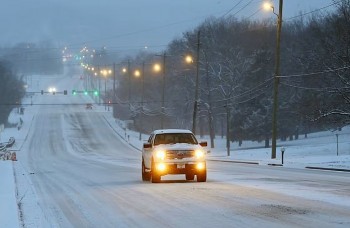
Freezing rain and sleet are expected to coat trees, power lines, and roads with a quarter-inch or more of ice across parts of the South and Mid-Atlantic. In some areas, ice accumulation could exceed half an inch, enough to snap tree limbs and bring down power lines.
“The ice is more damaging than the snow,” said Brian Hurley, a meteorologist with the National Weather Service. Ice-related outages can last longer than snow-related ones, especially when widespread tree damage occurs.
Two primary ice corridors are forecast:
-
From Texas through Louisiana, Arkansas, Mississippi, and into Tennessee
-
From northeast Georgia through South Carolina and into North Carolina and Virginia
At the same time, bitter cold will move in behind the storm. Temperatures well below normal are expected to persist through late January and into early February, increasing the risk of frozen pipes, hypothermia, and dangerous heating conditions during power outages.
Snow Totals: Where Accumulation Will Be Most Severe
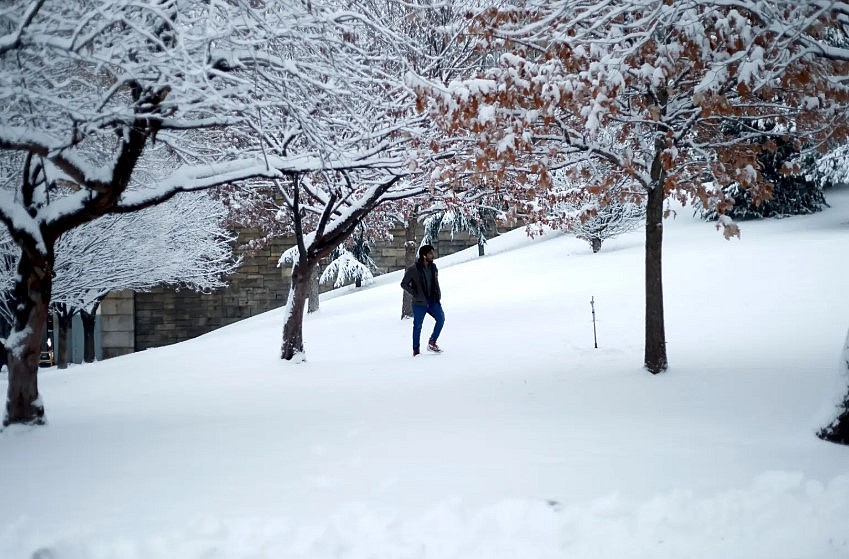
Snow is expected across a wide portion of the country, but the heaviest and most disruptive totals will be more localized.
According to forecasters and meteorologists at AccuWeather:
-
6 to 15 inches of snow is expected across much of the Mid-Atlantic and interior Northeast.
-
10 to 15 inches are likely in higher elevations of northwest Virginia, Maryland, and the central Appalachians.
-
18 to 24 inches are possible in parts of West Virginia, western Virginia, Pennsylvania, and the Poconos, particularly in mountainous terrain.
-
New England could see significant snowfall, especially inland and at higher elevations.
In the New York City region, forecasters say snowfall could reach up to 16 inches, raising concerns about one of the most disruptive snow events the area has seen in years.
When Will the Winter Storm Hit — and How Long Will It Last?
Forecasters say the winter storm will unfold over several days, with impacts beginning as early as Friday afternoon and lingering into Monday or even Tuesday in some regions.
According to the National Weather Service, the first phase of the storm will arrive in Texas and the southern Plains late Friday, where freezing rain, sleet, and rapidly falling temperatures are expected to create hazardous conditions by evening. As the system strengthens, it will push east overnight into the Lower Mississippi Valley.
By Saturday morning, snow and ice will expand across the Tennessee Valley, Ohio Valley, and Southeast, with the most dangerous ice accumulating Saturday into Saturday night. Forecasters warn that conditions could deteriorate quickly after sunset as temperatures drop below freezing.
The storm will reach the Mid-Atlantic and Northeast late Saturday night into Sunday, bringing heavy snow to major population centers. In the New York City region, snowfall is expected to begin overnight Saturday and continue through much of Sunday, with lingering snow showers possible into early Monday.
While precipitation will gradually taper off, dangerous cold, icy roads, and power outages could persist well beyond the storm’s peak, especially in hard-hit areas. Meteorologists caution that cleanup and travel disruptions may last several days after snowfall ends, particularly where ice damage is severe.
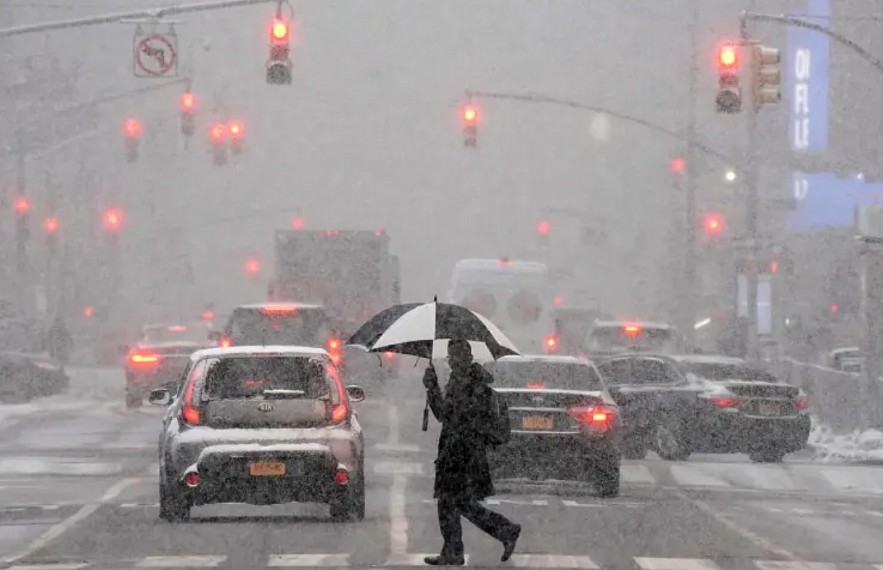 |
| A cold front will usher in bone-chilling temperatures and a possible wintry mix of rain and snow in New York City |
Travel Impact: Roads and Flights Likely to Be Disrupted for Days
Transportation officials warn that this storm will significantly disrupt both ground and air travel.
Roads
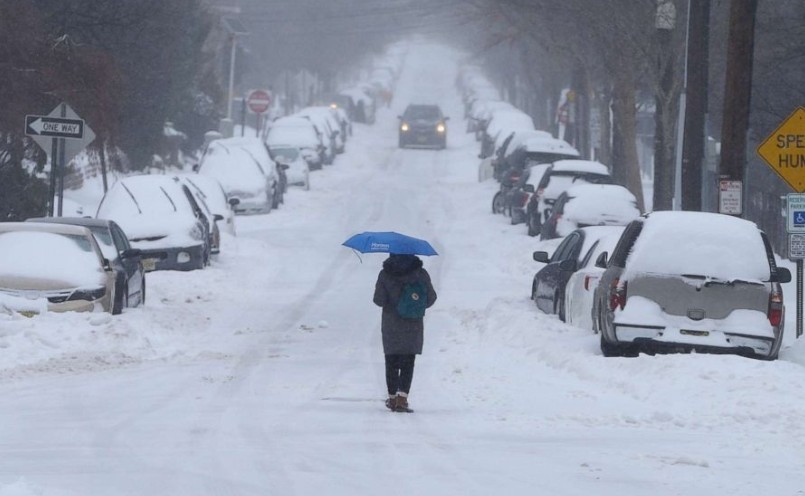
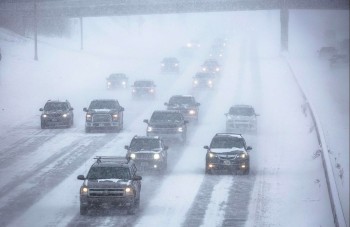
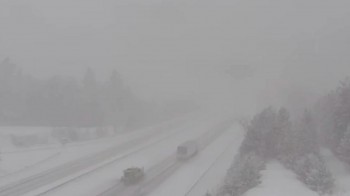
Snow-covered highways, icy bridges, and rapidly changing visibility conditions are expected to make driving hazardous across large parts of the country. The National Weather Service has also warned about snow squalls in the Northeast, which can reduce visibility to near zero in minutes.
Drivers are urged to:
-
Avoid unnecessary travel
-
Slow down and increase following distance
-
Turn on headlights and hazard lights in poor visibility
-
Carry a winter survival kit if travel is unavoidable
Air Travel
Major airports in Texas, Georgia, Tennessee, North Carolina, and the Northeast are likely to experience delays and cancellations. Airlines have already issued travel waivers ahead of the storm, and additional disruptions are expected as snow and ice move east.
Travel experts warn that delays may continue even after snowfall ends, as crews work to clear runways and reposition aircraft.
Government Response: States of Emergency Declared
Governors across several states have declared emergencies or disaster declarations in anticipation of the storm.
-
Georgia: Gov. Brian Kemp declared a statewide emergency, authorizing the deployment of National Guard troops. Ice is expected to be the primary threat.
-
Arkansas: Gov. Sarah Huckabee Sanders approved emergency funding to support storm response.
-
Maryland: Gov. Wes Moore issued a state of preparedness.
-
Texas: Gov. Greg Abbott declared a disaster across 134 counties, citing dangerous road conditions and ultra-cold temperatures.
State and local officials are urging residents to avoid travel when conditions deteriorate and to prepare for possible extended power outages.
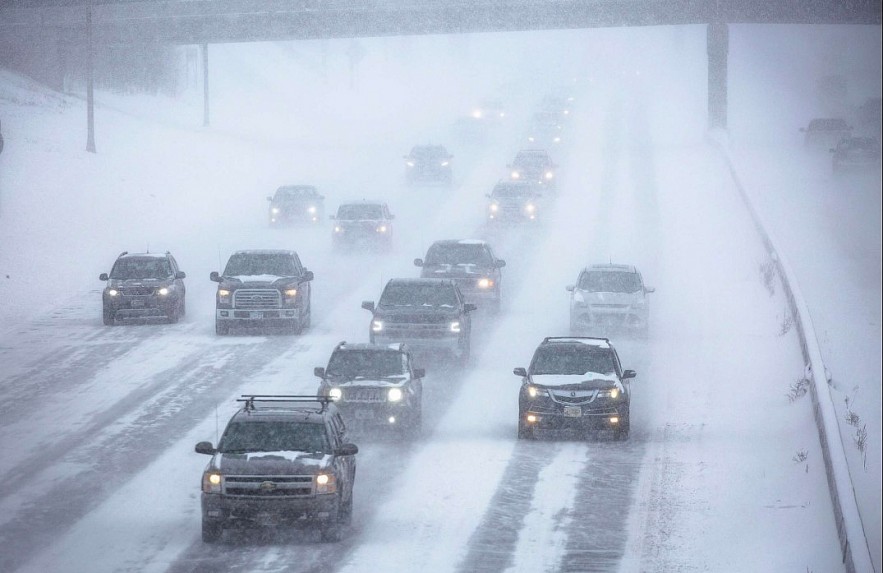 |
| Winter storms will bring snow, ice, rain this week |
What People Should Do Now
Officials stress that preparation before the storm arrives can reduce risk and prevent emergencies.
Recommended steps include:
-
Stocking food, water, medications, and pet supplies
-
Charging phones, battery packs, and backup power sources
-
Having flashlights and blankets ready in case of power loss
-
Preparing vehicles with fuel, windshield fluid, and emergency kits
-
Checking on elderly neighbors, relatives, and others who may need assistance
People are also urged to monitor local forecasts and alerts closely, as storm details and impacts may change quickly.
The Bottom Line
This weekend’s winter storm is expected to affect more than two dozen states and could disrupt daily life for days. With heavy snow, damaging ice, prolonged power outages, and dangerous cold all likely, forecasters say preparation and caution will be critical.
For many Americans, the safest option may be simple: stay home, stay warm, and avoid travel until conditions improve.