Who Is the Federal Agent in Alex Pretti Shooting? Look at the Minneapolis Shooter

 |
| Who Is the Federal Agent Who Shot Alex Pretti in Minneapolis |
As investigations continue into the fatal shooting of Alex Jeffrey Pretti, public attention has increasingly narrowed to a single figure: the federal agent who fired the fatal shots. While much early reporting focused on Pretti’s actions, video evidence, and protests that followed, a growing number of questions now center on the shooter — who he is, why he fired, and whether he will ever be identified or held accountable.
At present, federal authorities have disclosed only limited, carefully worded details.
Read more: What Really Happened in the Alex Pretti Shooting? Look at the Video Evidence
What Is Known About the Shooter
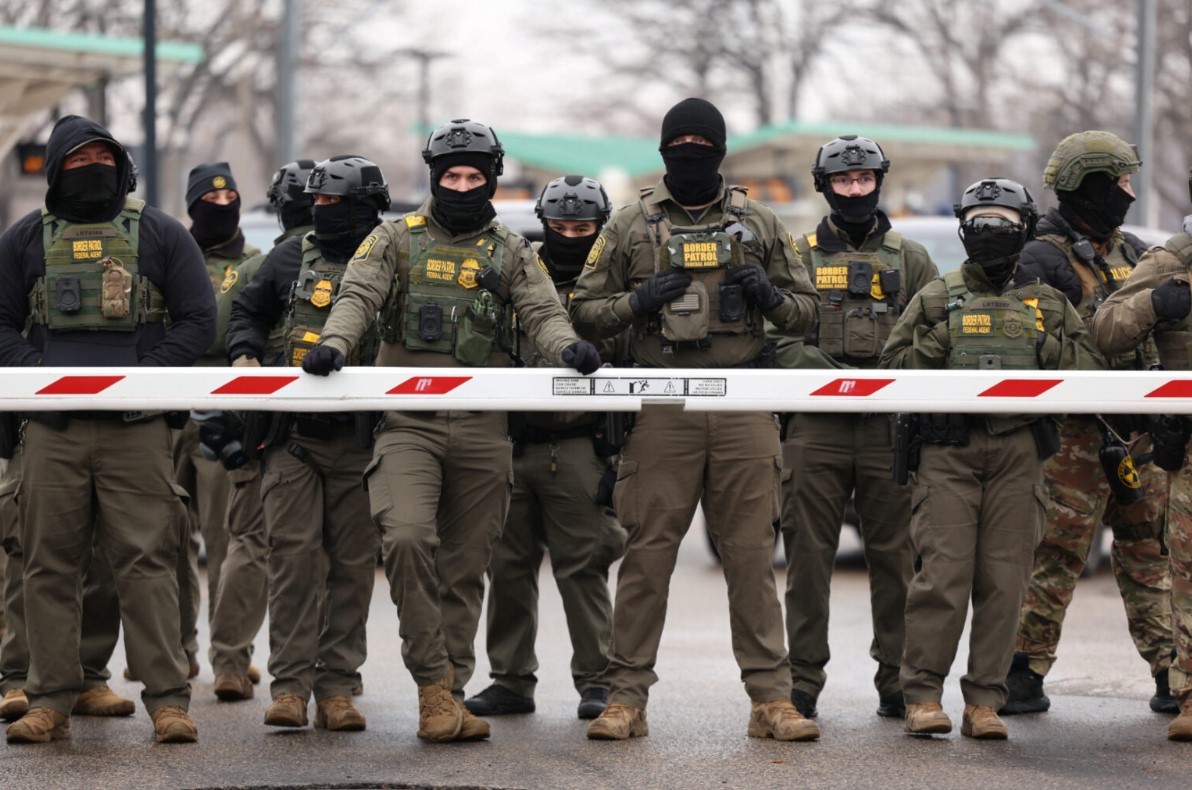
The Department of Homeland Security has confirmed that the individual who fired the fatal shots was a U.S. Border Patrol agent assigned to a federal enforcement operation in Minneapolis on January 24, 2026.
Beyond that, DHS has not released:
-
the agent’s name
-
rank or unit
-
years of service
-
prior use-of-force history
-
whether the agent was based locally or deployed from another state
Federal officials say the identity is being withheld due to officer safety concerns and because the investigation is ongoing. This practice is common in federal cases but has drawn criticism from state officials and civil rights advocates, who argue that anonymity limits public accountability in fatal use-of-force incidents.
Why the Agent Fired: The Federal Justification
Federal officials have framed the shooting as a case of self-defense during a volatile struggle involving a firearm.
According to DHS statements, Pretti approached agents while carrying a 9 mm semiautomatic handgun. Agents say they issued commands and attempted to disarm him. During the struggle, one agent perceived an imminent threat and fired.
Notably, DHS has not alleged that Pretti fired the weapon or pointed it directly at officers. Instead, the justification rests on the belief that Pretti could regain control of the gun during the physical confrontation.
Under federal use-of-force policy, deadly force is permitted only when an officer reasonably believes there is an immediate risk of death or serious bodily harm. Whether that standard was met is now the central legal and factual dispute.
Read more: New Video Suggests Alex Pretti Was Disarmed Before Minneapolis Border Patrol Shooting?
The Moment of Gunfire: What the Videos Do - and Do Not - Show
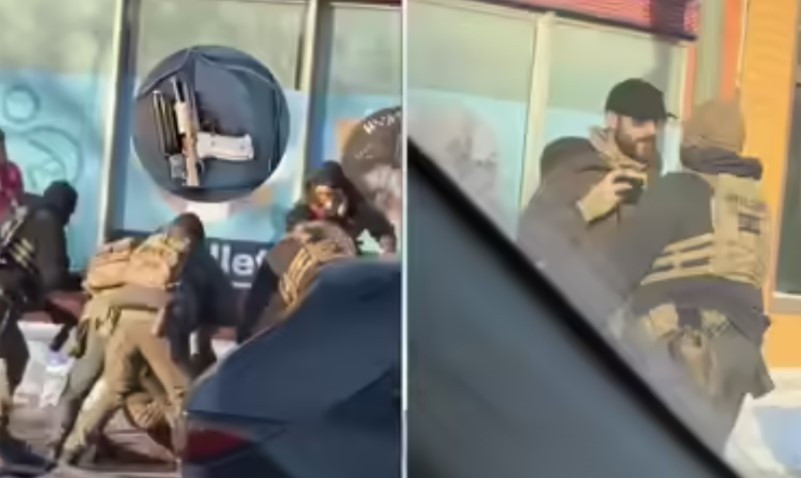
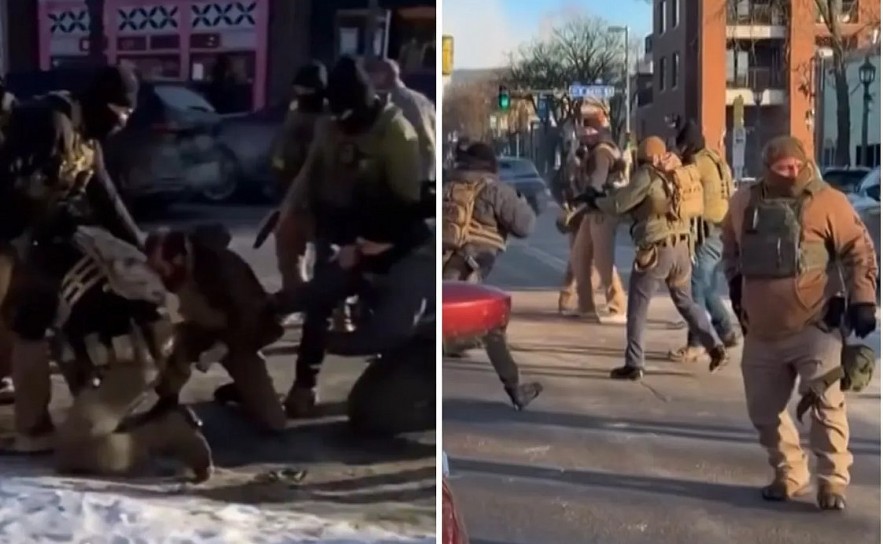
Multiple bystander videos capture fragments of the encounter, but no single recording shows the entire sequence clearly.
Across the available footage, several consistent elements appear:
-
Pretti is pepper-sprayed and tackled by multiple agents
-
He is forced to the ground during a brief struggle
-
Officers shout warnings about a gun
-
An agent appears to reach toward Pretti’s waist
-
Another agent is briefly seen holding a firearm
-
Gunshots are fired within seconds
What remains unclear is who had control of the gun at the exact moment shots were fired. No video conclusively shows Pretti holding the weapon during the gunfire. Some frames suggest he was already pinned or partially restrained.
Supporters of the agent argue that a struggle involving a firearm remains deadly even if the suspect is on the ground. Critics counter that firing while a suspect is restrained requires clear evidence of an ongoing, immediate threat — evidence that has not yet been publicly shown.
Was the Agent Required to Fire? Legal Standards at Issue
Legal experts say the case will hinge on a narrow but critical question: Did the agent reasonably believe lethal force was unavoidable at that moment?
Factors investigators will examine include:
-
whether the gun was accessible to Pretti
-
whether verbal commands were clear and continuous
-
how many agents were restraining him
-
whether alternative force options were available
-
the timing of shots relative to the struggle
Because federal body-camera footage has not been released, investigators must currently rely on bystander video, witness statements, and internal federal records.
Read more: Was Alex Pretti a Republican or Democrat? His Political Views After the Minneapolis Shooting
Will the Agent Be Charged or Prosecuted?
As of now:
-
No criminal charges have been filed
-
The agent has not been publicly named as a suspect
-
No administrative discipline has been announced
Historically, federal agents are rarely criminally charged for on-duty shootings unless investigators find clear evidence that the use of force violated policy or law.
Possible outcomes include:
-
internal clearance of the agent
-
administrative discipline
-
civil lawsuits against the federal government
-
or, less commonly, criminal prosecution
Minnesota officials have taken the unusual step of suing to preserve evidence, arguing that federal agencies should not control all materials related to a shooting involving their own agents.
Why the Agent’s Identity Remains Secret
Unlike local police departments, federal agencies operate under stricter disclosure rules. Names are often withheld unless charges are filed or lawsuits force disclosure.
Civil liberties groups argue this creates a double standard, shielding federal officers from scrutiny. Federal officials respond that premature disclosure could endanger agents and compromise investigations.
Whether the agent’s name is eventually released may depend on court rulings, civil litigation, or findings from independent investigators.
Public Debate: Self-Defense or Excessive Force
Public reaction remains sharply divided.
Those defending the agent argue:
-
a firearm was present
-
the situation escalated rapidly
-
split-second decisions were required
Critics argue:
-
Pretti appeared restrained
-
video does not show an active threat
-
federal agents escalated the encounter
Minnesota officials have openly questioned why heavily armed federal agents were operating in residential areas and why local law enforcement was excluded from the scene afterward.
What Happens Next
Multiple investigations are ongoing at both the state and federal levels. Any release of body-camera footage, internal reports, or additional video could significantly change public understanding of the agent’s actions.
Until then, the identity of the federal agent who shot Alex Pretti remains undisclosed, and the question of accountability remains unresolved.
What is clear is that the focus has shifted. The case is no longer only about what Alex Pretti did, but about what the agent believed, why he fired, and whether the system will meaningfully examine that decision.